





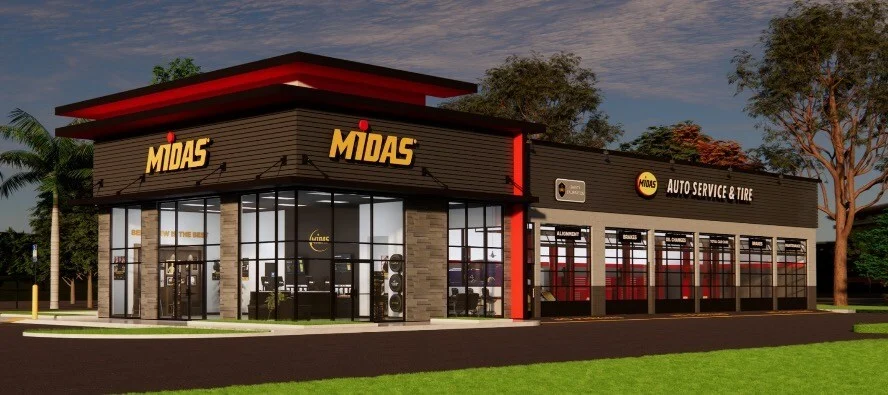
In a major move to revitalize one of the most recognizable names in the automotive service industry, Midas has officially announced the rollout of two distinct store design concepts across its expansive network of more than 1,200 locations in Canada and the United States. This sweeping architectural and operational overhaul represents the latest milestone in a five-year strategic growth plan initiated in 2023, signaling a departure from traditional repair shop aesthetics in favor of a customer-centric, tech-forward retail experience.
Beginning July 15, these new design paradigms—dubbed "Contemporary Industrial" and "Urban Modern"—will become the mandatory standard for all new Midas franchise builds and major renovations. The initiative comes roughly one year after the company was acquired by Mavis Tire Express Services, a transition that has clearly injected fresh capital and strategic momentum into the storied brand.
The Evolution of the Midas Brand: A Chronological Overview
The path to this transformation has been deliberate, shaped by shifting market demands and the evolving complexities of modern vehicle maintenance.
The Foundation (2023)
The strategic journey began in 2023 when Midas launched a comprehensive five-year growth plan. The objective was clear: modernize the customer journey to ensure longevity in a market increasingly dominated by digital integration and rapid service expectations. The acquisition by Mavis Tire Express Services provided the necessary structural backing to execute these large-scale changes.
Research and Development (2023–2024)
Throughout the past year, Midas leadership conducted rigorous research, soliciting feedback from both the franchisee community and the end-consumer. This phase was critical in identifying pain points within the existing store layouts, such as cramped waiting areas and a lack of transparency regarding the service process.
The Launch (July 2024)
The official implementation of the new design standards on July 15 marks the transition from theoretical planning to physical reality. This date serves as the benchmark for all future renovations, effectively drawing a line in the sand for the brand’s new aesthetic and functional identity.
Strategic Design Concepts: Tailoring to the Market
Midas is moving away from a "one-size-fits-all" approach, recognizing that a service center in a sprawling suburban highway corridor requires different operational priorities than one located in a dense, pedestrian-heavy city center.
The Contemporary Industrial Concept
Primarily designed for suburban and highway-adjacent locations, the "Contemporary Industrial" model emphasizes functionality and brand visibility. These sites often deal with high-volume, transient traffic. The layout focuses on high-impact exterior signage to capture the attention of passing motorists, combined with a robust, efficient interior flow designed to handle high throughput without sacrificing the quality of the customer interaction.
The Urban Modern Concept
For locations in densely populated metropolitan areas, Midas has developed the "Urban Modern" design. These stores prioritize a retail-oriented aesthetic, featuring expansive storefront windows that bring natural light into the showroom. This design aims to make the Midas brand feel more integrated into the neighborhood landscape, shedding the utilitarian "garage" feel in favor of a clean, welcoming environment that encourages walk-in business.
Enhancing the Customer Journey: Core Improvements
The redesign is not merely cosmetic; it is fundamentally rooted in improving the efficiency and comfort of the automotive service experience. According to internal data, the company identified several key areas where the traditional shop layout was falling short.
Waiting Areas and Flow
A primary focus of the redesign is the enhancement of customer comfort. Modernized waiting areas will provide more space for individuals and families, equipped with amenities that allow customers to work or relax while their vehicles are being serviced. By optimizing the "customer flow" within the facility, Midas aims to facilitate quicker, more seamless interactions between the vehicle owners and the service staff.
Service-Bay Visibility and Transparency
Transparency has become a currency in the automotive repair industry. To build trust, the new layouts emphasize improved visibility into the service bays. By allowing customers to better understand the work being performed on their vehicles, Midas is positioning itself as a transparent, high-integrity service provider.
The ADAS Integration
Perhaps the most significant technical upgrade is the inclusion of a dedicated Advanced Driver Assistance Systems (ADAS) service bay in every new layout. As modern vehicles become increasingly equipped with sensors, cameras, and collision-avoidance systems, the need for specialized calibration and repair has skyrocketed. By integrating these bays directly into the store architecture, Midas is future-proofing its service capabilities against the technological wave of the automotive industry.
Official Perspectives: Leadership on the Brand Evolution
The executive team at Midas emphasizes that these changes are the result of deep listening and data-driven decision-making.
"Driven by customer and franchisee insights, the new store designs are the next step in the company’s national brand evolution," said Lenny Valentino Jr., president and chief operating officer of Midas International. His statement highlights the collaborative nature of the project; by involving franchisees in the design process, the company ensures that the new standards are not only aesthetically pleasing but also economically viable for the independent business owners who operate the vast majority of the network.
Paul Elliott, vice-president of marketing for Midas, added clarity to the motivation behind the physical layout changes. "In our research, we discovered that we could design new stores that provide smoother customer flows, quicker interactions between customers and Midas team members, and more waiting areas for customers and their families." For Elliott, the store is the primary touchpoint for the brand’s promise of reliability and convenience.
Implications for the Automotive Aftermarket
The decision by Midas to overhaul its physical footprint has profound implications for the broader automotive aftermarket sector.
A Competitive Advantage in Franchise Retention
By providing a clear, modernized path forward, Midas is strengthening its value proposition to current and prospective franchisees. A brand that invests in its own infrastructure is a brand that signals long-term stability—a critical factor for entrepreneurs choosing where to invest their capital.
Responding to the "Retailization" of Auto Repair
The automotive industry is seeing a shift where consumers expect the same level of service and environment from their mechanic as they do from their favorite retail outlets. Midas is clearly leaning into this trend, moving away from the "grease-and-grime" stigma of the past and toward a professional, polished service experience.
Adapting to the EV and Tech Era
While the ADAS bays are the current priority, the focus on modernizing the physical footprint suggests a readiness to adapt further. Should the network need to incorporate Electric Vehicle (EV) charging stations or specialized EV maintenance equipment in the future, the new, more flexible store layouts will likely provide the necessary physical infrastructure to facilitate such additions.
Conclusion: A New Chapter for a Legacy Brand
The rollout of the "Contemporary Industrial" and "Urban Modern" design concepts is a calculated, aggressive move by Midas. By prioritizing the integration of ADAS technology, enhancing the comfort of the waiting experience, and tailoring designs to specific market environments, Midas is signaling that it is not merely content with its current market share.
As the company works closely with its franchise partners to roll out these changes over the coming months and years, the industry will be watching closely. If successful, this architectural shift could serve as a blueprint for other legacy service providers looking to bridge the gap between traditional automotive repair and the high-tech, service-oriented future of the industry. The transformation of Midas is more than just a fresh coat of paint; it is an assertion that the brand is ready to meet the challenges of the next decade head-on.
