





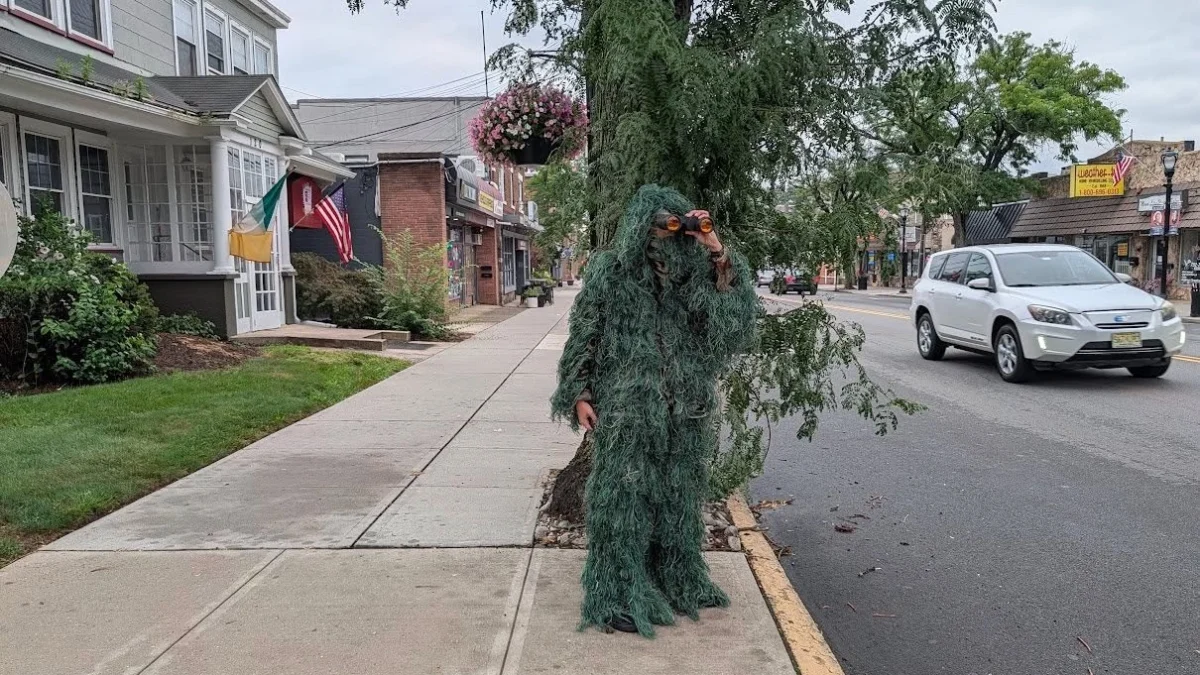
If you find yourself navigating the streets of Dunellen, New Jersey, you might want to look twice at the landscaping. In a move that blends high-stakes traffic enforcement with a touch of the absurd, local law enforcement has pioneered an unconventional method to combat the epidemic of distracted driving: the “ghillie suit” sting.
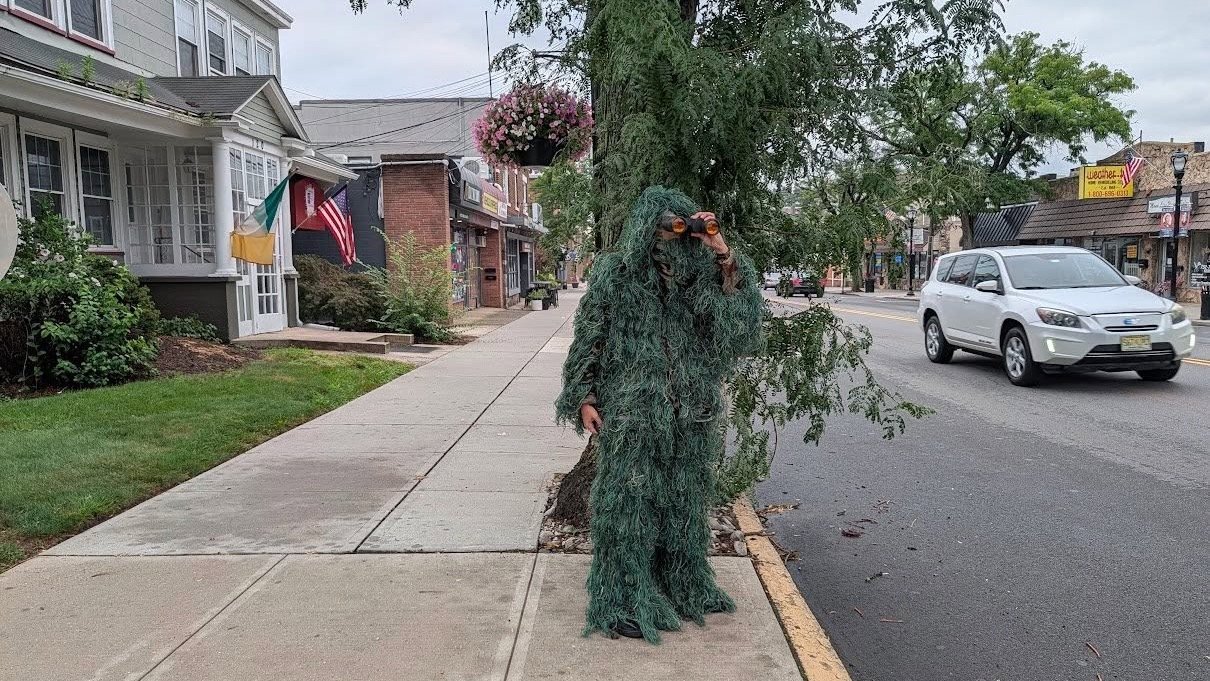
For the average motorist, the sight of a leafy bush standing on the sidewalk might register as a harmless part of the suburban aesthetic. However, for those brazenly scrolling through social media or texting while behind the wheel, that very shrubbery may actually be a plainclothes officer equipped with binoculars and a radio, ready to signal for a citation.
This tactical innovation, while humorous to some, underscores a growing desperation among traffic safety officials as they grapple with a behavioral crisis that refuses to subside despite years of public awareness campaigns and stringent legislation.
The Chronology of a Botanical Sting
The operation, which gained national attention following a viral update from the Dunellen Borough Police Department, took place over a focused, six-hour window. The objective was simple yet ambitious: to quantify and mitigate the prevalence of handheld device usage in high-traffic zones.
The operation followed a clear, tactical progression:
- The Deployment: Officers, utilizing military-grade ghillie suits—camouflage gear typically reserved for sniper operations—integrated themselves into the roadside environment. By blending into the natural foliage, these officers could observe driver behavior without the “deterrent effect” of a marked police cruiser.
- The Observation Phase: For six hours, the “plant-officers” acted as silent sentries. They focused specifically on the clear, observable violations of New Jersey’s statewide ban on handheld mobile device usage.
- The Interception: Once a violation was confirmed—usually the sight of a driver with a phone in their hand or pressed to their ear—the observer would transmit the vehicle’s description and license plate to a team of uniformed officers stationed further down the road.
- The Enforcement: The motorists were then pulled over, likely bewildered to find themselves cited by an officer who had been “tipped off” by a nearby shrub.
The result of this localized campaign was stark: 74 citations were issued in just one shift. This volume of enforcement in such a short duration highlights not just the effectiveness of the tactic, but the sheer ubiquity of distracted driving on modern American roads.
The Irony of the “Not a Cop” Approach
The creativity did not stop with the ghillie suits. The Dunellen Police Department’s social media disclosure also revealed officers utilizing plainclothes tactics that included t-shirts emblazoned with the phrase “Not a Cop.”
While the humor of the situation was not lost on the public, the implications were serious. The juxtaposition of a “Not a Cop” shirt and a police radio illustrates the lengths to which authorities are willing to go to bypass the “scout effect.” Typically, when drivers spot a marked patrol car, they immediately adjust their behavior—putting the phone down, checking their mirrors, and adhering to speed limits. The moment the cruiser is out of sight, the behavior often reverts. By utilizing unconventional disguises, the Dunellen police were attempting to capture a “true” snapshot of driver behavior when the fear of law enforcement is absent.
Supporting Data: Why Distraction Is a Public Health Crisis
The necessity for such drastic measures is backed by a mountain of data from the Insurance Institute for Highway Safety (IIHS) and the National Highway Traffic Safety Administration (NHTSA).
Distracted driving is not merely a nuisance; it is a leading cause of preventable road fatalities. Studies have consistently shown that the cognitive load required to operate a vehicle is incompatible with the cognitive load required to engage with a mobile device.
The IIHS Findings
Recent research from the IIHS has identified a direct correlation between the rise of modern vehicle technology and driver complacency. As cars have become more autonomous, drivers have become less vigilant. When a vehicle features “partial automation,” drivers are more likely to engage in secondary tasks, trusting the software to monitor the road. This misplaced trust, combined with the psychological urge to check notification pings, has led to a measurable increase in rear-end collisions.
Furthermore, data suggests that the presence of anti-phone laws is often insufficient. In a 2022 study, the IIHS analyzed collision rates in states with strict bans compared to those with laxer enforcement. The study found that “vague wording” in legislation—which makes it difficult for officers to prove a driver was using a phone rather than just looking at a GPS—rendered many laws ineffective.
The “Tech-Gap”
There is a fundamental disconnect between the speed at which technology evolves and the speed at which traffic laws are enforced. Modern dashboards, which have increasingly moved away from physical, tactile buttons toward complex, menu-heavy touchscreens, act as internal distractions. When you combine this with the personal smartphone, the driver is constantly fighting a war for their own attention.
Official Responses and the Ethics of Camouflage
The use of camouflage in civilian traffic enforcement has ignited a debate regarding the ethics and necessity of such tactics.
Proponents argue that the primary duty of the police is public safety. If a driver is so distracted that they fail to notice a person dressed in a full ghillie suit standing on the side of the road, that driver is an objective danger to themselves and everyone around them. From this perspective, the disguise is a diagnostic tool: if you didn’t see the plant, you weren’t looking at the road, and you shouldn’t be behind the wheel.
Conversely, some critics raise concerns about the "entrapment" of public trust. They argue that police should be visible, uniform-clad guardians of the peace, and that resorting to "prank-like" camouflage diminishes the authority and seriousness of the department. However, in the context of Dunellen, the police department has framed the operation as a necessary shock to the system. By creating a viral moment, they have forced a conversation about the danger of the phone-in-hand habit that a standard patrol car could never achieve.
Broader Implications: A New Era of Enforcement?
The Dunellen experiment raises an uncomfortable question for the motoring public: If the police have to dress as trees to get you to stop texting, have we lost the battle for road safety?
The implications of this strategy are likely to ripple outward. As other jurisdictions look for ways to boost enforcement statistics without the massive overhead of additional patrol units, we may see an increase in “stealth” enforcement.
1. The Death of the “Safe” Window
Historically, drivers have operated under the assumption that if no patrol car is visible, they have a “safe window” to check their phones. The Dunellen strategy effectively destroys that illusion. It suggests that enforcement is everywhere, even where it is invisible.
2. The Shift Toward Behavioral Modification
The ultimate goal of any traffic law is not to issue tickets, but to modify behavior. By making the enforcement unpredictable, the police are attempting to force a change in habit. If the risk of being caught is perceived as constant, the hope is that drivers will eventually default to leaving the phone in the center console or a bag, rather than in their hand.
3. The Future of Vehicle Design
The findings from these enforcement stings may also apply pressure to automotive manufacturers. If police departments continue to struggle with distracted drivers, regulatory bodies may demand stricter “lockout” features on infotainment systems, preventing drivers from accessing anything other than essential navigation while the vehicle is in motion.
Conclusion: Putting the Phone Down
The sight of a police officer in a ghillie suit is, admittedly, a surreal suburban image. Yet, the 74 citations issued in that single operation serve as a sobering reminder of the reality of our current driving habits.
While the theatrics of the Dunellen Borough Police Department may be unconventional, the message is clear and rooted in a desperate need for change. Every time a driver looks at their phone, they are gambling with the lives of pedestrians, cyclists, and fellow motorists. Whether that gamble is observed by a patrol car, a traffic camera, or a person dressed as a tree, the danger remains the same.
Ultimately, the most effective deterrent against distracted driving isn’t a clever disguise or a high-tech camera—it is the simple, conscious decision to put the phone down. Until that becomes the standard, we should perhaps all start treating every roadside shrub with a little bit of healthy suspicion.
