




By Investigative Desk
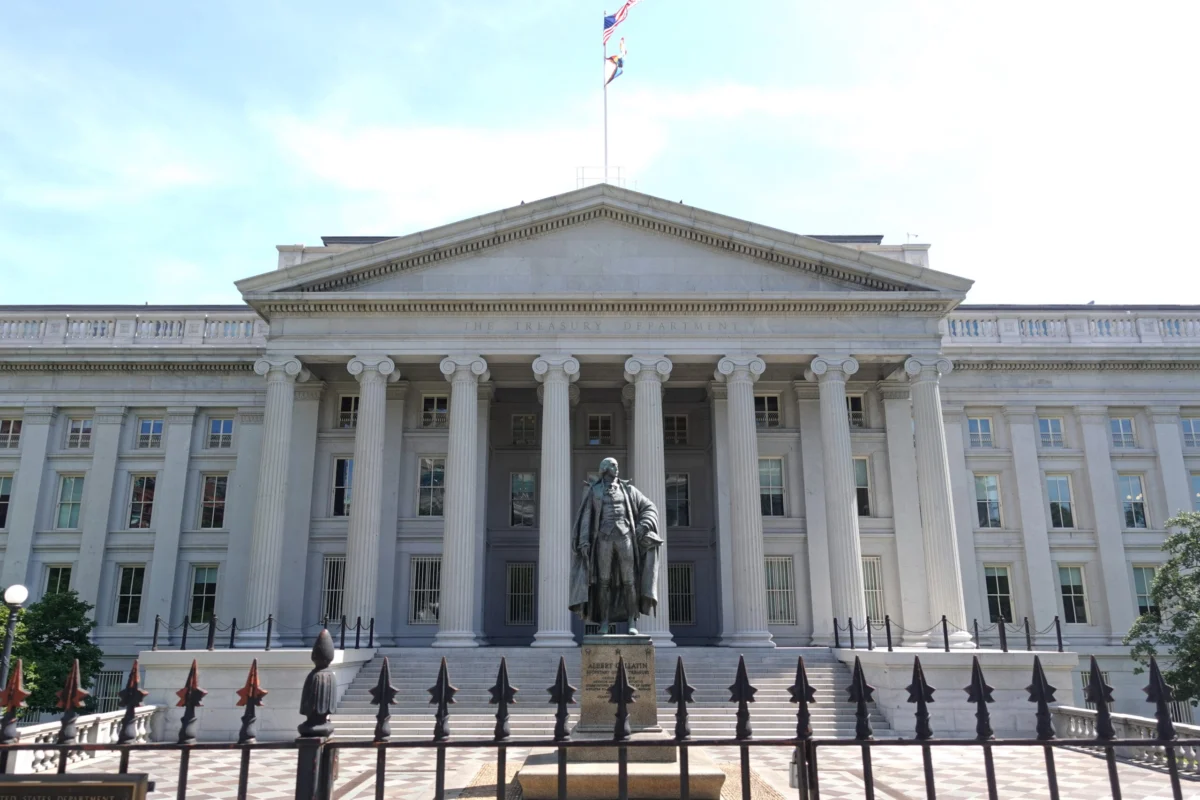
In a significant intensification of the ongoing US-Iran conflict—now entering its sixth month—the United States Department of the Treasury’s Office of Foreign Assets Control (OFAC) has unveiled a sweeping new package of economic sanctions. The measures target a complex, multi-national network of six entities and individuals accused of providing critical material and logistical support to Iran’s Islamic Revolutionary Guard Corps (IRGC).
This latest action underscores the Biden administration’s shift toward a "stranglehold" strategy, aimed at severing the lifelines of the IRGC, which Washington views as the primary engine behind regional destabilization and direct aggression against American and allied interests. The sanctioned parties span the globe, with operations identified in China, Russia, India, and Iran, signaling the administration’s intent to pursue the IRGC’s support network wherever it operates.
The Anatomy of the Sanctioned Network
The core of the Treasury Department’s latest announcement focuses on two distinct areas: the logistical capabilities of Iran’s aviation sector and the emerging threat of digital warfare.
Mahan Air: The IRGC’s Aerial Conduit
Central to the sanctions is Mahan Air, a privately-owned Iranian carrier that the Treasury has long identified as an instrument of state-sponsored militancy. OFAC’s designation highlights the airline’s role as the "airline of choice" for the IRGC. According to intelligence cited in the order, Mahan Air has been instrumental in the clandestine transport of weaponry, sophisticated drone technology, and military personnel across the Middle East. By leveraging commercial flight paths to mask the movement of prohibited military hardware, Mahan Air has effectively served as a shadow logistics wing for the Guard Corps.
DadeNegar: Digital Espionage and Crowd-Sourced Targeting
Perhaps most alarming is the inclusion of DadeNegar Startup Studio, a tech firm based in Iran. OFAC officials allege that DadeNegar served as a sophisticated front for the IRGC, utilizing public platforms to execute "crowd-sourced" espionage. By launching websites designed to solicit location data for American and Israeli military equipment, the firm reportedly leveraged public participation to build a high-fidelity targeting database for IRGC missile and drone units. This represents a modern, asymmetrical evolution of warfare, where civilian-facing technology is weaponized to facilitate kinetic strikes.
Global Reach: The Logistics Chain
The reach of these sanctions extends far beyond Iranian borders, implicating international intermediaries who facilitate the IRGC’s operations.
- China: The Treasury designated Tang Xin, the managing director of Shanghai Wings Logistics Company. Investigations reveal that Tang coordinated international travel and logistical support for Mahan Air, effectively acting as a broker for the transit of troops and military cargo. Additionally, his control over Shanghai Elite International Travel Company provided the necessary administrative cover to move resources across international borders.
- India and Russia: Further expanding the net, the US targeted India-based Skiez Travels and Logistics Private Limited and Russia-based Air Cargo Pro Limited. These entities acted as general sales agents for Mahan Air in their respective nations, providing the commercial infrastructure required for the airline to maintain a global operational footprint.
By sanctioning these entities, the US is sending a clear message to international commercial partners: engagement with Iranian logistics networks now carries a prohibitive cost.
Chronology: Six Months of Escalation
The current economic measures are not isolated events but are part of a rapid descent into open conflict between the US and Iran.
- Month 1-2: Initial skirmishes following the collapse of back-channel negotiations led to a spike in maritime and regional drone attacks. The US responded with targeted naval patrols and limited cyber-attacks.
- Month 3: The conflict shifted to a more formalized state of hostilities. Both sides increased rhetoric, and the US began formalizing a "containment and starve" strategy, targeting Iranian oil exports and financial institutions.
- Month 4: Iranian-linked assets, including the IRGC, stepped up intelligence-gathering efforts against regional US bases, leading to the identification of the DadeNegar network.
- Month 5: Intelligence services tracked the movement of drone components through transit hubs in Asia and Eastern Europe, directly linking them to the entities sanctioned in the latest announcement.
- Month 6 (Current): The Treasury Department moves to legally freeze the assets of this entire global support network, effectively "blacklisting" these companies from the global financial system.
Legal Framework: Executive Order 13224
The authority for these sanctions rests on Executive Order 13224, a cornerstone of US counter-terrorism policy signed by President George W. Bush in the immediate aftermath of the September 11, 2001, terrorist attacks.
Under this order, the Secretary of State, in coordination with the Treasury and the Attorney General, possesses the power to designate foreign entities as "Specially Designated Global Terrorists" (SDGT). The legal consequences are immediate:
- Asset Freeze: All property and interests of the designated entities within the United States or in the possession of US persons are blocked.
- Transaction Ban: US citizens and businesses are strictly prohibited from engaging in any transactions with the sanctioned parties.
- Secondary Sanctions: Any foreign financial institution that knowingly facilitates significant transactions for these entities risks being cut off from the US financial system.
Official Responses and Diplomatic Friction
The Treasury’s announcement has been met with a mixture of domestic support and international apprehension.
US Perspective:
Treasury officials emphasized that the sanctions are a defensive necessity. "The IRGC has outsourced its logistical requirements to commercial entities that profit from their role in regional violence," a Treasury spokesperson stated. "By exposing these networks, we are stripping the IRGC of the infrastructure required to move weapons and intelligence across borders."
International Reaction:
In Moscow and Beijing, the reaction has been predictably hostile. A representative for the Russian Foreign Ministry characterized the sanctions as "a violation of international law and an attempt to use the dollar as a weapon of political coercion." Meanwhile, Iranian officials have dismissed the sanctions as "ineffective propaganda," claiming that their internal military and logistical networks remain resilient against external pressure.
Implications: The Long-Term Economic Impact
The imposition of these sanctions has profound implications for the future of the US-Iran conflict and the global economy.
1. Increased Operational Costs for the IRGC
By targeting the private companies (like Skiez Travels and Air Cargo Pro) that facilitate Mahan Air’s operations, the US is forcing the IRGC to build new, more expensive, and less reliable logistical channels. This "friction" slows down the delivery of military assets and limits the Guard Corps’ ability to project power effectively.
2. The Risk of Economic Bifurcation
As the US leans more heavily on sanctions, countries like Russia and China are increasingly exploring non-dollar-based payment systems to circumvent US reach. This could lead to a long-term fragmentation of the global financial system, where a "sanction-proof" bloc emerges, further complicating future diplomatic efforts.
3. Escalation Risks
Historically, as the US restricts the IRGC’s financial and logistical reach, the Guard Corps has responded with asymmetric escalations—often through increased cyber activity or proxy attacks in the region. Analysts are now closely monitoring whether these sanctions will trigger a "tit-for-tat" escalation in the coming weeks, potentially leading to a broader regional flare-up.
4. Impact on Global Logistics
The inclusion of legitimate logistics firms like Skiez Travels and Shanghai Wings serves as a warning to the private sector. Shipping and travel companies that previously saw Iran as just another market now face a "compliance nightmare." The cost of performing due diligence has skyrocketed, and the risk of accidental exposure to sanctioned entities is at an all-time high.
Conclusion
The latest action by the US Treasury is a testament to the fact that modern warfare is fought as much in the ledger books of international banks as it is on the battlefield. By targeting the intersection of private enterprise and military logistics, the United States is attempting to make the cost of supporting the IRGC unsustainable.
However, as the US-Iran war drags into its sixth month, the effectiveness of these measures remains to be seen. While the sanctions successfully isolate specific entities, they also solidify the formation of a counter-alliance of nations determined to bypass American influence. As the conflict continues to evolve, the global community remains braced for further economic volatility and the potential for the "shadow war" between Washington and Tehran to spill into even broader domains.
