


In an era defined by the dual pressures of geopolitical realignment and an accelerating climate crisis, the strategic partnership between India and Germany has shifted from traditional diplomatic channels toward a robust, green-centered alliance. Recognizing that the path to a sustainable future is paved with shared technology, skilled labor exchanges, and the secure sourcing of critical minerals, both nations are doubling down on their cooperation. To foster deeper public understanding of this complex transition, Clean Energy Wire and The Migration Story, in collaboration with the Heinrich Böll Foundation, have launched an intensive climate and energy journalism program designed to bridge the narrative gap between New Delhi and Berlin.
Main Facts: A New Chapter in Collaborative Reporting
The initiative aims to cultivate a cadre of journalists equipped to dissect the intricacies of Indo-German climate policy. By selecting 14 fellows—seven from India and seven from Germany—the program seeks to move beyond surface-level reporting.
The core objectives of the fellowship include:
- Capacity Building: Providing participants with rigorous online training sessions led by experts in renewable energy, international policy, and climate diplomacy.
- Cross-Border Synergy: Facilitating a unique "buddy system" where Indian and German journalists are paired to produce collaborative investigative work.
- Grant Support: Offering financial resources to support field reporting, enabling journalists to explore the human and environmental impacts of climate policies on the ground.
While the sign-up window for the current cycle closed on January 27, 2026, the program marks a significant investment in the future of international environmental journalism. It serves as a response to the growing recognition that the energy transition is not merely a technical challenge, but a narrative one that requires nuanced communication across borders.
Chronology: The Evolution of the Indo-German Climate Partnership
The trajectory of the Indo-German relationship has been characterized by a steady increase in institutional cooperation, particularly since the turn of the decade.
- 2022: The German government and the Indian government signed a joint declaration establishing a Green and Sustainable Development Partnership (GSDP). This agreement provided the framework for the current surge in collaborative climate projects.
- 2024: Diplomatic focus intensified on the "critical minerals" supply chain, as both nations sought to reduce dependency on monopolistic market players. This year saw the initiation of several bilateral technology transfer agreements focused on green hydrogen.
- January 2026: In a pivotal diplomatic engagement, the German Chancellor visited India. This visit served to cement the GSDP, moving the partnership from the negotiation table to active implementation. The Chancellor’s visit emphasized not only large-scale infrastructure projects but also the social dimensions of the transition, including the mobility of skilled workers.
- Post-January 2026: Following the state visit, the media landscape began to shift toward a more granular analysis of the partnership. The launch of the Clean Energy Wire and The Migration Story fellowship program was announced as a direct mechanism to support this shift in media discourse.
Supporting Data: The Scale of the Transition
The necessity for this collaborative reporting is underscored by the sheer scale of the energy infrastructure currently under development.
The Bhadla Solar Factor
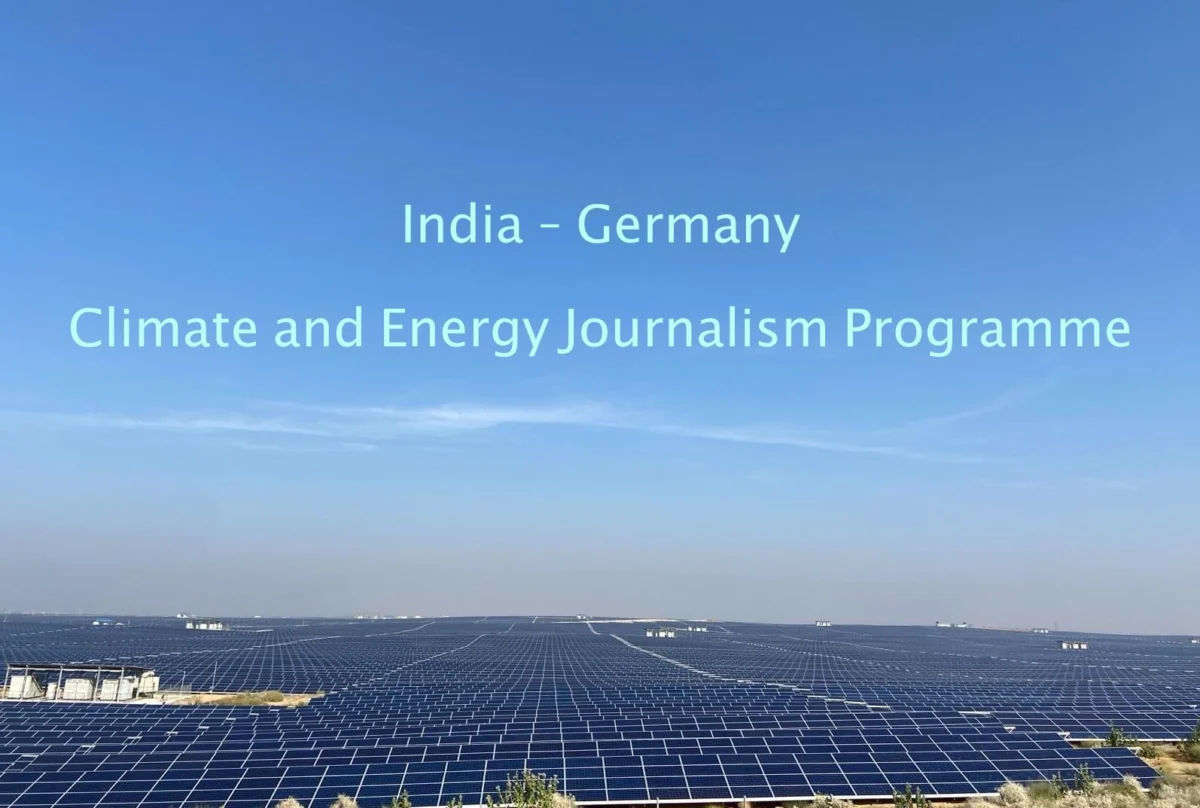
The program’s focus is visually represented by projects like the Bhadla Solar Park in Rajasthan. As one of the largest solar farms in the world, Bhadla stands as a testament to India’s capacity to scale renewables rapidly. However, the success of such projects relies on complex global supply chains—chains that Germany, with its advanced manufacturing capabilities, is increasingly looking to integrate with.
Economic and Demographic Shifts
- Renewable Targets: India has committed to an ambitious goal of 500 GW of non-fossil energy capacity by 2030.
- Green Hydrogen: Germany, aiming to become carbon-neutral by 2045, has identified India as a key partner for the importation of green hydrogen and derivatives, viewing the South Asian giant as a potential "energy hub" for Europe.
- Workforce Integration: Demographic data suggests that while Germany faces a shrinking, aging workforce, India possesses a demographic dividend of young, technically skilled workers. The "Green Skills" partnership seeks to streamline the migration of these professionals, creating a symbiotic labor market.
Official Responses and Strategic Rationale
The leadership of the partner organizations has been clear regarding the intent of the program. Representatives from the Heinrich Böll Foundation have frequently noted that "climate policy is no longer an isolated domestic issue; it is a transnational imperative."
The German Perspective
For Berlin, the partnership is a hedge against energy insecurity. By aligning with India, Germany aims to diversify its supply chains for critical minerals such as lithium, cobalt, and rare earth elements, which are essential for the production of electric vehicles and wind turbines. The German diplomatic corps has consistently praised the collaborative efforts as a "gold standard" for North-South cooperation.
The Indian Perspective
For New Delhi, the partnership represents a bridge to advanced technology and capital. India’s focus remains on the "Just Transition"—ensuring that the shift away from coal-based power does not destabilize the economy or leave millions of workers behind. Indian officials have emphasized that the partnership must focus on "affordable technology transfer" rather than just the importation of finished goods.
Implications: Why Journalism Matters
The implications of this program extend far beyond the 14 journalists who will receive funding. By fostering a deeper understanding of the Indo-German partnership, the initiative addresses three critical areas:
1. Combating Misinformation
Climate change reporting is often susceptible to nationalistic narratives that ignore the global nature of carbon emissions. By requiring cross-border collaboration, the program forces participants to confront the perspectives of the "other side." An Indian journalist reporting on the impact of a solar park must now consider how that energy is being framed for a German audience, and vice versa.
2. Shaping Policy Discourse
Journalists serve as the bridge between bureaucratic agreements and public perception. By training a specialized cadre of reporters, the program ensures that the details of the Green and Sustainable Development Partnership—often hidden in dense policy papers—are translated into accessible, impactful stories. This, in turn, keeps governments accountable to the ambitious promises they make in high-level meetings.
3. A Model for Future Cooperation
The collaborative nature of this fellowship could serve as a blueprint for other nations. If successful, the model of joint training and cross-border reporting grants may be replicated in other regional partnerships, such as those between the EU and the ASEAN bloc or within the Global South.
Conclusion: The Road Ahead
As the world watches the Indo-German partnership unfold, the role of the media becomes increasingly vital. The transition to a green economy is not a linear progression; it is a complex, often messy, and deeply political journey.
The journalists selected for this program are tasked with a difficult but essential mission: to document the friction and the progress of this transformation. They will explore how climate policy affects the livelihoods of farmers in Rajasthan, the industrial output of factories in Bavaria, and the geopolitical standing of both nations on the global stage.
While the application window has closed, the output of these 14 fellows will soon emerge, offering a fresh, binational lens on one of the most consequential partnerships of the 21st century. Through their reporting, the global community will gain a clearer view of what it means to build a green future—not in isolation, but in concert. As the climate clock continues to tick, such collaborations are no longer a luxury; they are the fundamental mechanism through which the world will understand and navigate the energy transition.
