


For decades, American motorists have been living in a state of automotive arrested development when it comes to headlight technology. While European and Asian drivers have enjoyed the benefits of adaptive lighting systems—technology that actively shapes beams to maximize visibility while preventing glare—U.S. drivers have been largely restricted to the binary world of high beams and low beams.
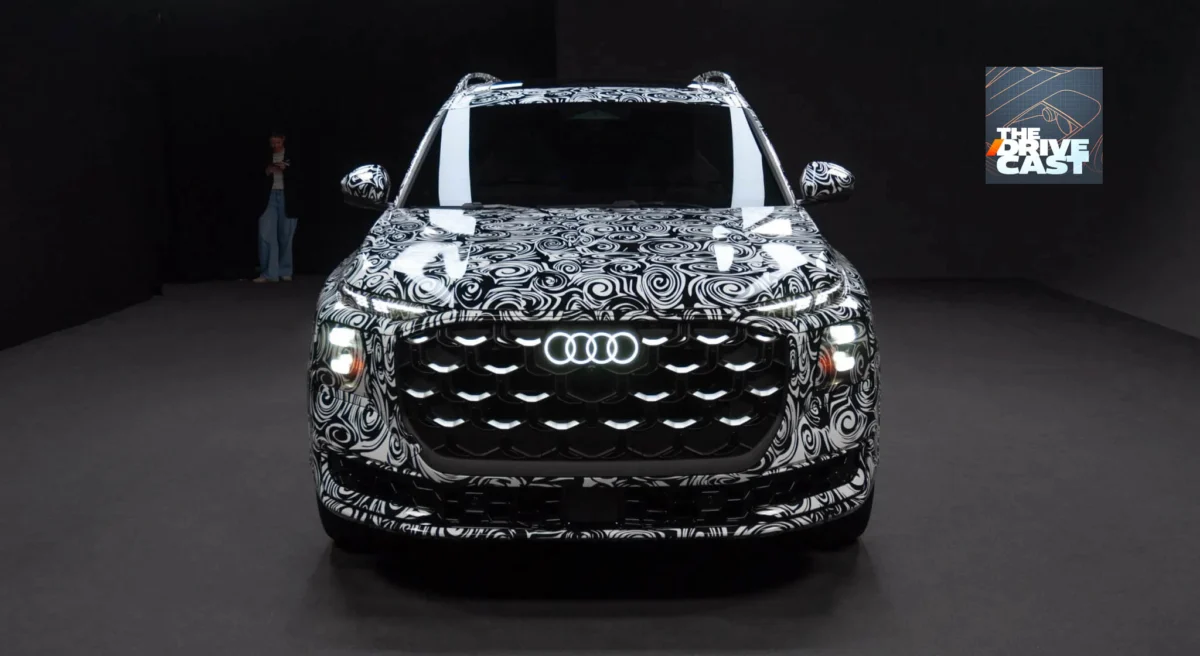
That era of stagnation is finally drawing to a close. With the imminent arrival of the 2027 Audi Q7 and Q9, the American automotive landscape is poised to embrace "Digital Matrix" LED lighting. This transition, discussed in depth on the latest episode of The Drivecast, marks a significant shift in how vehicles communicate with the road and other drivers, promising to redefine safety standards for night driving.
The Regulatory Logjam: A Decade Behind
To understand why U.S. headlights have lagged behind the rest of the world, one must look at the regulatory framework. For years, the National Highway Traffic Safety Administration (NHTSA) adhered to outdated, rigid standards that essentially codified 1980s-era lighting philosophy. While Europe moved toward performance-based regulations that embraced solid-state lighting and adaptive software, the U.S. remained locked in a prescriptive regulatory cycle.
"The rest of the world uses the UN safety standards, and the U.S. devises its own," explains Daniel Stern, a renowned vehicle lighting expert and Chief Editor of Driving Vision News. "We live on a regulatory island."
The turning point arrived in 2021 with the passage of the Infrastructure Investment and Jobs Act (H.R. 3684). This landmark legislation finally mandated that the U.S. government modernize its lighting regulations to allow for Adaptive Driving Beam (ADB) systems. However, as industry experts point out, the lag between a legislative change and a showroom-ready vehicle is substantial. Even with the green light from regulators, automakers required years to develop, test, and integrate these complex hardware and software systems into the U.S. market.
Chronology of a Lighting Revolution
The journey to modern headlights has been a slow climb, characterized by incremental breakthroughs:
- 2006–2012: Solid-state lighting (LEDs) enters the automotive space, initially met with skepticism regarding reliability. Dr. Michael Kruppa, Head of Exterior Lighting for Audi AG, notes that early efforts focused on convincing the industry that LEDs could survive the harsh environment of an exterior car component.
- 2013: Audi launches the A8 with advanced lighting systems in Europe, setting a benchmark for what was possible with matrix lighting.
- 2021: The U.S. Infrastructure Act is signed into law, providing the legal framework for adaptive headlights in America.
- 2024: Rivian becomes one of the first manufacturers to bring fully functional matrix lighting to the U.S. market with its second-generation R1 platform.
- Late 2026/2027: Audi introduces the Q7 and Q9 in the U.S. market, featuring their proprietary Digital Matrix LED technology, marking a significant milestone for legacy automakers adopting the tech stateside.
The Philosophy of "The Light Tunnel"
A key takeaway from the industry experts is that not all adaptive systems are created equal. As Dr. Kruppa explains, the goal of Audi’s system is "premium impression"—a smooth, theater-like transition that minimizes driver fatigue.
"We are not so much into the ‘click-clack’ [of rapidly switching lights]," Kruppa notes. "We want to provide light when you don’t have the active system… fulfilling other regulations… not only loving the technology because you can do it, but really understanding what is your contribution to safety."
This "light tunnel" concept is the cornerstone of modern adaptive systems. By using high-resolution cameras and sophisticated software, the vehicle can identify oncoming traffic and carve out a "dark" space in the light distribution, effectively keeping high-beam intensity on the surrounding road while shielding the eyes of other drivers.
However, the U.S. implementation of this technology faces unique hurdles. Unlike European standards, which encourage the smallest possible "tunnel" to maximize visibility, U.S. regulations currently mandate a larger shadow area, which experts like Stern argue artificially limits the system’s effectiveness.
Expert Analysis: Safety vs. Novelty
While the safety implications of ADB are clear—improved reaction times to hazards in ditches, better visibility of pedestrians, and reduced glare—there is a debate regarding the implementation.
Daniel Stern highlights a concern that many enthusiasts share: the tendency for lighting to become "the new chrome." In the 1950s, manufacturers used tail fins and chrome to express design; today, they use lighting animations. While impressive, Stern warns that distraction is a real factor. "I’m not going to sit here and say the Rivian system is poopy… but I would rather have smoothly morphing tunnels than jumping ones."
From a safety perspective, the consensus is that the technology is a massive improvement over traditional low beams, which have been "inadequate for the tasks we ask of them" for over a century. By decoupling the conflict between "seeing" and "glaring," ADB offers the most significant leap in night-driving safety since the invention of the headlight itself.
The Future: Democratization or Premium Feature?
The critical question remains: when will this technology reach the average commuter? Historically, features like anti-lock brakes and stability control began as luxury-segment staples before trickling down to high-volume vehicles like the Toyota Corolla.
Industry experts are cautious about predicting a rapid democratization of ADB in the United States. Because U.S. regulations require significant hardware modifications compared to the European versions of the same vehicles, the cost of compliance remains high. For the time being, these systems will likely remain the province of premium models like the Audi Q7 and the Rivian R1 platform.
"I have a hard time seeing how adaptive driving beam as implemented in the United States will make that list [of rapid democratization] anytime soon," says Stern. "It’s going to remain the province of really cool, really expensive cars in the United States."
Conclusion
The arrival of Digital Matrix LED lighting in the United States is more than just a technological curiosity; it is the correction of a long-standing regulatory imbalance. While the "light tunnel" is currently reserved for the affluent, the successful deployment of these systems by Audi and Rivian signals a permanent change in expectations. As the technology matures and regulatory requirements potentially align more closely with global standards, the hope is that the safety benefits of adaptive lighting will eventually illuminate roads for everyone, not just those at the top of the price bracket.
