




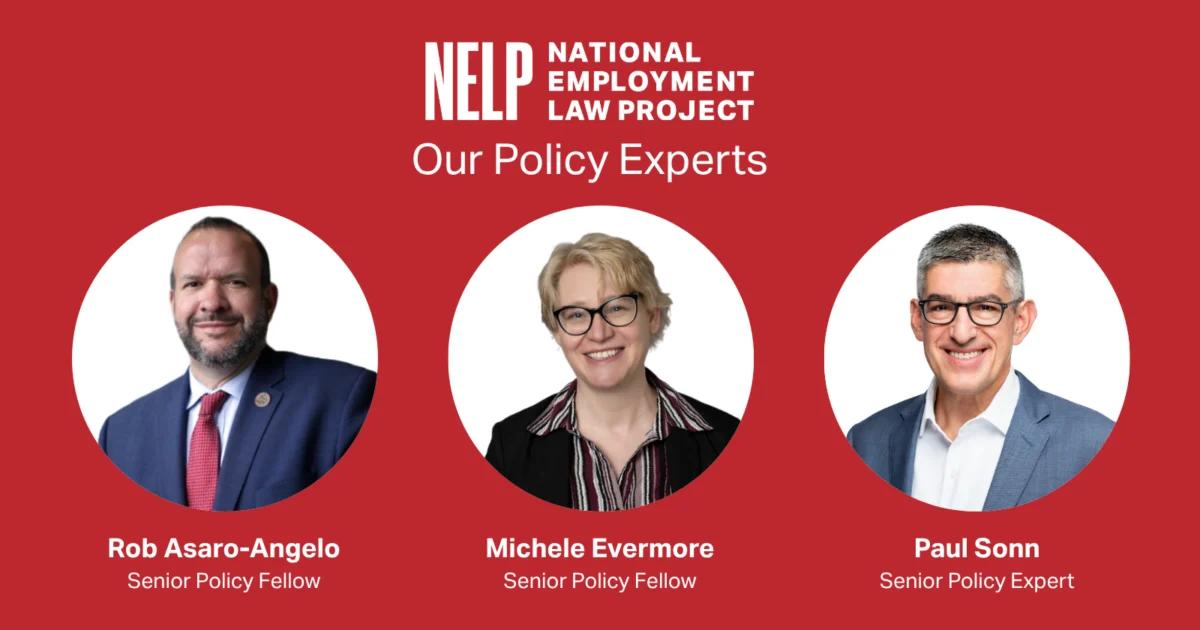
NEW YORK — In a move designed to reshape the landscape of American labor policy for the late 2020s, the National Employment Law Project (NELP) announced today the appointment of three high-profile labor experts to senior leadership roles. As the nation grapples with rapid technological shifts, the rise of artificial intelligence in the workplace, and evolving economic pressures, NELP is positioning itself as the primary architect of a new generation of worker protections.
The appointments—Rob Asaro-Angelo, Michele Evermore, and Paul Sonn—represent a deliberate aggregation of talent from the highest levels of state and federal government, as well as long-standing advocacy expertise. Under the leadership of NELP President & CEO Rebecca Dixon, this expanded team is tasked with modernizing the social safety net and establishing more robust enforcement mechanisms to combat wage theft and labor exploitation.
The Strategic Imperative: Why Now?
The labor market is currently undergoing its most significant transformation since the industrial revolution. The integration of AI into sectors ranging from logistics to creative arts has created a precarious environment for workers. NELP’s strategic pivot is focused on "future-proofing" the American worker. By prioritizing research-backed policy innovation, the organization aims to move beyond traditional advocacy and into the realm of systemic, legislative reform.
"We are thrilled to have such extraordinary leaders as Rob, Michele, and Paul taking on these significant new roles for NELP," said Rebecca Dixon. "Among the nation’s most renowned worker advocates, each is an accomplished architect of both visionary policies and winning campaigns. Together, they will be the nucleus of a team that advances transformative policies for workers across the country."
Meet the New Leadership: A Trio of Policy Architects
The appointments reflect a multifaceted approach to worker rights: enforcement, social insurance, and wage stability.
1. Rob Asaro-Angelo: Championing Worker-First Protections
As the new Senior Policy Fellow for Worker-First Protections, Rob Asaro-Angelo brings a wealth of executive experience from the state level. Serving as the Commissioner of the New Jersey Department of Labor and Workforce Development (NJDOL) from 2018 to 2026, Asaro-Angelo oversaw a period of unprecedented policy expansion.
His tenure in New Jersey saw the successful implementation of a $15 minimum wage, earned sick leave, and the enactment of a "Temporary Workers’ Bill of Rights." At NELP, he will pivot his focus toward strengthening state-level enforcement capacity. Asaro-Angelo’s mandate includes tackling wage theft and developing administrative innovations that allow state agencies to act as more effective watchdogs against employer violations.
2. Michele Evermore: Modernizing the Social Safety Net
The pandemic exposed the cracks in the American Unemployment Insurance (UI) system, leading to widespread administrative failure and delays in getting aid to those who needed it most. Michele Evermore, the new Senior Policy Fellow for Economic Security and Worker Transitions, is returning to NELP to address these systemic failures.
Evermore’s resume includes a pivotal role at the U.S. Department of Labor, where she served as Deputy Director for Policy in the Office of Unemployment Insurance Modernization during the Biden administration. Her expertise—honed further as a senior fellow at The Century Foundation—will be critical as NELP pushes to build a UI system that is not only robust during economic crises but also adaptive to the frequent job transitions characteristic of the modern AI-driven economy.
3. Paul Sonn: The Architect of Wage Policy
As the Senior Policy Expert for Wages and Affordability, Paul Sonn will continue his long-standing work with NELP, now in a more focused capacity. A veteran of the "Fight for $15," Sonn has been instrumental in the design and defense of municipal and state minimum wage laws across the United States.
Sonn’s focus is expanding beyond simple hourly rates to include the broader umbrella of "affordability policy." This includes developing "just cause" job protections, which safeguard workers from arbitrary termination, and creating legislative guardrails to manage the impact of AI on job security. His deep experience as the director of the NELP Action Fund makes him uniquely qualified to bridge the gap between policy design and political mobilization.
Chronology of Influence: NELP’s Evolution
Since its founding in 1969, NELP has moved from a legal aid-focused organization to a national policy powerhouse.
- 1969–1990s: Establishing a baseline. NELP focused primarily on litigating for the rights of low-wage workers and ensuring access to the legal system.
- 2000s–2015: The "Living Wage" era. NELP began to focus on state and local policy, helping to launch the first municipal minimum wage campaigns that would eventually lead to the national conversation around a $15 minimum wage.
- 2016–2024: Broadening the scope. The organization expanded its mandate to include unemployment insurance, workplace safety, and the rights of gig workers.
- 2025–Present: The "Next Generation" shift. With the new appointments, NELP is formalizing its focus on AI-driven job displacement and the modernization of labor standards to meet the technological realities of the late 2020s.
Supporting Data: The Impact of Advocacy
The importance of organizations like NELP cannot be overstated when viewed through the lens of economic impact. Over the last decade alone, NELP’s policy victories have affected an estimated 100 million workers and their families.
Data from the Economic Policy Institute and NELP’s own research suggests that when state-level minimum wage laws are enacted, local economies see a boost in consumer spending without the predicted negative impacts on employment levels. Furthermore, the expansion of Unemployment Insurance during the pandemic is credited with preventing millions of households from falling into extreme poverty, reinforcing Evermore’s argument that a modernized UI system is a primary tool for national economic stabilization.
Implications: The Road Ahead
The appointment of these three leaders signals that NELP is preparing for a period of intense legislative activity. The primary implications for the American workforce include:
Combatting the "AI Displacement" Narrative
One of the most pressing challenges for the new leadership team will be the intersection of AI and labor rights. The team is expected to push for policies that require transparency in algorithmic management—ensuring that workers are not unfairly monitored, rated, or terminated by automated systems.
A Renewed Focus on State Enforcement
While national legislation remains difficult to pass in a polarized climate, the strategy outlined by Asaro-Angelo focuses on the "laboratory of the states." By providing state labor departments with better tools for enforcement, NELP aims to create a "bottom-up" standard of excellence that forces corporate compliance across regional markets.
Strengthening the Social Contract
Evermore’s work on social insurance will likely emphasize the need for "portable benefits." As the labor market shifts toward more project-based and contract-based work, the traditional link between employment and benefits (health insurance, retirement, unemployment) is breaking down. NELP’s new leadership will likely advocate for a decoupled benefits system that stays with the worker, rather than the job.
Conclusion
The National Employment Law Project’s decision to bring in such high-caliber talent is a clear indication that the organization is not content to wait for federal action. By synthesizing expertise in enforcement, UI modernization, and wage strategy, NELP is building a comprehensive framework for the future of work.
As Rebecca Dixon noted, these leaders are the "nucleus" of a broader team, but their influence will be felt far beyond the organization’s walls. Whether through the halls of state capitols or the administrative offices of the Department of Labor, the work of Asaro-Angelo, Evermore, and Sonn will define the standard of living for the American worker for years to come. For an economy that is increasingly automated and volatile, the focus on "job quality" and "worker protections" is not just a moral choice—it is an economic necessity.
About NELP
Founded in 1969, the nonprofit National Employment Law Project (NELP) is a leading advocacy organization with the mission to build a just and inclusive economy where all workers have expansive rights and thrive in good jobs. Together with local, state, and national partners, NELP advances its mission through transformative legal and policy solutions, research, capacity building, and communications. For more information, visit www.nelp.org.
