



As artificial intelligence begins to serve as the new digital concierge, the fundamental question for the global hospitality industry has shifted: How do you optimize for a machine that thinks, recommends, and predicts?
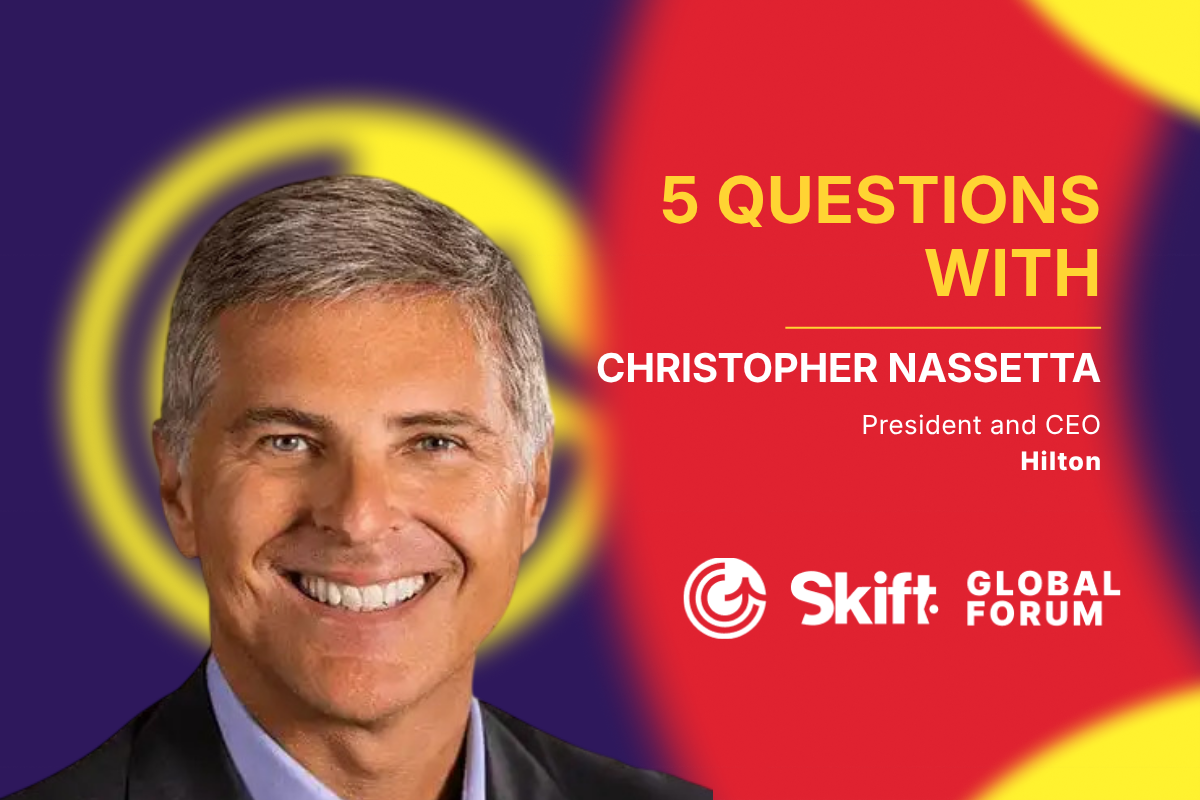
For Christopher Nassetta, President and CEO of Hilton, the answer is deceptively simple, even as the technological landscape undergoes a tectonic shift. Despite the rise of generative AI, predictive algorithms, and automated search queries, the core tenets of the hospitality business remain unchanged. According to Nassetta, reliability, a human-centric culture, and the pursuit of a lifelong guest relationship remain the primary drivers of success. As Hilton prepares for the Skift Global Forum in New York City, Nassetta is clarifying how the world’s largest hotelier is balancing the cold precision of silicon with the warm touch of human service.
The New Gatekeepers: Navigating AI-Driven Discovery
The modern traveler’s journey has moved beyond the simple search engine. Today, AI models are increasingly acting as curators, effectively deciding which brands earn visibility and which fade into the background of a search result.
"Ultimately, earning a place in an AI recommendation comes down to the same thing that has always earned guest loyalty," says Nassetta. "It is about being relevant to the traveler and delivering the industry’s most reliable and friendly stays."
The Feedback Loop
In the digital age, the "recommendation engine" is essentially a mirror of real-world performance. When Hilton delivers a superior experience, it generates positive reviews, social media engagement, and high-quality data points that feed back into the AI models. These algorithms prioritize reliability because they are programmed to optimize for user satisfaction. Thus, the traditional KPIs of the hospitality industry—clean rooms, friendly staff, and seamless check-ins—have become the most vital inputs for modern SEO and AI visibility.
Investing in Proprietary Intelligence
Hilton is not merely waiting for third-party AI to favor them; they are actively building their own ecosystem. The company’s "Hilton AI Planner" is designed to act as an internal engine, synthesizing property-specific content with local destination data. By providing personalized, curated recommendations directly to the guest, Hilton aims to own the relationship from the moment of inspiration through to the final booking. This digital advantage is a result of a multi-year strategy to consolidate their technology platform, ensuring that they can innovate at scale across 28 distinct brands.
The Evolution of the Guest Relationship: From Transaction to Lifecycle
Historically, the hotel business was transactional. A guest would book a room, stay, and depart—a series of isolated events. Today, Nassetta views the relationship as a long-term, intentional engagement.
The Loyalty Engine
The strength of the Hilton Honors platform serves as the connective thread across the company’s vast portfolio. By encouraging guests to engage with the brand for family vacations, business travel, and milestone celebrations, Hilton is shifting the paradigm from "a guest for a night" to "a guest for a lifetime."
Culture as a Business Strategy
Nassetta emphasizes that the secret to maintaining this relationship is deeply rooted in internal culture. He argues that the quality of the guest experience is directly proportional to the quality of the employee experience. "Being the best place to work enables us to be the best place to stay," he asserts. When Hilton’s staff feels a sense of belonging and purpose, that sentiment is inevitably translated into the hospitality provided to guests, creating a cycle of loyalty that no algorithm can replicate.
Supporting Data: A Market in Transition
While the industry often fixates on the resilience of the luxury segment, current internal data from Hilton reveals a more nuanced and encouraging trend: the robust return of the mid-market business traveler.
The Rise of the SMB Traveler
One of the most significant shifts identified by Hilton is the sustained strength of midweek business travel, particularly among small and medium-sized businesses (SMBs). For years, the narrative in travel was dominated by high-end leisure and luxury growth. However, the data now shows that the "engine" of the economy—small businesses—is back on the road.
This broadening of demand across all market segments suggests a "healthier and more balanced" travel environment. For a portfolio that spans 28 brands, this is a strategic advantage. It ensures that Hilton is not over-exposed to a single segment, but rather positioned to capture growth across the midscale, upper-midscale, and luxury tiers.
The Strategic Architecture of a 28-Brand Portfolio
The customer journey is no longer linear; it is fragmented, erratic, and highly personalized. To address this, Hilton has built its portfolio to meet guests exactly where they are.
Why Fragmentation Requires Curation
When a traveler chooses a destination, the purpose of their trip changes their needs. A business traveler may require a high-efficiency urban hotel, while a family might require an expansive, amenity-rich resort. By offering 28 brands, Hilton provides a "menu" that covers every price point and travel occasion. The complexity of this portfolio is managed by a centralized loyalty strategy, ensuring that while the brands differ in character, the standard of service remains a constant, recognizable thread.
The Role of Travel as a Global Unifier
Beyond the bottom line, Nassetta advocates for a perspective that is often overlooked in boardrooms: the role of travel as a bridge for global understanding. Drawing on the legacy of Conrad Hilton, who viewed hospitality as a "force for good," Nassetta emphasizes that in an increasingly divided world, the simple act of human connection is an essential service.
Moments that Matter
From the global influx of visitors during the World Cup to the anticipation of the 2028 Los Angeles Olympics, Hilton sees itself as the facilitator of cross-cultural interaction. Whether it is a conversation in a hotel lobby or a welcome from a staff member, these interactions provide the human "inputs" that data models can quantify but never fully understand. These experiences are the foundation of what makes travel a transformative human endeavor rather than just a commodity.
Implications for the Future
As the travel industry moves toward 2026 and beyond, the implications of Nassetta’s strategy are clear:
- Tech-Enabled Humanism: The successful hotel company of the future will be one that uses AI to remove friction, but preserves human interaction as the primary differentiator.
- Portfolio Diversification: Relying on a single brand or a narrow demographic is a liability in a volatile market. The ability to pivot between business and leisure, and between midscale and luxury, is the new standard for stability.
- The Feedback Loop of Excellence: Brands must recognize that digital discoverability is a lagging indicator of physical performance. To rank high in an AI-driven future, one must excel in the physical reality of the present.
As the industry gathers at the Skift Global Forum in New York, the conversation will undoubtedly focus on the intersection of innovation and tradition. For Hilton, the message is one of confidence: as long as the world remains curious and connected, the fundamentals of hospitality will endure, even as the tools we use to find one another continue to evolve.
