



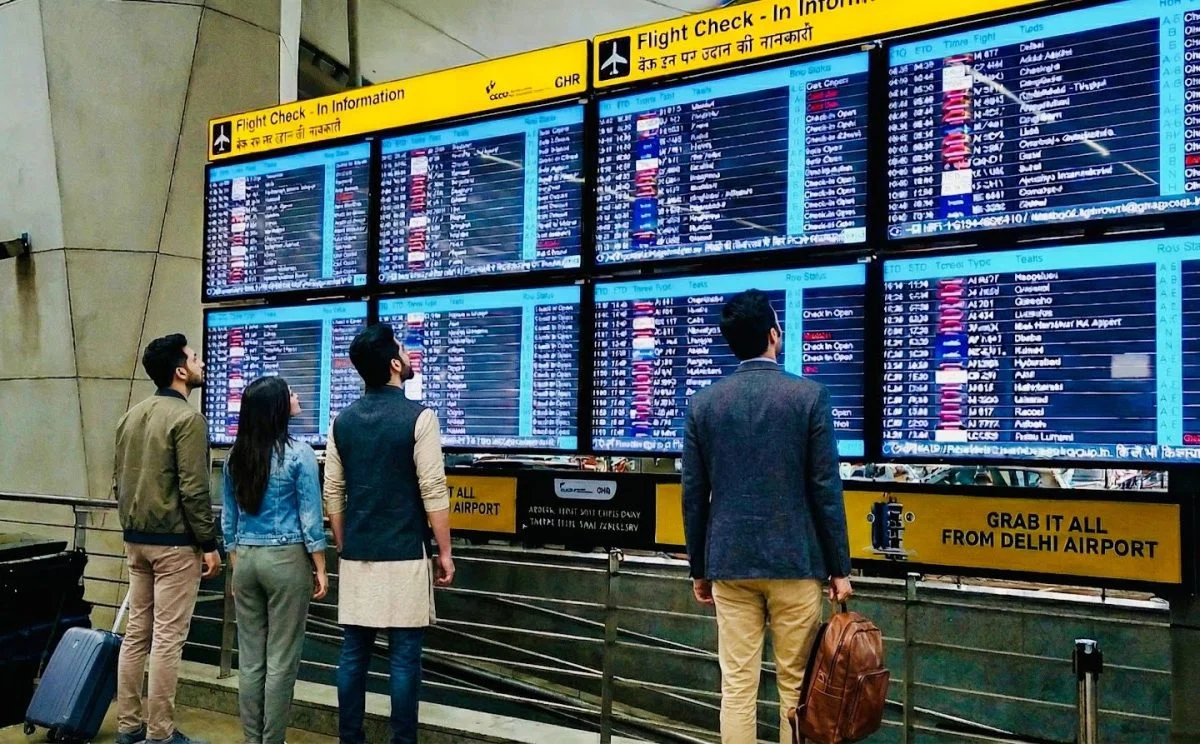
The aviation landscape in India, which had been experiencing a post-pandemic renaissance, faced a harsh reality check in the first full quarter following the outbreak of the Iran conflict. Between April and June 2026, the country’s international aviation network suffered a contraction that exposed the deep, structural vulnerabilities of India’s dependence on Middle Eastern airspace and transit hubs. As geopolitical instability shuttered critical corridors, the ripple effects were felt from the bustling terminals of Mumbai to the corporate boardrooms of global airline alliances.
Main Facts: The Scope of the Contraction
According to the latest data released by the Directorate General of Civil Aviation (DGCA), international passenger traffic to and from India plummeted by approximately 9% during the April-June 2026 quarter, totaling 17.2 million passengers. While a 9% decline might seem manageable in isolation, the granular data reveals a far more alarming trend: Indian carriers are bearing the brunt of the instability.
Domestic airlines—including heavyweights like Air India, IndiGo, and Akasa Air—reported a staggering 27% decline in international passenger traffic, dropping to 6.4 million. This stark disparity suggests that while foreign carriers with more diversified route maps or different operational strategies managed to weather the storm, Indian operators—heavily tethered to the Gulf—found themselves paralyzed by airspace closures and the subsequent operational complexities.
The conflict has transformed the Middle East from a reliable transit engine into a strategic bottleneck. For India, the Gulf is not merely a regional destination; it is the central nervous system of its international connectivity. With Dubai, Doha, Abu Dhabi, and Muscat serving as the primary gateways for the Indian diaspora and essential transit points for travel to Europe, Africa, and North America, the closure of these skies has effectively severed the primary arteries of India’s global reach.
Chronology of the Crisis: From Stability to Stagnation
The crisis did not emerge in a vacuum. To understand the current state of Indian aviation, one must examine the timeline of the disruption:
- Pre-April 2026: India’s aviation sector was on a growth trajectory, with international seat capacity reaching record highs. Airlines were expanding fleets, betting on the "Middle East Bridge" to facilitate the growing demand for Western travel.
- The Onset of Conflict: As hostilities between Iran and regional adversaries escalated, the imposition of "No-Fly Zones" and restricted airspace corridors forced airlines to execute long, costly detours.
- April 2026 (The First Month): As the conflict solidified into a regional war, the DGCA reported immediate cancellations. Carriers struggled with crew scheduling, fuel burn efficiency, and overflight permit cancellations.
- May 2026: The impact began to manifest in passenger booking data. Travelers, wary of flight cancellations and prolonged transit times, began delaying or canceling long-haul international travel.
- June 2026: By the end of the quarter, the data confirmed a systemic downturn. The cumulative effect of increased operational costs and decreased consumer confidence led to the sharp 9% decline in total traffic and the disproportionate 27% hit to Indian carriers.
Supporting Data: Analyzing the Disparity
The discrepancy between the 9% total market decline and the 27% decline for Indian carriers is the focal point of the current debate. Several factors underpin this data:
- Hub Dependence: Indian carriers have aggressively expanded their "hub-and-spoke" models through Middle Eastern partners. When those hubs are affected by airspace restrictions, the entire network efficiency collapses.
- Fleet Composition: Many Indian carriers rely on narrow-body aircraft for shorter international hops. These aircraft lack the range to perform the extreme detours required to bypass conflict zones, forcing cancellations that wide-body operators—who often fly non-stop to Europe or the US—could sometimes circumvent.
- Revenue Yields: As flight times increased due to detours, fuel consumption skyrocketed. Indian airlines, operating on tighter margins than their Gulf counterparts, were forced to pass these costs onto consumers, leading to a sharp drop in demand as ticket prices became prohibitive.
The UAE, India’s largest aviation partner, remains the bellwether. The traffic between the two nations, which historically accounted for the highest volume of Indian international travel, saw a precipitous decline as flight paths were forced to pivot away from Iranian and Iraqi airspace.
Official Responses: Navigating the Policy Vacuum
The DGCA and the Ministry of Civil Aviation have been in a state of constant consultation with airlines. Official statements have highlighted the government’s commitment to "airspace safety," but industry insiders suggest there is a growing sense of urgency to diversify India’s reach.
"The government is actively exploring the opening of new, secondary corridors," a senior DGCA official noted in a recent press briefing. However, the regulatory body remains constrained by the realities of international law and the unpredictability of the conflict.
Meanwhile, airline CEOs have been more vocal about the need for state intervention. Leaders from the private sector have called for temporary fuel tax waivers and landing fee reductions to mitigate the losses incurred during the crisis. There is also an ongoing discussion regarding the "Open Skies" policy—whether India should grant more direct traffic rights to non-Gulf carriers to offset the loss of connectivity, a move that is currently being met with resistance from domestic incumbents fearing market share dilution.
Implications: The Long-Term Strategic Shift
The current crisis has forced a paradigm shift in how India views its aviation strategy. The implications are profound and will likely dictate industry policy for the next decade:
1. The End of "Gulf-First" Strategy
India can no longer afford to treat the Middle East as its sole gateway to the world. The volatility of the region has exposed the fragility of a network that lacks redundancy. We are likely to see a renewed push for direct, long-haul, ultra-long-haul flights to North America and Europe, bypassing the Gulf entirely. While this requires massive capital expenditure on wide-body aircraft, the security of connectivity may now outweigh the cost.
2. Geopolitical Diversification
There is a growing impetus for Indian carriers to strengthen partnerships with airlines in Southeast Asia (Singapore, Bangkok) and potentially Central Asia as alternative transit hubs. By diversifying the "spokes" of the network, Indian aviation can insulate itself from regional conflicts in any single theater.
3. Impact on the Diaspora
The Indian diaspora is arguably the most affected stakeholder. With the reduction in flights, the cost of visiting home has surged, and the reliability of travel has plummeted. This has a direct economic impact on remittances and the broader cultural ties between India and the global community.
4. Technological and Operational Resilience
Airlines are now re-evaluating their route-planning software and fuel hedging strategies. The crisis has proven that the ability to rapidly reroute and adapt to airspace closures is a competitive advantage. Carriers that invested in advanced flight-tracking and risk-mitigation AI have managed the crisis far better than those relying on traditional flight planning.
Conclusion: A Turning Point for Indian Aviation
The April-June 2026 quarter will likely be recorded as the moment India’s aviation sector realized it had outgrown its reliance on traditional hubs. While the 27% decline in domestic carrier traffic is a sobering statistic, it serves as a catalyst for a necessary evolution.
As the industry moves forward, the focus will inevitably shift from rapid expansion to resilient connectivity. The Middle East remains a vital partner, but the era of unquestioned reliance is over. For India to assert itself as a global aviation powerhouse, it must build a network that is as robust as its economy—a network capable of soaring above the clouds, regardless of the storms brewing below. The road to recovery will be paved with new partnerships, a more diverse fleet, and a strategic pivot toward direct, unencumbered access to the global stage.
