




Introduction
The humanitarian landscape in the occupied West Bank has reached a critical inflection point. In a sobering report released this August, Human Rights Watch (HRW) has formally accused Israeli authorities of actively facilitating and enabling a surge in settler violence that is systematically driving the forced displacement of Palestinian communities.
The report, which draws on extensive field investigations conducted between April and May 2026, paints a harrowing picture of life in the West Bank. It describes an environment where intimidation, physical abuse, property destruction, and lethal force have become normalized tools used to expand territorial control. According to HRW, this is not merely a collection of isolated incidents involving rogue actors; rather, it is a calculated strategy supported by government funding, legal immunity, and the direct complicity of the Israeli military.
Main Facts: A Pattern of Systematic Coercion
The findings published by HRW center on seven Palestinian communities that have been disproportionately affected by settler aggression. The data reveals a disturbing escalation in violence between March and April 2026, characterized by a broad spectrum of human rights abuses.
The Anatomy of Displacement
The violence reported is not limited to physical altercations. It encompasses a multifaceted strategy of economic and psychological warfare designed to make life untenable for Palestinian residents. Key tactics identified include:
- Lethal Violence: An alarming spike in killings, which HRW notes includes the deaths of children.
- Systemic Harassment: Frequent reports of sexual violence, arbitrary detention, arson, and the destruction of private property.
- Economic Strangulation: Armed settlers have systematically targeted the agricultural foundations of these communities, destroying livestock, ruining crops, and restricting access to vital water sources and grazing lands.
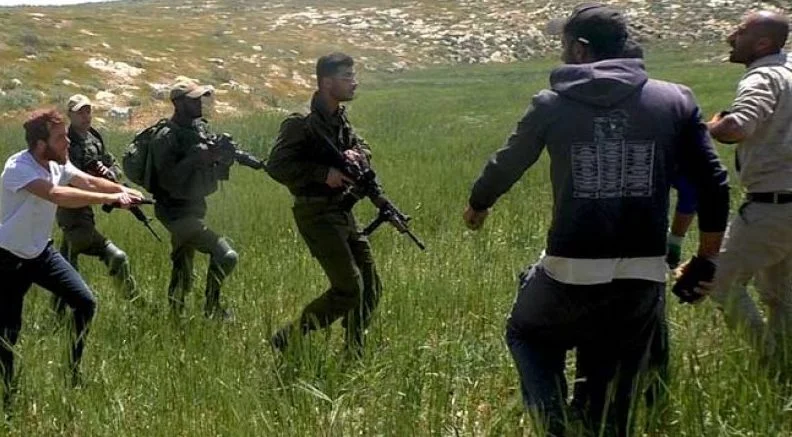
- Military Complicity: Perhaps most damning is the evidence of state involvement. HRW documented instances where armed settlers operated in coordination with Israeli army units. In numerous other cases, soldiers were reported to be physically present while settler violence unfolded, yet they consistently failed to intervene to protect Palestinian civilians.
Chronology of Escalation (2026)
The current crisis is the result of a long-term trajectory of settlement expansion, which has accelerated sharply throughout 2026.
- March 2026: The United Nations issues a landmark report highlighting an "unprecedented" surge in activity, documenting the establishment of 84 new illegal outposts within a single reporting period.
- April–May 2026: Human Rights Watch conducts intensive investigations across seven Palestinian communities, documenting the shift from sporadic violence to organized, state-backed campaigns of displacement.
- June 2026: Amnesty International releases an executive summary detailing the "ethnic cleansing" of Palestinians, citing specific incidents in locations like Zenuta, where settlers burned schools and contaminated farmland with sewage.
- June 2026: The UN publishes further findings regarding the systemic nature of human rights abuses, specifically noting threats of sexual violence against Palestinian women and girls.
- August 2026: Human Rights Watch issues its formal warning, linking the spike in violence directly to the policies and budgetary decisions of the Israeli government.
Supporting Data: The Economics of Occupation
The escalation of violence is supported by a robust financial and administrative infrastructure. The current Israeli administration has demonstrably prioritized the expansion of the settler movement over the protection of Palestinian human rights.
Financial Incentives
According to research by Amnesty International, the "Ministry of Settlement and National Missions" has seen its budget balloon by 122 percent under the current government. This fiscal prioritization has manifested in the direct allocation of 50 million shekels (approximately $16 million USD) specifically earmarked for "illegal settlement outposts."
The Regulatory Framework
Sarah Sanbar, Acting Israel and Palestine researcher at HRW, emphasizes that settlers are not acting in a vacuum. The state provides:
- Direct Armament: Distributing weapons to settler groups under the guise of "self-defense."
- Legal Cover: Ensuring that perpetrators of violence face little to no judicial accountability, thereby fostering a culture of impunity.
- Active Facilitation: Using military infrastructure to protect and advance the goals of those establishing illegal outposts.
As Sanbar succinctly stated: "The Israeli government and the settlers share the same goal of maximum land and minimum Palestinians, with the authorities not only failing to stop settler violence, but actively enabling it."
Official Responses and Global Reaction
The international community has begun to shift its tone as the evidence of state-sponsored displacement becomes impossible to ignore.
The UN Stance
United Nations bodies have been vocal in their condemnation. Reports from the Office of the High Commissioner for Human Rights (OHCHR) have repeatedly warned that the current trajectory of settler expansion is not only causing mass displacement but is also directly exacerbating the humanitarian catastrophe unfolding in Gaza and the wider region. The UN has categorized the forced eviction of civilians as a criminal offense, citing the 1974 Declaration on the Protection of Women and Children in Emergency and Armed Conflict.
HRW Recommendations for the International Community
In response to the deteriorating situation, Human Rights Watch has called for urgent, concrete actions from the international community, arguing that diplomatic statements are no longer sufficient. Their recommendations include:
- Targeted Sanctions: Imposing immediate travel bans and asset freezes on individuals and entities complicit in orchestrating settler violence.
- Arms Embargoes: Suspending all arms transfers to Israel, citing the clear risk that these weapons are being used to facilitate human rights abuses in the West Bank.
- Trade Restrictions: Implementing a ban on all trade with illegal settlements to ensure that international commerce does not inadvertently subsidize the displacement of Palestinians.
- Policy Review: Considering the suspension of preferential trade agreements with Israel until there is a demonstrable end to the state-sanctioned violence.
Implications: A Violation of International Law
The legal implications of these findings are profound. The forced displacement of a civilian population is a clear violation of international law.
Customary International Law
Under Rule 129 of customary international law, parties to a conflict are strictly prohibited from ordering the displacement of the civilian population. The actions being documented by HRW and Amnesty International constitute a breach of these fundamental tenets. By providing the legal and financial framework that allows for the systematic removal of Palestinians from their ancestral lands, the Israeli authorities are placing themselves in direct opposition to established humanitarian norms.
The Human Toll
Beyond the legal statutes, the implications for the Palestinian people are devastating. The loss of access to grazing land, water, and homes is creating a refugee crisis within the West Bank itself. The systematic destruction of classrooms and community infrastructure ensures that the trauma of this displacement will be felt for generations.
The term "ethnic cleansing," utilized by Amnesty International, underscores the gravity of the situation. It describes a policy that seeks to alter the demographic composition of the West Bank by creating conditions so hostile that the target population has no choice but to leave.
Conclusion: The Path Forward
The evidence provided by HRW, the UN, and Amnesty International points to a singular conclusion: the violence in the West Bank is not an accidental byproduct of regional tension; it is a policy-driven outcome.
As the international community grapples with the fallout of these revelations, the question remains whether the rhetoric of "human rights" will be backed by the enforcement of international law. Without immediate and significant pressure—including sanctions and the cessation of military support—the current cycle of violence and displacement is likely to intensify, leaving the prospect of a just and peaceful resolution further out of reach than ever before. The international community is now at a crossroads: to remain a passive observer to these developments or to uphold the rule of law through decisive and collective action.
