




By Editorial Staff
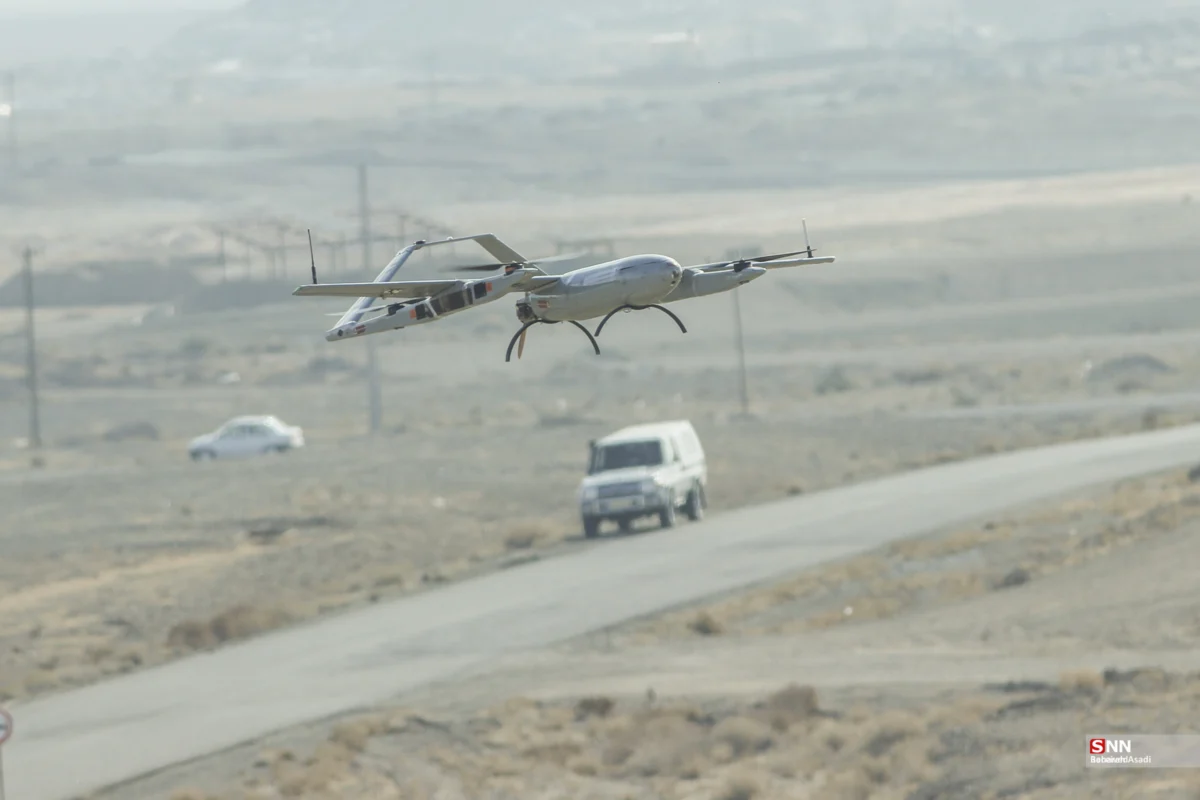
The character of modern warfare is undergoing a rapid, often invisible transformation. As technological advancements outpace international oversight, the battlefield has expanded from defined front lines into the very heart of civilian life. Tom Fletcher, the United Nations Under-Secretary-General for Humanitarian Affairs and Emergency Relief Coordinator, issued a sobering assessment this week, warning that the unchecked proliferation of drone warfare is not only destabilizing humanitarian aid operations but is systematically eroding the bedrock of international humanitarian law (IHL).
Speaking from the front lines of the crisis in Ukraine during World Humanitarian Day, Fletcher characterized the current state of conflict as one where "easily available means to kill are outstripping accountability." His remarks serve as a critical clarifier: regardless of the sophistication, autonomy, or remote nature of a weapon system, the prohibitions against targeting civilians and aid workers remain absolute under international law.
The Human Toll: Observations from the "Road of Death"
Fletcher’s visit to Ukraine included a harrowing journey along the route from Mykolaiv to Kherson—a stretch of road locals have grimly dubbed the "Road of Death." The moniker stems from the constant, pervasive threat of Russian drone strikes, which turn ordinary transit into a gamble with life.
During his two-day stay in Kherson, Fletcher witnessed firsthand the psychological and physical saturation of the city. The city is essentially under a constant, low-level siege where the sound of a buzzing motor acts as a harbinger of potential death. The humanitarian chief’s visits to local medical facilities revealed a grim statistical reality: at one hospital, nearly 70 percent of the wounded patients were identified as survivors of drone strikes.
"We are seeing a trend where the distance between the pilot and the victim is increasing," Fletcher noted in a video address posted to social media. "As that physical and psychological distance grows, the capacity for accountability and the pursuit of justice for these strikes seems to be receding into the horizon."
Chronology of a Shifting Battlefield
The evolution of drone warfare in Ukraine has been exponential since the full-scale invasion began in February 2022.
- February 2022: The conflict began with traditional artillery and missile engagements. Drones were primarily utilized for reconnaissance and localized surveillance.
- Late 2022 – 2023: Russia began the systematic deployment of "loitering munitions," specifically targeting Ukrainian energy infrastructure. This period marked the shift of drones from tactical assets to strategic terror weapons.
- 2024 – 2025: A rapid "arms race" in drone technology occurred. Both sides began manufacturing cheaper, more agile, and increasingly autonomous platforms. The front lines became saturated, and the use of First-Person View (FPV) drones became standard for targeting individual vehicles and infantry.
- July 2026: The UN Human Rights Monitoring Mission in Ukraine recorded a watershed moment in civilian harm. With 437 deaths and 2,610 injuries, July saw the highest monthly casualty rate since the initial months of the war. Drones, once a niche weapon, were now responsible for more than 25 percent of all civilian casualties.
Supporting Data: The Rising Statistical Threat
The data released by the UN confirms that the "drone-ification" of the war is not merely a qualitative change in military tactics, but a quantitative shift in civilian mortality.
According to the UN Human Rights Monitoring Mission in Ukraine (HRMMU), the surge in casualties in July 2026 highlights the lethality of modern unmanned systems. Missiles and drones combined accounted for 38 percent of total civilian harm. While conventional artillery remains deadly, drones possess a unique combination of attributes—low cost, high precision, and the ability to strike deep behind enemy lines—that make them a disproportionate contributor to non-combatant trauma.
Furthermore, the "democratization" of this technology means that the barrier to entry for causing mass casualties has plummeted. Unlike heavy artillery, which requires massive logistics and training, small, commercially available or modified drones can be deployed by a small team, making them difficult to track, intercept, or attribute to specific command structures.
Official Responses and the Legal Vacuum
The United Nations has been vocal about the need to reconcile modern weapon systems with existing legal frameworks. Fletcher’s insistence that IHL "must not change" is a direct response to the narrative that new technology necessitates a "new rulebook."
"Technology changes every week," Fletcher argued during his briefings in Ukraine. "But the Geneva Conventions do not. The prohibition against the targeting of non-combatants is not a suggestion; it is the fundamental requirement for the existence of a civilized international order."
However, the legal challenge is compounded by the issue of attribution. When a drone strike occurs, the remote nature of the operation allows state and non-state actors to maintain plausible deniability. The UN is increasingly concerned that this "accountability gap" will lead to a culture of impunity where civilian deaths are written off as "collateral damage" caused by technical errors rather than intentional violations of the laws of war.
Implications: A Global Crisis of Autonomy
The crisis in Ukraine is, according to Fletcher, a microcosm of a much larger, global trend. The proliferation of armed drones is fundamentally altering the nature of conflict in Sudan, Somalia, Gaza, Lebanon, and Colombia.
In Sudan, for instance, drones have emerged as a primary driver of civilian displacement and death, complicating an already fragile humanitarian corridor. In Gaza and Lebanon, the density of civilian populations combined with the use of precision drone strikes has led to repeated calls from the UN for increased oversight of autonomous and semi-autonomous systems.
The Role of Article 36
The UN is increasingly pointing toward Article 36 of the 1977 Additional Protocol I to the 1949 Geneva Conventions. This article mandates that when a state develops or acquires a new weapon, it must determine whether its use would, in some or all circumstances, be prohibited by international law.
The current consensus among human rights experts is that the world is failing this test. The rapid deployment of drones—particularly those utilizing AI-assisted targeting—is happening without the rigorous legal reviews that Article 36 demands.
The Path Forward: Accountability in the Age of Algorithms
As the international community grapples with the fallout of the Ukrainian conflict, the UN’s call to action is three-fold:
- Rigorous Legal Review: States must commit to transparent Article 36 reviews for all new drone technology, specifically addressing the risks of civilian harm in urban environments.
- Closing the Accountability Gap: International legal bodies must develop new protocols for forensic investigation of drone strikes. Because the "pilot" is often thousands of miles away, the focus must shift to command-level responsibility and the digital footprint of the weapon systems used.
- Protection of Humanitarian Spaces: There must be a redoubled effort to ensure that humanitarian corridors and medical facilities are treated as inviolable, even as the "battlefield" becomes increasingly blurred by remote-controlled combat.
In conclusion, the warning from Tom Fletcher is a clarifier for the 21st century: the technological revolution in warfare must not become an excuse for moral regression. If the international community fails to tether the development of drone warfare to the iron-clad principles of human rights, the "Road of Death" seen in Kherson may soon become a permanent feature of conflicts across the globe. The challenge is not just to regulate the drone, but to preserve the humanity of the society that survives it.
