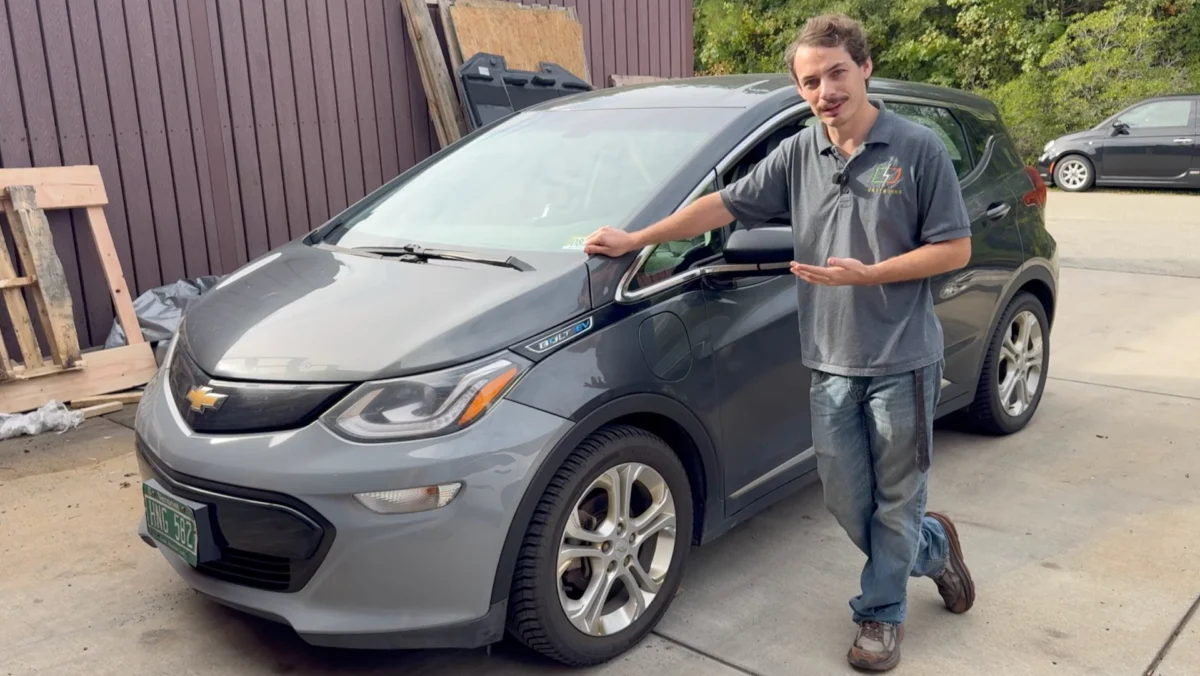




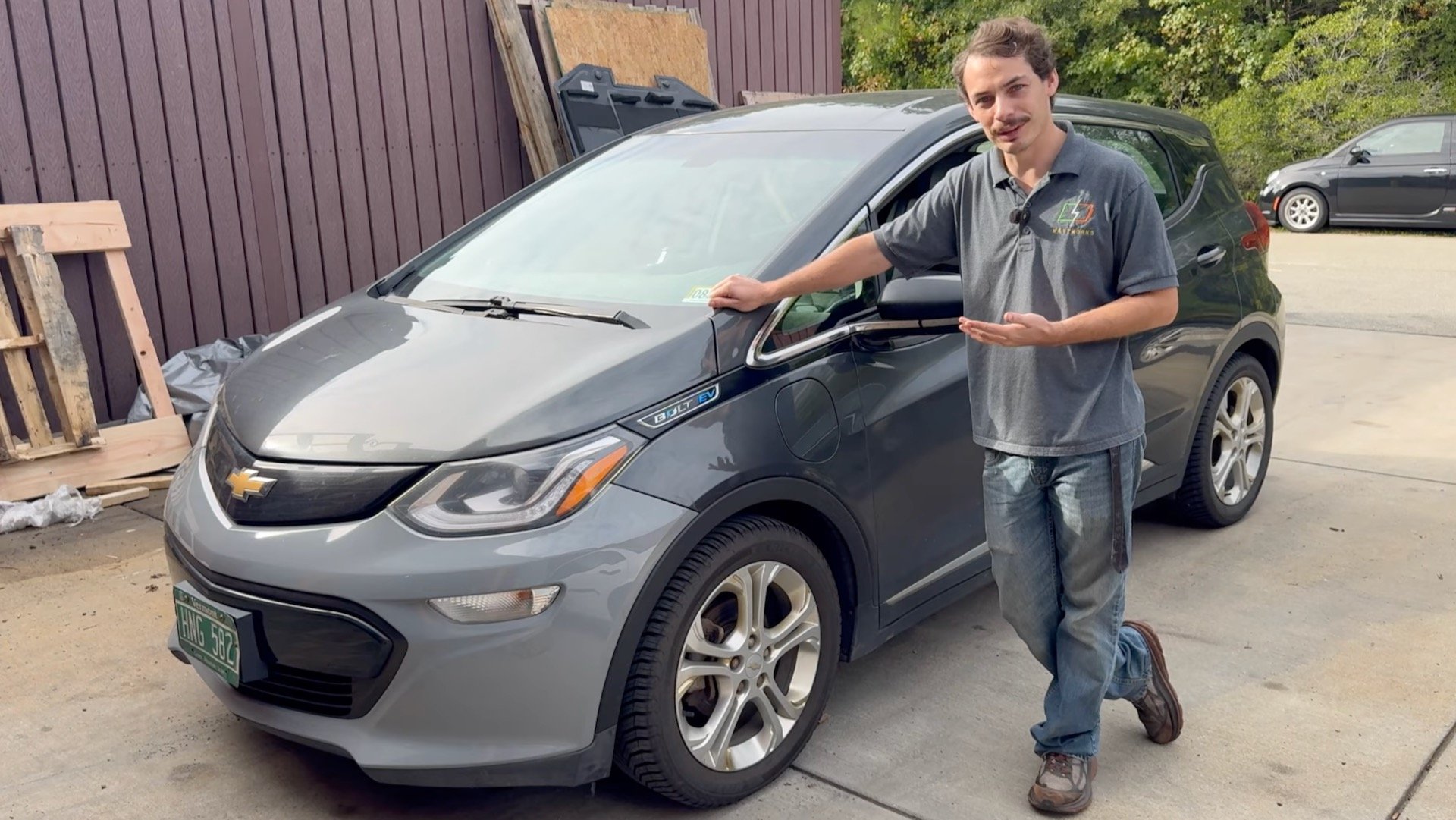
For years, a pervasive narrative has shadowed the electric vehicle (EV) market: the fear that battery degradation renders these machines "disposable" long before they reach the mileage milestones expected of traditional internal-combustion vehicles. However, a recent deep dive into the service life of a high-mileage 2019 Chevrolet Bolt EV suggests that the reality of long-term EV ownership is far more robust—and repairable—than skeptics often claim.
The vehicle in question, recently featured by the YouTube channel Out of Spec Renew, has clocked a staggering 471,616 miles. This isn’t merely a testament to the longevity of the car; it is a case study in how modern EVs, despite manufacturing hiccups, can be maintained and rejuvenated to serve well beyond the lifespan of the average passenger vehicle.
The Half-Million Mile Milestone: A Reality Check
When the 2019 Bolt EV rolled into the Out of Spec Renew garage, it didn’t look like a pampered garage queen. It bore the scars of a high-mileage life: a mismatched front bumper, minor abrasions on the rear, and the inevitable wear associated with a vehicle that has spent the better part of a decade on the open road.
Beyond the chassis, the car had required significant maintenance—suspension components, wheel bearings, and steering rack repairs—all of which are standard wear-and-tear items for any vehicle, regardless of whether it is powered by gasoline or lithium-ion cells. The presence of these mechanical repairs serves as a crucial reminder: an electric car is still a car. It possesses the same rolling mechanical architecture as a Toyota Camry or a Honda Civic, subject to the same physical stressors. The difference, and the subject of much debate, lies solely in the energy storage system.
A Chronology of the Battery Recall and Replacement
To understand how this specific vehicle reached such high mileage, one must examine the turbulent history of the Chevrolet Bolt’s battery program.
- 2017-2019: The initial production run of the Bolt EV establishes its reputation as a reliable, affordable, and practical daily driver.
- 2021: General Motors issues a massive, sweeping recall covering approximately 140,000 Bolt EV and Bolt EUV units across North America. The recall follows reports of manufacturing defects in battery modules supplied by LG Energy Solution, which created a localized fire risk.
- 2022: The subject 2019 Bolt EV receives a full battery pack replacement under the recall program. This new pack featured updated chemistry, providing a slight boost in range and correcting the previous safety defects.
- 2024-2025: The replacement battery sustains over 330,000 miles of operation, an impressive figure that challenges the assumption that battery replacements are frequent or fragile events.
- October 2026: The vehicle finally encounters a "battery fault" error, leaving it unable to shift into drive. The car is brought in for a second battery replacement, marking its second major life-cycle extension.
Data Points: Analyzing the Battery Lifecycle
The data derived from this specific vehicle provides a fascinating look at the "upper limit" of current-generation battery technology. While the original battery pack was replaced early in the car’s life due to the manufacturer’s proactive recall, the replacement pack managed to endure 330,000 miles of rigorous usage.
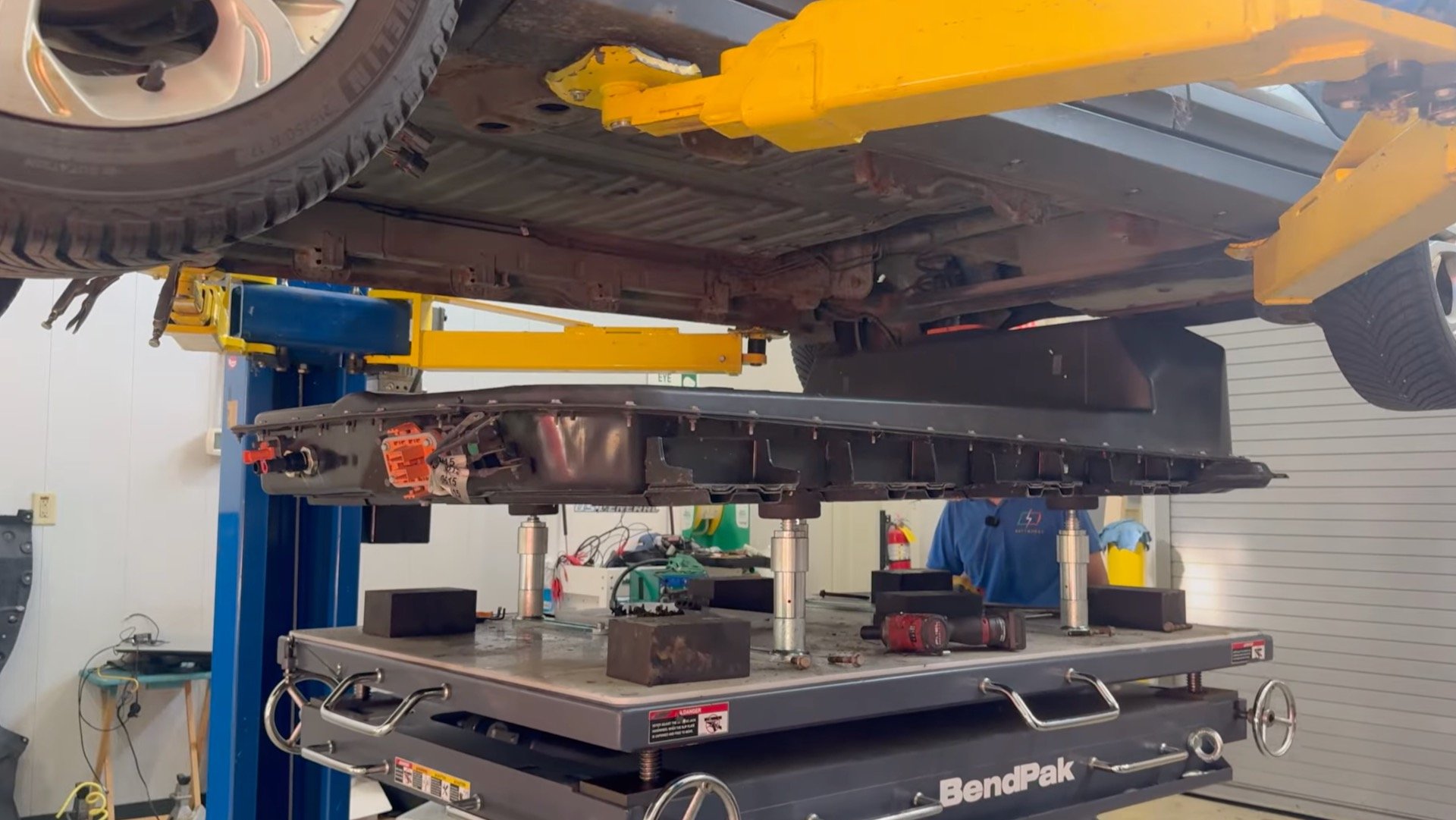
This suggests that for a daily driver, a well-managed lithium-ion pack can last significantly longer than the typical warranty period. The failure in this instance—a "battery fault" that effectively bricked the vehicle—is typical of complex electronic systems. In the case of the Out of Spec Renew repair, the replacement unit was sourced from a 2017 donor vehicle that had only seen 10,000 to 15,000 miles of use. This "recycling" of battery packs highlights an emerging ecosystem where the secondary market for EV components is beginning to mature.
The installation process was described as relatively straightforward, requiring only minor component swaps from the old pack to the new one to ensure full compatibility. For mechanics and enthusiasts, this confirms that the "black box" nature of EV batteries is beginning to yield to better documentation and modular repair techniques.
Official Responses and the "Bolt" Legacy
The Chevrolet Bolt has occupied a unique position in the automotive landscape. While it was plagued by the high-profile recall that dominated headlines for years, its popularity never truly waned. Consumers recognized the value proposition: an affordable, long-range, compact vehicle that performed exceptionally well in urban and suburban environments.
General Motors, acknowledging the strong demand for the platform, made the surprising decision to resurrect the Bolt for the 2027 model year. This was not a long-term strategic pivot, but rather a "last-minute" decision to keep an affordable EV in the lineup while the company transitioned to its Ultium-based architecture.
GM has been transparent about the limitations of this return, noting that there is currently no long-term production home for the model. The company has publicly admitted that while it is possible to extend production beyond the initial 18-month window, the Bolt is essentially a "bridge" product—a beloved stopgap that satisfies the market until newer, more profitable platforms achieve full-scale production.
Implications for the Future of EV Ownership
The story of this 471,616-mile Bolt EV carries profound implications for the automotive industry:
1. Battery Longevity is Improving
The fact that a replacement pack can survive 330,000 miles proves that modern battery chemistry is vastly more durable than early skeptics predicted. When managed correctly by the vehicle’s thermal management system, these batteries are capable of outlasting the rest of the car’s mechanical components.
2. The Right to Repair
The ease with which the Out of Spec team swapped the battery pack underscores the growing necessity for open access to diagnostic tools and parts. As more EVs reach the end of their primary warranty, the ability for independent shops to perform "battery swaps" will be the deciding factor in whether these vehicles remain on the road or head to the scrapyard.
3. Sustainability and Second Lives
The use of a 10,000-mile donor pack for a 471,000-mile vehicle is a perfect example of circular economy in action. Rather than discarding the entire vehicle due to a single component failure, the industry is moving toward a model of modular replacement. This is not only economically beneficial for the owner but also environmentally responsible, as it maximizes the utility of every lithium-ion cell manufactured.
4. Changing Consumer Perceptions
Perhaps the most significant implication is the shift in consumer psychology. As vehicles like this Bolt cross the half-million-mile mark, the "disposable battery" myth begins to crumble. When potential buyers see that an EV can survive as long as a high-mileage Toyota or diesel truck, the barrier to entry for the EV market lowers significantly.
Conclusion
The 2019 Chevrolet Bolt EV that recently graced the Out of Spec Renew workshop is more than just a high-mileage oddity; it is a signpost for the future of mobility. While it faced the challenges of a major industry recall, its ability to persist for nearly half a million miles serves as a powerful endorsement of electric powertrain durability.
As the automotive world continues its transition toward electrification, the lessons learned from this humble, blue-collar hatchback will be invaluable. The future of the EV is not just about the shiny new models hitting the showroom floor, but about the ones that stay on the road, mile after mile, proving that the electric revolution is built to last. Whether or not the Bolt returns for a long-term stay at GM, it has already secured its place in history as the car that proved EVs could go the distance.
