





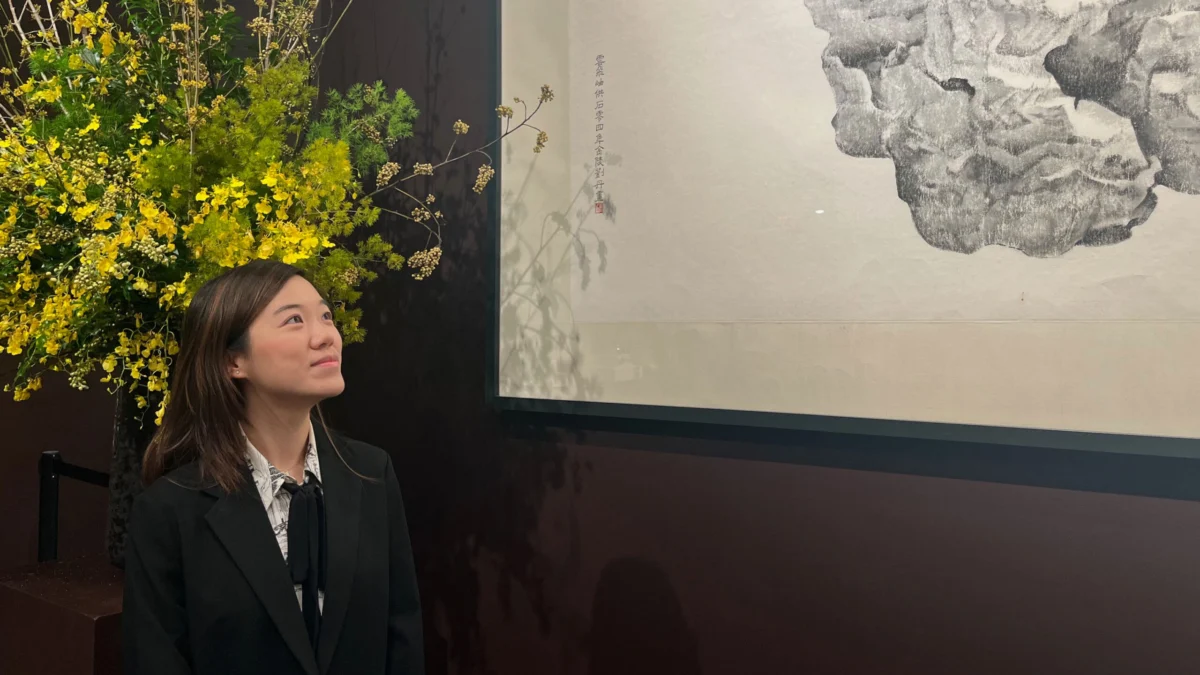
In the hallowed, marble-floored halls of Sotheby’s—a bastion of tradition where the gavel has dictated the value of history for centuries—a quiet revolution is unfolding. It is not occurring in the appraisal rooms or the restoration labs, but behind the glow of high-resolution monitors. At the center of this transformation is Kelly Shen ’17, a technologist whose work is proving that the intersection of fine art and high-tech is not merely a modern novelty, but the new foundation of the global art market.
As an expert in the burgeoning field of art intelligence, Shen is fundamentally altering how the world’s oldest auction house approaches the ephemeral nature of aesthetic value. By bridging the chasm between data science and the creative arts, she is helping Sotheby’s navigate a landscape where buying trends, artist popularity, and digital infrastructure are as critical as provenance and condition reports.
The Intersection of Data and Aesthetics: Main Facts
At its core, Shen’s role at Sotheby’s involves the deployment of complex algorithmic frameworks designed to demystify the art market. Traditionally, art appraisal was an exercise in human intuition—a blend of connoisseurship, historical research, and subjective taste. Shen is augmenting this human touch with a layer of analytical rigor.
Her work encompasses two primary domains: predictive modeling and systems architecture. In the realm of prediction, Shen builds sophisticated algorithms that synthesize massive datasets—ranging from historical auction results and market liquidity to emerging social media trends and global economic shifts. These models provide the house with a quantitative compass, helping them gauge the potential interest in a specific lot before it ever hits the auction block.
Simultaneously, Shen is a guardian of the digital experience. As the auction house increasingly shifts its operations to virtual platforms, the technical demands have surged. Ensuring that thousands of bidders can engage in real-time, high-stakes bidding without a millisecond of latency requires a robust, scalable infrastructure. Shen’s contributions in this area have been vital, cataloging massive inventories and fortifying systems to handle the volatile, high-pressure environment of live, global auctions.
A Path Forged at MIT: A Chronological Perspective
To understand how Shen arrived at the intersection of Silicon Valley methodology and New York auctioneering, one must look back to her formative years at the Massachusetts Institute of Technology. Her journey was defined by a unique duality: a rigorous academic focus on the quantitative and a deeply ingrained, lifelong passion for the expressive arts.
The Undergraduate Foundation
Shen pursued a double major in computer science and mathematics, a demanding curriculum that served as the crucible for her analytical skills. However, she distinguishes her MIT experience not just by the mastery of code, but by the development of a unique professional voice. She frequently points to the "Project Laboratory in Mathematics" as the defining experience of her undergraduate tenure.
In this course, students were tasked with presenting creative solutions to highly intricate, theoretical mathematical puzzles. This was not a traditional lecture-based environment; it was a laboratory of communication. It taught Shen how to distill complex mathematical concepts into narratives that could be understood by diverse audiences—a skill that has become essential in her current role, where she must often explain the implications of data-driven insights to auction specialists, collectors, and executive stakeholders.
Transitioning to the Auction House
Following her graduation in 2017, Shen transitioned into the professional world with a mindset shaped by the "MIT way"—an approach that values both technical excellence and practical utility. Her entry into the art world was not by chance, but by design. Recognizing that the art market was one of the last major industries to undergo a comprehensive digital transformation, she sought an environment where her skills in algorithmic design could have a profound, tangible impact.
Sustaining the Community
Throughout her professional rise, Shen has remained deeply embedded in the MIT ecosystem. Her current roles—as a class officer, vice president of the Association of MIT Alumnae, and an active volunteer for the MIT Club of New York—highlight a commitment to professional mentorship and institutional stewardship. These roles provide her with a platform to advocate for the inclusion of technical talent in unconventional industries, encouraging a new generation of engineers to look toward the arts as a frontier for innovation.
The Quantitative Landscape: Supporting Data
The art market is notoriously opaque, characterized by private transactions and fluctuating sentiment. Historically, this opacity has been a barrier to entry for many. However, data from recent years suggests that the integration of artificial intelligence and machine learning—the very systems Shen helps build—is increasing market transparency and liquidity.
Market reports indicate that the "online-only" and "hybrid" auction formats have grown by over 300% since 2019. This massive influx of digital traffic places an immense burden on backend systems. Sotheby’s ability to maintain a seamless user experience during marquee sales—where a single lot might command tens of millions of dollars—is a testament to the infrastructure improvements Shen and her colleagues have implemented.
Furthermore, predictive modeling is changing the calculus of the "estimate." In the past, auction houses relied almost exclusively on comparable sales (comps). Today, the inclusion of predictive variables—such as the "velocity" of an artist’s market, social media engagement scores, and macroeconomic indicators—allows for more accurate, data-backed estimates. These models do not replace the expert, but they provide a safety net that minimizes the risk of a "passed" lot, which can have long-term negative effects on an artist’s market reputation.
Practicality Over Sophistication: Official Perspectives
Despite her deep technical proficiency, Shen maintains a philosophy that is remarkably pragmatic. In an industry where "AI" and "Machine Learning" are often treated as buzzwords, she remains grounded in the realities of user experience and business objectives.
"You can build a super-sophisticated algorithm," Shen observes, "but if it doesn’t bring more audience engagement, it doesn’t really matter." This statement encapsulates the core tension in modern data science: the divide between theoretical purity and practical application.
For Shen, an elegant algorithm is only valuable if it solves a genuine problem. If a model is 99% accurate but is so complex that it cannot be explained to a consignor, it is ultimately a failure. She advocates for a "human-in-the-loop" approach, where algorithms serve as tools for empowerment rather than autonomous decision-makers. Her work ensures that the technology serves the art, rather than allowing the technology to dictate the aesthetic discourse.
Implications: The Future of the Art Market
The implications of Shen’s work extend far beyond the walls of Sotheby’s. We are witnessing the democratization of the art market through data. As algorithms become more adept at predicting value and managing global bidding, the barrier to entry for new collectors—particularly those from the tech-savvy younger generation—is lowering.
The Democratization of Access
By optimizing the digital bidding experience, Shen is helping to ensure that the auction house is no longer an exclusive club for the elite, but a global marketplace accessible from any device. This shift is essential for the sustainability of the art market, which relies on the constant influx of new capital and fresh perspectives.
The Evolution of the Professional
Shen represents a new archetype of professional: the "Polymath Technologist." As industries across the board—from fashion to real estate to fine arts—undergo digital shifts, the demand for individuals who can speak the language of engineering while appreciating the nuance of human culture will only increase. Shen’s trajectory suggests that the future of work lies not in specialization alone, but in the synthesis of disparate disciplines.
A New Standard for Ethics
Finally, the use of algorithms in the art market raises important questions regarding pricing and transparency. As these models gain influence, there is a responsibility to ensure they are free from bias. Shen’s emphasis on communication and transparency within her team is a critical component of the ethical deployment of these systems. As the industry continues to integrate these technologies, the standards set by professionals like Shen will determine whether these tools contribute to a more equitable market or merely reinforce existing power structures.
In conclusion, Kelly Shen’s work at Sotheby’s is a fascinating study in the marriage of high-tech innovation and cultural heritage. By applying the rigor of an MIT education to the delicate, high-stakes world of fine art, she is not just optimizing an auction house; she is helping to redefine what it means to participate in the art market in the 21st century. As the lines between the physical and digital continue to blur, one thing is certain: the future of art is being written in code, and Kelly Shen is holding the pen.
