



By Legal Affairs Correspondent
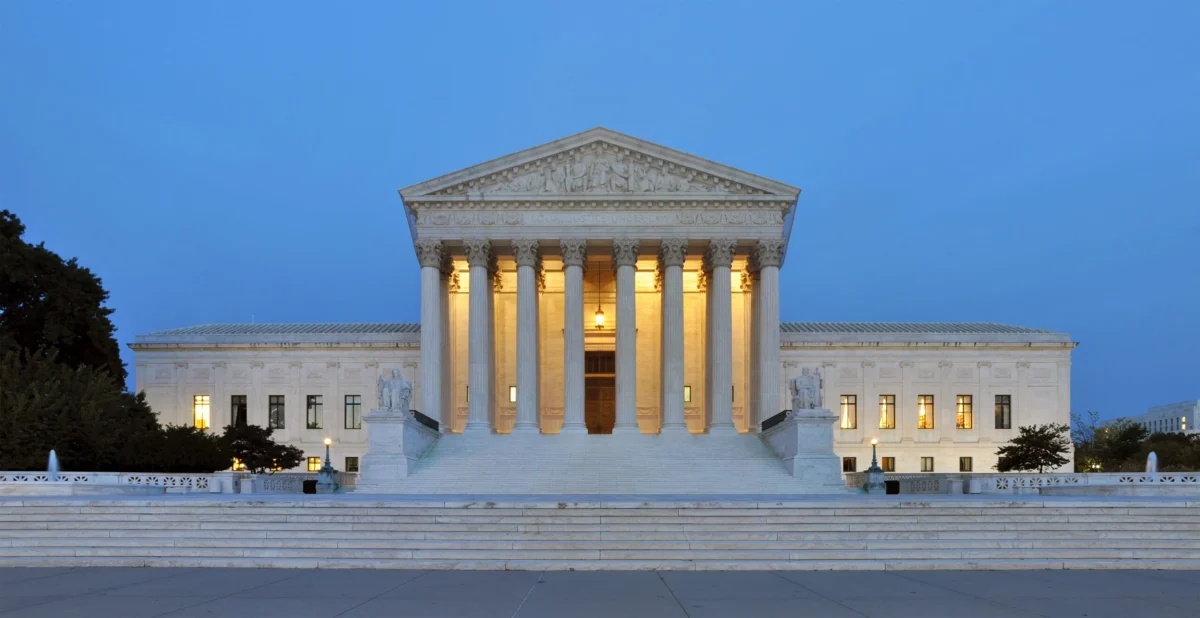
In a significant judicial development with profound implications for the upcoming November midterm elections, the United States Supreme Court issued a per curiam opinion on Monday, staying a district court injunction that had previously blocked President Donald Trump’s executive order concerning the modernization and regulation of mail-in voting. The decision effectively permits the administration to move forward with the implementation of Executive Order No. 14399, a controversial directive that has become the centerpiece of a high-stakes legal battle between the federal government and a coalition of 23 states and the District of Columbia.
The High Court’s ruling, while technical in its reasoning, serves as a major tactical victory for the Trump administration. By finding that the plaintiff states failed to demonstrate an injury that was "concrete and imminent" enough to justify judicial intervention at this stage, the Court has cleared the immediate path for the Department of Justice and the United States Postal Service (USPS) to proceed with measures that critics argue could disenfranchise millions of voters.
The Legal Core: Justiciability and Standing
The crux of the Supreme Court’s decision in Trump v. California lies in the doctrine of standing—a foundational principle of federal litigation. The Court determined that the executive order, at the time of the initial lawsuit, functioned merely as an "internal directive from the President to his subordinates." Consequently, the Court held that the order "neither requires nor forbids anything of anyone outside the Executive Branch."
Because the legal challenges were brought before the USPS had finalized its rule-making process regarding mail ballot envelopes and barcode requirements, the Court viewed the states’ concerns as "too speculative." The per curiam opinion emphasized that the government was likely to succeed on the merits of its claim that the case is not currently justiciable.
However, the Court was careful to note that this ruling is not an endorsement of the executive order’s constitutionality. "On that score, time will tell," the opinion stated, signaling that while the administration may proceed for now, the ultimate legality of the order remains an open question for future adjudication.
A Chronology of the Conflict
The friction surrounding mail-in voting began in early 2026, culminating in a series of administrative and legal maneuvers that have defined the pre-election season.
- March 2026: President Trump issues Executive Order No. 14399, titled "Ensuring Citizenship Verification and Integrity in Federal Elections." The order mandates that the Department of Homeland Security (DHS) compile a state-by-state "Citizenship List" of voters and directs the DOJ to prioritize the prosecution of officials issuing ballots to ineligible individuals.
- Spring 2026: A coalition of 23 states and the District of Columbia initiates litigation in the US District Court for the District of Massachusetts, arguing the order infringes upon state authority to manage elections.
- Summer 2026: Judge Indira Talwani of the District of Massachusetts enters a final judgment, imposing a nationwide injunction against the enforcement of the order.
- July 2026: The US Court of Appeals for the First Circuit denies the government’s request for a stay of the injunction, prompting the Trump administration to elevate the case to the Supreme Court.
- August 21, 2026: The USPS finalizes its rule-making regarding ballot envelope barcodes, which goes into effect just days before the Supreme Court’s intervention.
- August 24, 2026: The Supreme Court issues its per curiam opinion, lifting the stay and allowing the administration’s policies to take effect.
The Components of Executive Order No. 14399
To understand the intensity of the opposition, one must look at the specific mandates contained within the March directive. The order is a three-pronged effort to reshape the landscape of federal elections:
- The Citizenship List: The DHS is instructed to work with state and federal databases to verify the citizenship status of registered voters. While the order includes language limiting this to what is "feasible and consistent with applicable law," civil rights groups argue it creates a "chilling effect" on immigrant communities and creates administrative burdens that could lead to illegal purges of voter rolls.
- Aggressive Prosecution: The DOJ is ordered to prioritize the investigation and prosecution of election officials who facilitate voting by non-citizens. Again, the administration frames this as a matter of "integrity," while critics point to the lack of evidence of widespread non-citizen voting in federal elections.
- Postal Service Regulation: The most immediate impact involves the USPS. The administration successfully pushed for a new rule requiring specific barcode markings on mail-in ballot envelopes. The administration argues these barcodes provide necessary tracking and security; opponents argue that such requirements, implemented so close to an election, create an unnecessary barrier that risks disqualifying ballots that do not meet the new, technical specifications.
Dissenting Voices: Sotomayor, Kagan, and Jackson
The Supreme Court was not unanimous in its decision. Justices Sonia Sotomayor, Elena Kagan, and Ketanji Brown Jackson filed separate dissents, expressing deep concern over both the procedural handling of the case and the potential for voter disenfranchisement.
Justice Sotomayor argued that the majority ignored the "common sense" reality of the situation. She posited that the government’s own admissions throughout the litigation process demonstrated that the states faced a concrete and immediate threat of enforcement. To Sotomayor, the order was never merely "internal"—it was a roadmap for executive action that would directly interfere with state-run electoral processes.
Justice Jackson was more pointed in her rebuke of the majority’s characterization of the record. She termed the Court’s treatment of the USPS rule-making process a "stunning misinterpretation of the factual record." Jackson highlighted the fact that the district court had already held the order to be unlawful and that the government had failed to defend its lawfulness before the Supreme Court. "No judge or Justice has held that the Order comports with the Constitution," Jackson wrote, underscoring the legal precariousness of the administration’s position.
Implications for the Midterm Elections
The immediate consequence of the Supreme Court’s ruling is the restoration of the executive order’s legal standing, which will now govern the procedures for the upcoming midterm elections. Election officials across the country are now scrambling to reconcile their existing state-level protocols with the new federal mandates, particularly the USPS barcode requirements.
Impact on State Sovereignty
The ruling reignites the long-standing debate over the balance of power between the federal government and the states in administering elections. Under the US Constitution, the "Time, Places and Manner" of elections are largely delegated to the states. Critics of the administration argue that this executive order represents an unprecedented federal overreach into local administrative functions.
Voter Confidence and Participation
Proponents of the order argue that these steps are essential to restore faith in the democratic process after years of debate surrounding mail-in voting security. They contend that verification of citizenship and standardized tracking of ballots will strengthen the integrity of the results.
Conversely, voting rights advocates warn that the combination of "Citizenship Lists" and strict barcode requirements will create mass confusion, potentially leading to thousands of rejected ballots. With only weeks remaining before the midterm cycle hits full swing, the potential for voter suppression—whether intentional or as a byproduct of bureaucratic complexity—remains the primary concern for the opposition.
Looking Ahead: The Path of Appeal
The Supreme Court’s decision is an interlocutory stay, meaning it is a temporary hold on the lower court’s injunction while the appeals process continues. The government’s appeal will now proceed at the First Circuit, and the parties are expected to file petitions for certiorari to have the case heard on the merits.
If the Supreme Court denies certiorari, the stay will terminate automatically, and the district court’s original injunction will likely be reinstated. If the Court grants the petition, the stay will remain in effect until the Court issues a final judgment. This leaves the nation in a period of legal uncertainty, where the rules of the election are subject to change depending on how the First Circuit and the Supreme Court weigh the substantive constitutional arguments in the coming months.
As the nation approaches the midterm elections, this case stands as a stark reminder of the judiciary’s role as the ultimate arbiter in the struggle between executive authority and the mechanisms of American democracy. For now, the administration’s mail-in voting overhaul remains in effect, but the final word on its legality is far from written.
