





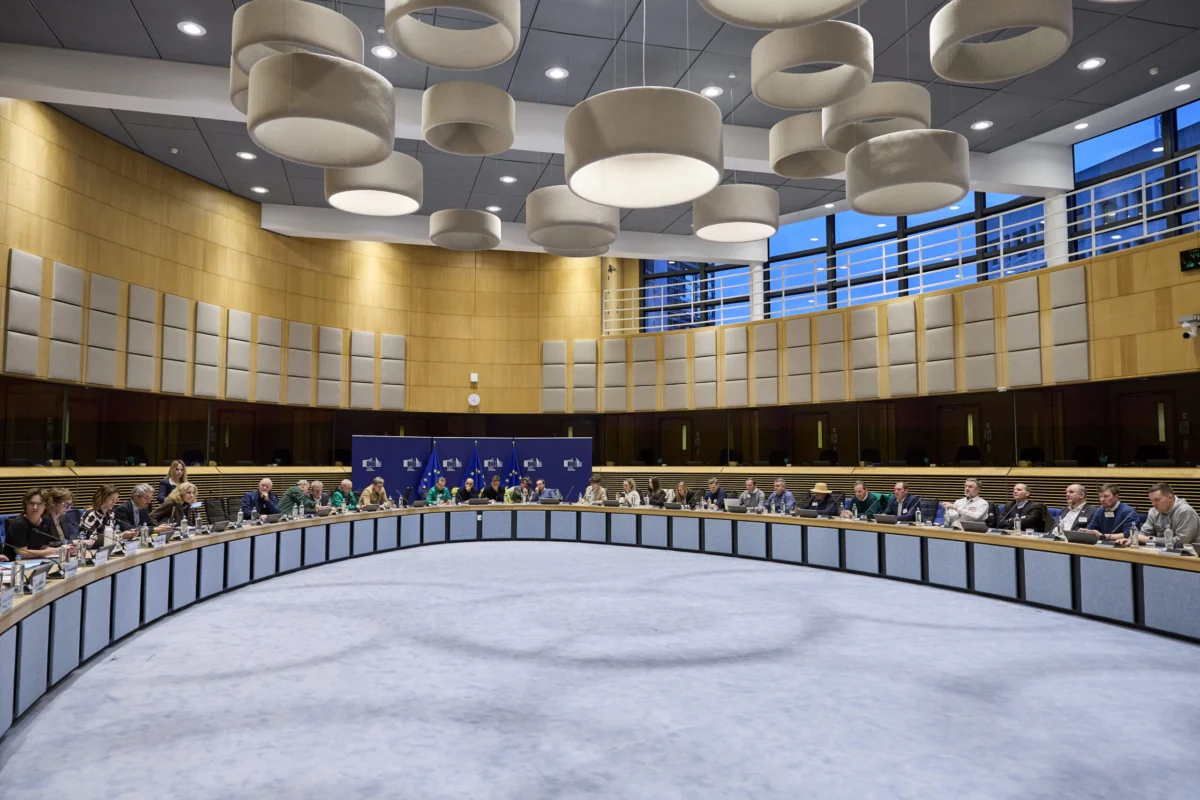
As the calendar turns to 2026, the European Union—led by the economic engine of Germany—finds itself at a precarious and definitive crossroads. With the target of climate neutrality by 2045 looming over German policy and the broader European Green Deal entering its most complex implementation phase, this year is no longer just about setting goals; it is about survival in a volatile geopolitical and domestic landscape.
While sign-ups for the foundational policy briefings on this subject have concluded, the discourse remains open and urgent. The decisions made in the halls of Brussels and the corridors of Berlin over the next twelve months will determine the industrial viability and environmental trajectory of the continent for decades to come.
I. Main Facts: The Stakes of 2026
The year 2026 has been identified by policy analysts as the “make-or-break” window for the European energy transition. The confluence of three primary factors creates a high-pressure environment for policymakers:
- The German Industrial Mandate: As Europe’s largest economy, Germany’s commitment to climate neutrality by 2045 is the linchpin of the EU’s collective ambition. To reach this, Germany must accelerate the decarbonization of its heavy industry, transport sectors, and building infrastructure simultaneously.
- The Electricity Market Reform: With energy prices remaining a point of contention for industrial competitiveness, the EU is finalizing reforms intended to stabilize costs while incentivizing the rapid integration of intermittent renewables (wind and solar) into the grid.
- The Political Climate: A rising wave of far-right populism, characterized by skepticism toward centralized environmental mandates, has begun to manifest in local-level policy stagnation. This trend is expected to reach a crescendo following regional elections, potentially creating a "gridlock effect" that stalls national implementation of EU-led climate directives.
II. A Chronology of the Transition
To understand the urgency of 2026, one must look at the trajectory that brought Europe to this point and the immediate milestones ahead.
The Foundation (2019–2024)
The initial phase of the European Green Deal was characterized by high-level legislation, including the "Fit for 55" package. During this period, the legal frameworks for carbon pricing and emissions reductions were established, providing a roadmap for the subsequent decade.
The Implementation Gap (2025)
The previous year was marked by the realization that legislative ambition often outstrips operational reality. Supply chain disruptions, labor shortages in the green technology sector, and inflationary pressures meant that many infrastructure projects—particularly those involving hydrogen pipelines and heat pump rollouts—fell behind schedule.
The Decisive Year (2026)
- Q1 2026: Focus on finalizing the post-2030 climate policy framework. Negotiations regarding the EU budget allocation for green transition subsidies reach a critical stage.
- Q2 2026: Regional elections in Germany are expected to serve as a bellwether for national climate sentiment. Analysts are monitoring these contests to see if local authorities will attempt to roll back mandates on building efficiency or EV charging infrastructure.
- Q3 2026: Mid-year review of the Emissions Trading System (ETS) expansion. This phase determines whether the carbon price remains high enough to discourage fossil fuel reliance without causing "carbon leakage," where industry flees to regions with laxer regulations.
- Q4 2026: Finalization of the long-term industrial decarbonization strategy, setting the stage for the 2030 interim review.
III. Supporting Data: The Quantitative Challenge
The transition is governed by numbers that leave little room for error. According to data provided by the European Commission and German federal agencies, the metrics for success are increasingly aggressive.
- Decarbonization Rate: Germany must increase its annual rate of emissions reduction by nearly 25% compared to the 2020–2024 average to stay on the linear path to 2045 neutrality.
- Industrial Energy Demand: Nearly 60% of Germany’s industrial energy demand remains tethered to natural gas. The transition to hydrogen-ready furnaces and electrification is currently proceeding at only 40% of the pace required to meet 2030 targets.
- The Populist Drag: Early 2026 polling data indicates that in regions where far-right influence has increased by 5% or more in local councils, building permit approvals for wind energy projects have declined by an average of 12%. This suggests a tangible "bureaucratic slowdown" caused by shifting political priorities.
IV. Official Responses and Stakeholder Perspectives
The discourse surrounding these challenges is deeply divided between institutional optimism and pragmatic concern.
The European Commission’s Stance
Brussels maintains that the Green Deal is the only viable path to long-term economic security. A spokesperson recently noted, "The volatility we see in the energy markets is a symptom of our remaining dependence on fossil fuels. 2026 is the year we cement the infrastructure that makes us immune to these external shocks. We are not just decarbonizing; we are modernizing the European industrial base."
The German Industry Perspective
The Federation of German Industries (BDI) has expressed a more cautious sentiment. In recent briefings, industry leaders emphasized that "ambition without competitiveness is a recipe for deindustrialization." They are calling for massive state-backed subsidies to offset the high cost of electricity during the transition phase, arguing that if Germany loses its manufacturing edge, the global climate effort will suffer from a lack of innovative capacity.
Civil Society and Climate Activists
On the other side of the spectrum, climate advocacy groups argue that the current pace of policy is still too slow. "We are seeing a trend of ‘climate delay’ disguised as economic caution," one leading analyst stated. "The political shifts at the local level are being used as an excuse to kick the can down the road, but the atmosphere does not negotiate. 2026 must be the year of implementation, not further deliberation."
V. Implications: A Future in the Balance
The implications of the decisions made in 2026 will echo for decades.
The Economic Implication
If Germany and the EU succeed, they will become the global exporters of green technology, defining the standards for the rest of the world. If they fail, they risk a "lost decade" where high energy costs and outdated infrastructure lead to a permanent loss of industrial market share to the United States and China.
The Social Implication
The rise of populist opposition is not merely a political nuisance; it is a signal that the "just transition" remains unfinished. If the costs of the energy transition continue to be borne disproportionately by lower-income households and rural communities, the social contract supporting climate action will continue to fracture. The 2026 policy framework must therefore include robust social safety nets that make the transition feel like an opportunity rather than a tax.
The Geopolitical Implication
Europe’s climate policy is its primary tool for "strategic autonomy." By reducing reliance on imported fossil fuels, the EU significantly diminishes the leverage held by autocratic regimes. Thus, the climate debate is, at its core, a debate about sovereignty.
Conclusion: The Path Forward
As we navigate the remainder of 2026, the focus must shift from setting targets to overcoming the inertia that currently plagues the transition. The regional elections in Germany will likely serve as a barometer for the durability of the current consensus. If the political establishment can demonstrate that climate policy is an engine for growth rather than a burden, they may yet secure the support needed to stay the course.
However, if the momentum of 2026 is squandered, the goal of climate neutrality by 2045 may shift from a realistic ambition to a theoretical aspiration. The coming months are not merely a chapter in a policy book; they are the crucible in which the future of European prosperity is being forged. The eyes of the global community are fixed on the continent, waiting to see if the rhetoric of the last decade can be translated into the physical reality of the next.
