





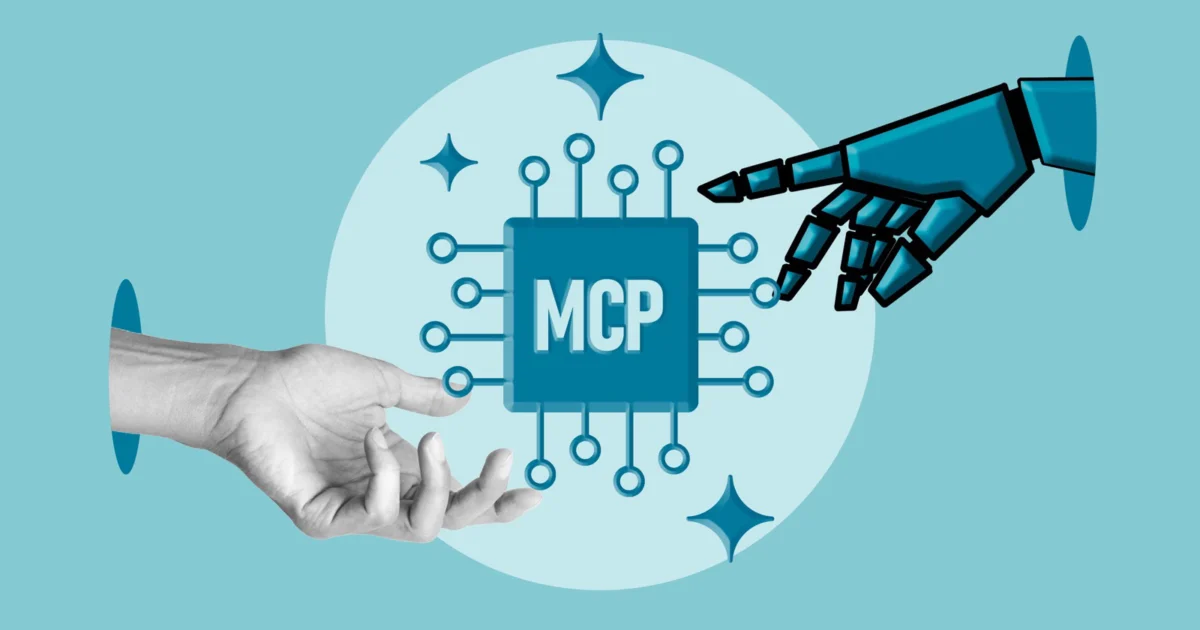
The architecture of the internet is undergoing its most significant shift since the introduction of the mobile-responsive web. For decades, websites have been built exclusively for human consumption—optimized for clicks, scrolls, and visual layout. However, as the digital ecosystem pivots toward AI-driven automation, the "human-only" web is becoming a bottleneck. Enter WebMCP (Web Model Context Protocol), a nascent standard designed to bridge the gap between static websites and intelligent AI agents.
What began as a theoretical browser experiment in early 2024 has, as of August, matured into a tangible, live technology. With major industry players like Shopify, OpenAI, and Cloudflare throwing their weight behind the protocol, WebMCP is moving from the whiteboard to the storefront, promising a future where AI doesn’t just "see" a website, but interacts with it programmatically.
The Core Concept: From "Imitation" to "Integration"
Historically, AI agents tasked with navigating the web have relied on "computer vision" and imitation. They observe a screen, identify a button that looks like a "Buy" button, and simulate a mouse click. This process is inherently brittle; a minor design change, a pop-up advertisement, or a non-standard UI component can cause the agent to fail.
WebMCP flips this paradigm. Instead of forcing an AI to interpret a visual interface, the website provides a structured "tool" that the agent can invoke directly. By registering named tools—complete with input schemas and descriptive metadata—a website grants an AI agent a clear, reliable API to execute tasks. As the Chrome development team aptly stated, "Instead of your application being a guest within an agent, the agent is a guest on your platform."
A Chronology of Rapid Evolution
The ascent of WebMCP has been nothing short of meteoric, characterized by a rapid succession of announcements that transformed it from a niche proposal into an industry-wide initiative.
Early 2024: The Proposal Phase
The foundation was laid in February, when Chrome announced an early preview of WebMCP. This was followed in June by the launch of an origin trial in Chrome 149. At this stage, the project was restricted to draft specifications and developer-focused demonstrations. The tools existed, but the ecosystem was missing a critical component: a widespread, real-world deployment.
August: The Inflection Point
August served as the catalyst for the technology’s move into the mainstream. The timeline of acceleration was rapid:
- Early August: Shopify announced that WebMCP tools were officially live on every Liquid storefront, providing a massive, existing base of e-commerce sites with AI-ready capabilities.
- Mid-August: Cloudflare introduced a developer preview, offering a "bridge" at the network edge. This allows site owners to implement WebMCP without modifying their underlying origin code—a crucial factor for rapid, mass adoption.
- August 25: OpenAI integrated "Site tools" into the ChatGPT desktop browser. This milestone effectively connected the "supply side" (websites) with the "demand side" (AI agents), allowing ChatGPT to browse catalogs and assemble shopping carts on supported sites.
To celebrate this momentum, the industry launched the "10-day WebMCP Challenge," supported by a coalition of giants including Google, Netlify, Vercel, and Render, signaling a unified industry effort to standardize the protocol.
Supporting Data and Technical Architecture
The technical implementation of WebMCP varies depending on the provider, yet the objective remains consistent: providing agents with reliable entry points.
The Shopify Approach
Shopify has been the most aggressive proponent, deploying 10 standardized tools across all Liquid storefronts. These tools are designed to streamline the shopping experience. For example, a proceed_to_checkout tool can transition a user to the payment screen with a pre-filled cart. Crucially, these tools operate within the customer’s active browser tab, ensuring that the user remains in control of the session.
The Cloudflare "Edge" Bridge
Cloudflare’s innovation lies in its "zero-code" integration. By injecting a single line of script into the HTML response at the network edge, Cloudflare enables WebMCP for sites that might otherwise lack the resources or technical expertise to build it from scratch. This democratizes the AI-ready web, ensuring that even smaller merchants can participate in the agent-first economy.
Security and Trust in an Authenticated World
Because WebMCP operates within a user’s authenticated session—allowing agents access to cookies and session data—security is the primary concern. Chrome’s security guidance emphasizes the risk of "prompt injection," where a malicious site might attempt to manipulate an AI agent into performing unauthorized actions.
OpenAI has responded by treating all site-provided definitions as untrusted. Every interaction is subjected to safety reviews, with strict limitations on sensitive actions like account deletion or permission changes. Despite these safeguards, the inherent risks of the open web remain. As experts have noted, while WebMCP provides a structured interface, it cannot entirely eliminate the risks associated with AI agents interacting with dynamic, potentially adversarial content.
Implications for the Digital Landscape
The rise of WebMCP carries profound implications for SEO, user experience, and the future of the internet.
Redefining SEO
WebMCP is not a discovery tool; it does not help a site rank higher in search results. Instead, it is a "post-discovery" technology. SEO professionals must now shift their focus toward "Agent Optimization." Once a user reaches a site via traditional search, how effectively can an AI agent execute a task on that site? The sites that offer the cleanest, most reliable WebMCP toolsets will likely see higher conversion rates from AI-assisted users.
The Fragmentation of Standards
Despite the momentum, WebMCP faces a significant hurdle: browser support. Currently, it is a Chromium-centric technology. Mozilla (Firefox) has maintained a neutral stance, while WebKit (Safari) has expressed formal opposition, citing concerns regarding privacy, security, and the potential for API duplication. This creates a fragmented landscape where the "AI-ready" web may initially be exclusive to Chrome and specific AI-integrated applications.
The Power Dynamic of Control
A critical, often overlooked aspect of WebMCP is the delegation of control. When a site owner uses a platform like Shopify, they are not necessarily the ones defining the agent-facing interface—Shopify is. This leads to a scenario where the "agent-facing version" of a website is determined by platform defaults rather than individual merchant preferences. As the technology matures, we must ask: who truly owns the interface between the user and the agent?
Looking Ahead: The Uncertainty of Adoption
While the technical milestones achieved in August are impressive, we remain in the early days of WebMCP. The current documentation lacks empirical data on performance, conversion rates, or user adoption. We do not yet know if the average consumer wants an AI agent to manage their shopping carts or if merchants will see a measurable ROI from implementing these tools.
Furthermore, the lack of W3C standardization means that WebMCP is currently an industry-led, rather than standards-led, initiative. Its long-term viability will depend on whether competing browser engines can find common ground, or whether the web will bifurcate into "agent-friendly" and "agent-hostile" silos.
Ultimately, WebMCP represents a shift from a web of documents to a web of actions. It is a bold experiment in making the internet machine-readable, not just for the sake of indexing, but for the sake of execution. Whether this leads to a more efficient, seamless digital experience or a new frontier of security vulnerabilities remains to be seen. For now, the "agent-first" web is no longer a dream; it is an active, evolving, and highly experimental reality.
