



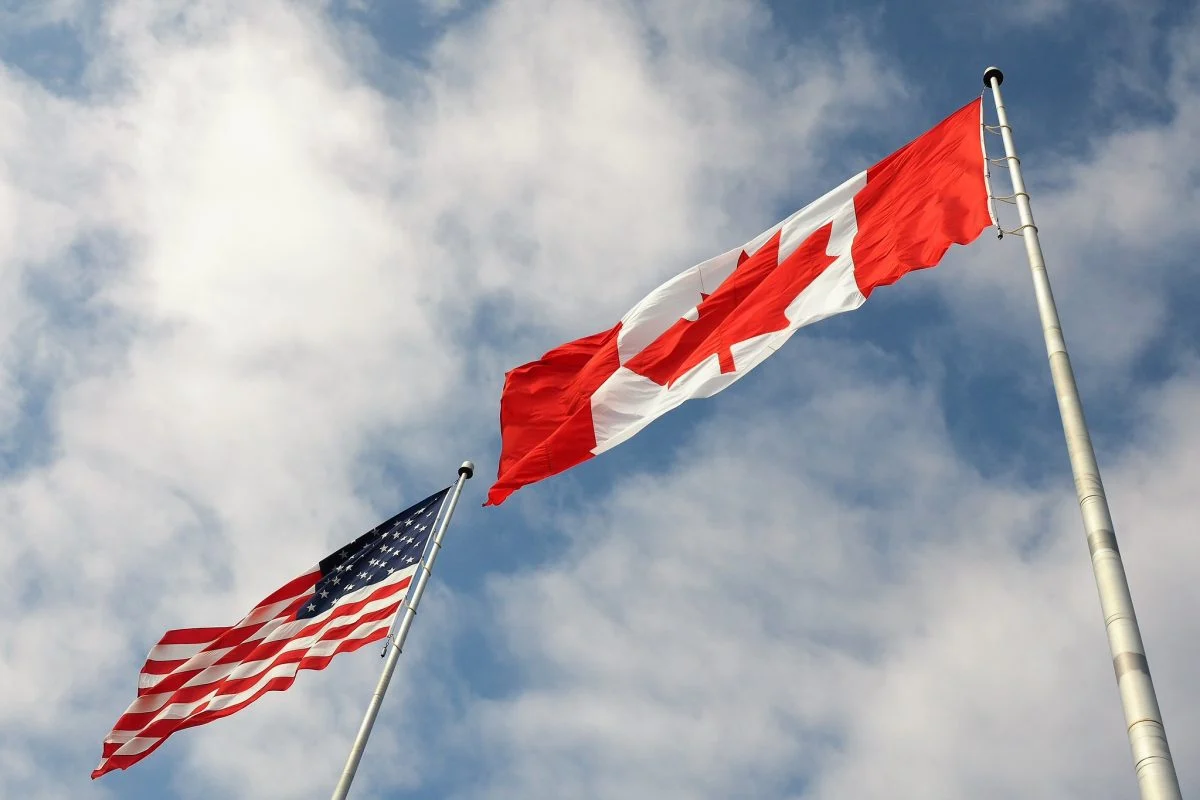
The long-standing economic and cultural bridge between the United States and Canada is currently experiencing its most volatile period in modern history. A rapidly escalating trade war, characterized by punitive tariffs and symbolic acts of geopolitical aggression, has transformed the world’s longest undefended border into a theater of economic hostility. As Washington and Ottawa exchange heavy-handed trade penalties, the collateral damage is already manifesting in the travel sector, threatening to derail the fragile post-pandemic recovery of U.S. inbound tourism.
The Chronology of Escalation: From Trade Dispute to Symbolic Warfare
The current crisis did not emerge in a vacuum; it is the culmination of months of deteriorating diplomatic discourse. The timeline of the breakdown can be categorized into three distinct phases of escalation:
Phase I: The Tariff Salvo
The conflict ignited when the White House announced a sweeping 50% tariff on a vast array of Canadian imports. The move, framed by the administration as a measure to protect domestic manufacturing, sent immediate shockwaves through global supply chains. Canada, a vital economic partner whose energy, timber, and automotive sectors are deeply integrated with the U.S., did not remain passive. Within 48 hours, the Canadian government announced retaliatory tariffs targeting approximately $20 billion worth of U.S. goods, effectively signaling the start of a full-scale trade war.
Phase II: The Rhetorical Turn
As trade barriers rose, so did the inflammatory rhetoric. In a defiant address, Canadian Prime Minister Mark Carney signaled a shift in diplomatic posture, declaring, “You’re at war when you’re attacked, and we got attacked.” The statement marked a departure from the traditional, understated diplomacy usually characterizing Canada-U.S. relations, suggesting that the Canadian administration is prepared for a protracted conflict.
Phase III: The Symbolic Provocation
Tensions reached a fever pitch this past Thursday when President Donald Trump signed an executive order that transcended economic policy, veering into the realm of geographic provocation. The order directed the U.S. Department of the Interior to officially rename Lake Ontario to "Lake America." While the move holds no immediate legal weight in Canadian territory, it served as a powerful, inflammatory signal that the U.S. administration is intent on asserting dominance in ways that directly challenge Canadian national identity.
Supporting Data: The Fragile Recovery of Inbound Travel
For the U.S. travel and hospitality sector, the timing of this geopolitical friction could not be worse. The industry has spent the last three years laboring to recover from the travel stagnation caused by the global pandemic. Canadians, historically the largest group of international visitors to the United States, are essential to this recovery.
Data provided by Longwoods International, a leading travel research firm, highlights the precarious nature of this relationship. A July survey indicated that 28% of Canadian travelers had visited the U.S. within the previous six months. While this was a positive increase from the 23% recorded the year prior, the trend was already described as “slow” by industry analysts.
Amir Eylon, President and CEO of Longwoods International, noted that the recovery of Canadian travel intent had been sluggish for months, largely dampened by previous provocative rhetoric from the U.S. administration, including discussions regarding the potential annexation of Canada as the "51st state." The current escalation serves as a major headwind to what was already a tepid upward trajectory.
Official Responses and Diplomatic Fallout
The response from both sides of the border reveals a stark divide in priorities. In Washington, the administration maintains that the tariffs are necessary to rectify trade imbalances. The executive order regarding Lake Ontario has been framed by officials as an exercise in "reclaiming national pride," though it has been widely criticized by legal scholars as an overreach that complicates maritime and environmental management protocols between the two nations.
In Ottawa, the mood is one of defensive mobilization. Prime Minister Carney’s administration has pivoted to a strategy of diversification, seeking to strengthen trade ties with European and Asian partners to insulate the Canadian economy from U.S. volatility. However, the travel industry in Canada has expressed deep concern. Canadian travel associations have warned that the combination of trade barriers and nationalist renaming initiatives creates a hostile environment that discourages Canadians from crossing the border, both for leisure and business.
The Economic Implications: A Sector Under Siege
The travel industry is particularly sensitive to political instability. When travel between two countries becomes fraught with the threat of sudden border closures, increased customs scrutiny, or a sense of national animosity, demand drops precipitously.
1. The Decline in Leisure Travel
Leisure travelers prioritize stability and a welcoming environment. The "Lake America" controversy has already triggered a wave of "staycation" sentiment on social media in Canada, with many citizens advocating for domestic tourism as a form of patriotic resistance. This sentiment is likely to translate into reduced bookings for U.S. hospitality groups that rely heavily on Canadian snowbirds and weekend travelers.
2. Business Travel and Cross-Border Integration
Business travel is often the first casualty of trade wars. Companies that previously conducted seamless operations across the border are now facing uncertainty regarding visa protocols, customs delays, and the potential for long-term travel bans. This uncertainty forces corporations to delay investment and reduce travel budgets, impacting airline revenues and hotel occupancy rates in major U.S. hub cities.
3. Long-Term Brand Damage
Beyond the immediate economic figures, there is the issue of "brand America." Travel recovery relies on the perception that the U.S. is an accessible and friendly destination. By engaging in aggressive trade tactics and symbolic provocations, the U.S. risks eroding the soft power it holds over its closest neighbor. Rebuilding that trust, should the political climate shift, will likely take years, if not decades.
Future Outlook: A Path to De-escalation?
As the situation evolves, industry experts are calling for a "cooling off" period. Travel advocacy groups are lobbying for the exclusion of travel and tourism-related infrastructure from the scope of the trade war, arguing that the movement of people should not be a bargaining chip in a dispute over goods and commodities.
However, with both the U.S. executive branch and the Canadian leadership doubling down on their positions, there is little sign of an imminent breakthrough. The "Lake America" directive remains a significant flashpoint, as it moves the conflict from the abstract realm of trade to the tangible realm of national identity—a move that typically hardens public opinion and makes diplomatic concessions much more difficult for leaders to justify to their respective electorates.
For the U.S. tourism industry, the path forward is fraught with uncertainty. If the 50% tariffs remain in place and the rhetoric continues to escalate, the gains made in the post-pandemic recovery could be wiped out in a single fiscal quarter. The travel sector now finds itself in the uncomfortable position of being a bystander in a high-stakes geopolitical battle, waiting to see if the bridges between Washington and Ottawa will hold or if they will be burned in the name of economic nationalism.
In conclusion, the current trajectory of U.S.-Canada relations suggests that the era of seamless cross-border movement is under significant threat. As the trade war deepens and the symbolic provocations continue, the U.S. inbound travel industry must prepare for a significant contraction of its most reliable market. The resilience of the travel sector, once thought to be a guaranteed pillar of the North American economy, is now being tested by the realities of a new, more isolationist geopolitical order. Whether this is a temporary setback or a permanent realignment of North American travel patterns remains the defining question for the industry in the coming year.
