




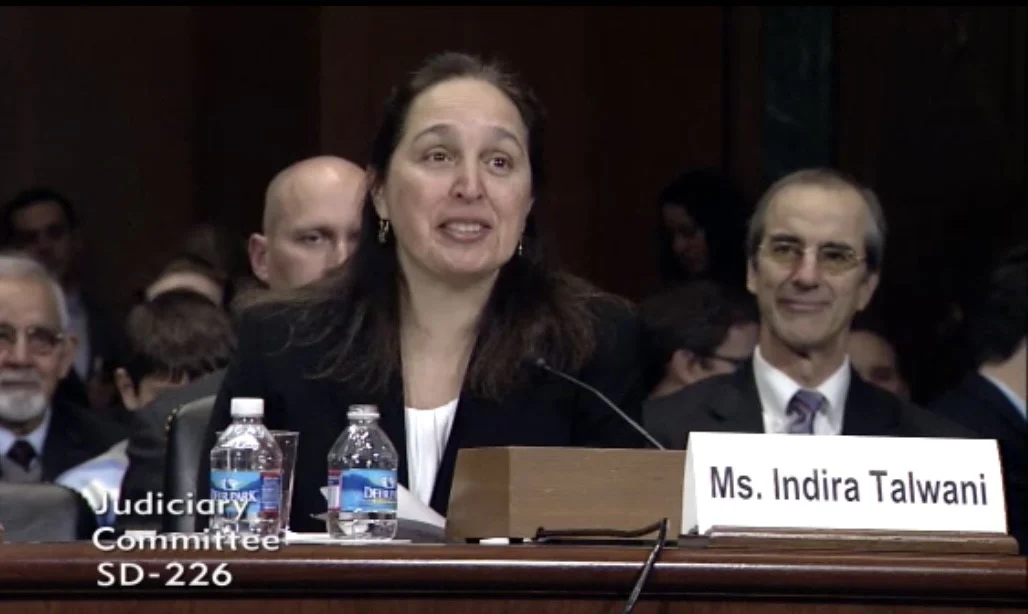
In a significant and controversial development impacting the landscape of the 2026 midterm elections, US District Judge Indira Talwani has formally vacated her earlier preliminary injunction that had previously blocked the US Postal Service (USPS) from implementing President Trump’s executive order on mail-in voting. This decision, issued on Wednesday, marks a pivotal shift in the ongoing judicial struggle over federal control of election procedures and the integrity of the absentee ballot system.
The ruling follows a high-stakes legal maneuver by the Department of Justice (DOJ), which sought reconsideration of Judge Talwani’s injunction in light of a recent Supreme Court intervention. As the midterm elections loom, the legal environment surrounding the administration’s efforts to overhaul mail-in voting protocols has become increasingly precarious, leaving voting rights organizations and state officials scrambling to interpret the evolving regulatory landscape.
Chronology of a Constitutional Collision
The conflict began in late March 2026, when President Trump issued an executive order (EO) titled “Ensuring Citizenship Verification and Integrity in Federal Elections.” The directive mandated that the Department of Homeland Security (DHS) compile “state citizenship lists” by cross-referencing federal immigration and naturalization databases. The primary objective, according to the administration, was to restrict the issuance of absentee ballots solely to individuals confirmed on these lists.
The legal response was immediate. Various civil rights groups and state entities filed lawsuits, arguing that the EO imposed unconstitutional barriers to the franchise. Judge Talwani’s court became a focal point of this resistance when she initially granted a preliminary injunction, effectively freezing the USPS’s ability to align its internal ballot-processing rules with the president’s new directive.
However, the legal ground shifted on Monday when the Supreme Court issued a decision in Trump v. California. The high court did not rule on the underlying merits of the EO’s constitutionality. Instead, it focused on the procedural issue of standing, ruling that the states challenging the order had failed to demonstrate a "concrete or imminent" injury. By labeling the claims non-justiciable at this stage, the Court signaled a judicial reluctance to intervene before the administrative machinery of the EO had been fully deployed.
Following the Supreme Court’s decision, the DOJ moved swiftly to request that Judge Talwani lift her injunction. On Wednesday, acknowledging the signal sent by the higher court, Talwani vacated her order, noting that the steps required to implement the EO had since progressed—most notably the finalization of the USPS rule on August 21, which now bypasses the previous judicial roadblock.
The Mechanics of the Executive Order
At the heart of the controversy is the administration’s claim that federal oversight of voter rolls is a necessary security measure. Proponents argue that the current decentralized system of voter registration is prone to errors, including the inclusion of non-citizens in voter rolls. By leveraging DHS data to create a centralized verification filter, the White House maintains it is protecting the sanctity of the ballot box.
Conversely, the Brennan Center for Justice and other critics have highlighted the inherent dangers of this approach. The central concern is the “error rate” associated with federal immigration databases, which were not designed for voter verification. Critics argue that these systems often contain outdated or inaccurate information, which could lead to the mass disenfranchisement of eligible, naturalized citizens.
The finalized USPS rule, which took effect on August 21, requires the agency to cross-check ballots against the newly generated federal lists. For voters who find themselves excluded from these lists due to bureaucratic errors, the burden of proof is shifted back to the individual, often requiring complex and time-consuming administrative appeals that may not be resolved before the polls close in November.
Dissent and Judicial Philosophy
The tension between the Supreme Court’s majority and its dissenting voices has been stark. In her dissent regarding Trump v. California, Justice Ketanji Brown Jackson offered a scathing critique of the Court’s decision to stay judicial review, arguing that it invites administrative chaos.
Judge Talwani, in her latest memorandum, pointedly referenced Justice Jackson’s warning: “[I]f sowing chaos is the Government’s ultimate goal, as it is here… the effectiveness of judicial review is substantially undercut when the Court shunts all consideration of the lawfulness of the Government’s conduct at the stay stage and greenlights significant harms in the interim.”
By quoting this dissent, Judge Talwani highlighted a fundamental dilemma: when the judiciary declines to intervene in administrative actions before they are finalized, the resulting "harm" to the electoral process—such as the systematic denial of ballots to eligible citizens—may become irreversible by the time a full trial on the merits concludes.
Official Responses and Stakeholder Positions
The Department of Justice has hailed the vacating of the injunction as a victory for executive authority and election integrity. In statements following the ruling, DOJ officials emphasized that the judiciary must respect the administration’s role in ensuring that only eligible citizens participate in federal elections.
Voting rights advocates, however, are characterizing the development as a “dark day for democracy.” Groups such as the League of Women Voters have expressed alarm that the judicial branch is effectively stepping aside while the executive branch alters the rules of the game just months before the midterms.
State election officials are also caught in the middle. Secretaries of State across the country are now facing the daunting task of reconciling their state-level voter registration databases with the new federal mandates. Many have expressed concern that the lack of clear, uniform guidance—compounded by the recent court rulings—will lead to inconsistent ballot processing across different jurisdictions, further eroding public trust in the election results.
Implications for the Midterm Elections
As the nation moves toward the November elections, the implementation of this executive order is expected to have profound, and potentially chaotic, consequences. The implications are multi-faceted:
1. Administrative Burden on the USPS
The Postal Service is now tasked with implementing a verification process that it was not originally equipped to handle. The potential for technical failures, delays in mail delivery, and confusion regarding ballot rejection notices is high, particularly in regions with high volumes of absentee voting.
2. Voter Disenfranchisement
The most immediate fear is that tens of thousands of eligible voters will be caught in the dragnet of "citizenship verification." If an individual is flagged incorrectly, they may never receive their ballot or, worse, have their cast ballot disqualified during the verification process.
3. Increased Litigation
While this specific injunction has been vacated, legal experts suggest that the battle is far from over. Future lawsuits will likely focus on the as-applied challenges, where plaintiffs bring cases on behalf of specific individuals who have been disenfranchised by the system. These cases will likely reach the courts in the final weeks of the campaign season, potentially leading to emergency judicial interventions.
4. The Precedent of Executive Power
Beyond the immediate impact on the midterms, this case establishes a significant precedent regarding the scope of presidential power over election administration. By successfully linking immigration data to ballot access, the administration has created a model for future federal interventions in what has traditionally been a state-controlled domain.
Conclusion: A Precarious Path Forward
The lifting of Judge Talwani’s injunction represents a critical victory for the Trump administration’s efforts to reshape the electoral process. However, the path forward remains fraught with legal and logistical hurdles. As the August 21 rule takes hold, the focus will shift from the courtroom to the ballot box, where election workers and citizens alike will grapple with the impact of these new requirements.
The judiciary’s current stance—prioritizing procedural standing over the immediate prevention of potential electoral harm—leaves the fundamental constitutional questions unresolved. As the country approaches the November midterms, the integrity of the election will depend not only on the security of the ballots but on the ability of the legal system to protect the fundamental right to vote amidst an increasingly aggressive federal agenda. Whether these measures serve to "ensure integrity" or "sow chaos," as Justice Jackson feared, remains the defining question of the 2026 election cycle.
