





The digital landscape of travel marketing has long been defined by the "Instagrammable moment"—the curated, filtered, and highly polished depiction of luxury resorts. However, a troubling new trend on TikTok suggests that the industry is entering an era of post-reality marketing. Hotels are increasingly finding themselves the subjects of AI-generated promotional videos that feature non-existent amenities, fabricated landscapes, and entirely synthetic "influencers," all designed to siphon affiliate commissions from unsuspecting travelers.
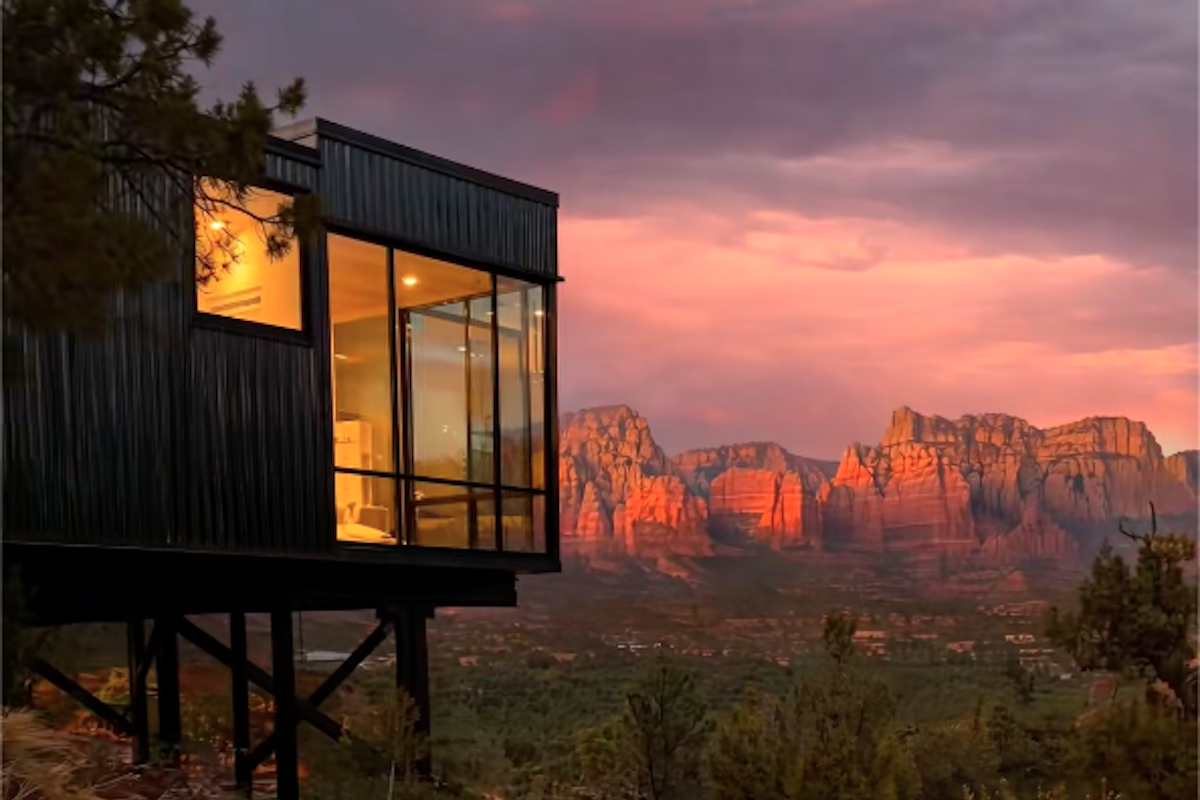
At the center of this digital mirage is Ambiente Sedona, an upscale, eco-conscious resort in Arizona. Recent viral videos showcasing the property have drawn hundreds of thousands of views, depicting luxurious atrium suites and tranquil ponds that simply do not exist on the physical grounds. As AI technology becomes more accessible, the barrier to entry for affiliate marketing fraud has collapsed, leaving hoteliers and consumers to grapple with a new reality where seeing is no longer believing.
Chronology of a Digital Mirage
The escalation of AI-driven hotel marketing fraud has occurred in rapid succession over the last eighteen months, mirroring the boom in generative AI tools.
- Early 2023: The rise of sophisticated AI video generation tools—such as Sora, Runway, and HeyGen—began to democratize high-end video production. Marketing affiliates realized that by overlaying generic stock footage of luxury landscapes with AI-synthesized voices, they could create high-conversion travel content without ever visiting a location.
- Late 2023: TikTok launched its "TikTok Shop" and expanded affiliate features, allowing creators to embed booking links directly into videos. This provided a direct monetization pipeline for automated content farms.
- Early 2024: Observers began noting an uptick in "travel inspiration" content on TikTok that felt uncanny. The videos often featured hyper-saturated colors, slightly glitchy water movements, and architectural impossibilities, such as rooms that defied the physical geometry of the actual hotels they claimed to represent.
- Mid-2024: The phenomenon hit a flashpoint when videos promoting Ambiente Sedona began circulating. One particular video, garnering over 315,000 views, showcased a stunning, fictitious atrium suite at sunset. Another highlighted a "peaceful pond" that property owners confirmed does not exist.
- Present Day: Industry watchdogs, including Resemble.AI, have begun flagging these accounts as synthetic, identifying the "influencers" as AI-generated avatars. Property owners are now scrambling to protect their brand integrity while the platforms struggle to moderate the sheer volume of AI-produced content.
Supporting Data: The Scale of Synthetic Deception
The economic incentive for these AI-generated campaigns is rooted in the affiliate marketing model. Under TikTok’s affiliate program, creators earn a commission for every booking made through their unique referral link. In the travel sector, where nightly rates can reach into the thousands, a single booking can generate a significant payout.
According to data from cybersecurity and AI detection firms, the cost to produce these fraudulent videos is negligible. An affiliate can utilize a subscription to an AI video generator for roughly $30 to $50 per month. If a single synthetic video results in three high-end bookings, the return on investment is immediate and substantial.
Resemble.AI, a company specializing in voice and content authenticity, conducted an audit of the Ambiente Sedona videos. Their analysis confirmed that the "creators" featured in the clips were entirely synthetic—generated using deepfake technology to mimic human influencers. The visual fidelity of these videos is high enough to bypass the initial scrutiny of the average social media user, who often views content in a passive, scrolling state.
Furthermore, industry reports indicate that "TravelTok" content is particularly susceptible to this trend. Users searching for #LuxuryTravel or #DreamVacation are often presented with algorithmic suggestions that prioritize engagement metrics (likes and shares) over factual accuracy. Because AI-generated videos are designed to be aesthetically "perfect," they often outperform authentic, amateur footage, leading to a feedback loop where the algorithm promotes the fake content more aggressively than the real thing.
Official Responses: The Battle for Brand Integrity
The response from stakeholders—including the hoteliers, the platforms, and the tech industry—has been fragmented and, in some cases, paralyzed by the speed of technological change.
Jennifer May, owner of Ambiente Sedona, has been vocal about the damage caused by these synthetic campaigns. For a boutique property that prides itself on architectural integrity and specific, real-world experiences, the circulation of fake "atrium suites" creates a direct conflict with guest expectations. When guests arrive at the property expecting a pond that does not exist or a suite layout that is physically impossible, the resort’s reputation suffers.
"We have spent years crafting the identity of Ambiente Sedona," a spokesperson for the resort noted. "To have that identity hijacked by AI-generated fictions is not just a marketing annoyance; it is a fundamental misrepresentation of our business. We are currently working with legal counsel and platform administrators to identify these accounts and have them removed."
TikTok, for its part, has stated that it maintains strict community guidelines regarding deceptive content. However, the platform’s sheer scale makes proactive moderation difficult. A spokesperson for the platform noted that they are "continuously refining [their] AI detection tools to identify and remove misleading content that violates our policies on platform integrity." Yet, the platform has yet to implement a mandatory "AI-generated" label for all promotional affiliate content, a move that critics argue is necessary to restore consumer trust.
Implications for the Travel Industry
The rise of the "Ghost Suite" phenomenon has profound implications for the future of digital marketing and consumer trust.
The Erosion of Authenticity
For years, the travel industry has relied on "user-generated content" as the gold standard of social proof. Travelers trusted other travelers more than they trusted brand advertisements. By polluting this ecosystem with AI-generated "influencers," bad actors are effectively destroying the currency of social proof. If users begin to suspect that every stunning view is a digital fabrication, the entire medium of social media travel marketing could face a credibility collapse.
Liability and Legal Challenges
Who is responsible when an AI-generated video leads to a fraudulent booking? Is it the affiliate who created the video, the platform that hosted it, or the hotel that inadvertently benefited from the traffic? Legal experts suggest that the current regulatory framework is ill-equipped to handle this. As hotels are forced to police the internet for unauthorized and deceptive AI content, the costs of digital brand management are expected to skyrocket.
The Shift Toward Verified Media
In response to this trend, some industry leaders are advocating for a "Verified Content" badge. Much like the blue checkmarks of the past, future travel bookings might depend on content that has been verified as originating from actual physical locations. Luxury brands may move away from broad affiliate marketing programs, opting instead for a closed-loop system where only vetted, human creators are permitted to promote their properties.
The Impact on Consumer Psychology
The psychological impact on the consumer is equally significant. When the line between a dream and a digital construct blurs, the "travel experience" begins to lose its luster. If the marketing for a destination is a fantasy, does the actual destination—with its potential for travel delays, weather issues, and imperfect reality—ever stand a chance at satisfying the customer?
Conclusion: Navigating the Synthetic Future
The case of Ambiente Sedona is not an isolated incident; it is a bellwether for the travel industry. As AI tools become more sophisticated, the ability to discern the "real" from the "synthetic" will become a core competency for the modern traveler.
For hoteliers, the path forward requires a dual approach: aggressive legal and technical monitoring of their brand assets online, and a return to authentic, human-centric storytelling that AI cannot replicate. For platforms like TikTok, the challenge is existential. If they cannot ensure that their affiliate ecosystem is free from deceptive AI-generated content, they risk losing the trust of both the advertisers who fund them and the users who populate them.
As we move deeper into this era of synthetic media, the most valuable asset in travel marketing will no longer be the most "perfect" image, but the most verifiable one. The "Ghost Suite" may be a technological marvel of the present, but it is a cautionary tale for the future of the digital economy. Travelers would do well to approach the next "picture perfect" TikTok with a healthy dose of skepticism—because in the age of AI, the view is often only as real as the code that created it.
