



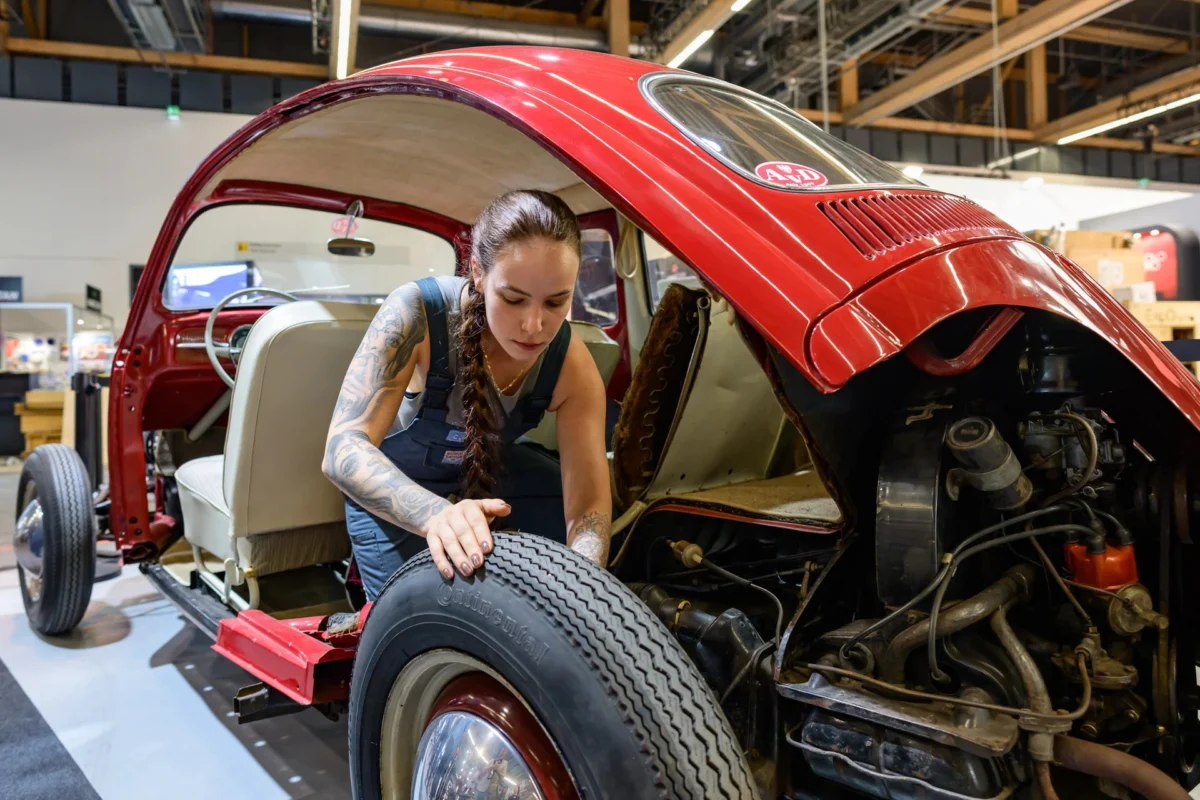
The automotive industry, currently navigating a period of unprecedented volatility and technological disruption, has converged upon Germany for one of its most significant gatherings. Automechanika Frankfurt, the world’s leading trade fair for the automotive service industry, officially opened its doors on September 8, signaling a resilient path forward for the global aftermarket. Spanning 300,000 square meters of fully booked exhibition space, the event has become a primary staging ground for the technologies that will define the next decade of mobility.
With approximately 4,400 exhibitors representing over 80 nations, the 2024 edition is not merely a showcase of parts and tools; it is an intellectual and industrial hub addressing the convergence of artificial intelligence, electrification, digitalization, and the transition toward autonomous driving.
Main Facts: A Global Stage for Innovation
The five-day event, running through September 12, serves as the definitive pulse-check for the automotive aftermarket. As the industry faces shifting regulatory landscapes and the rapid obsolescence of traditional mechanical systems, Automechanika provides the infrastructure—both physical and digital—to facilitate this transition.
The sheer scale of the event—covering 300,000 square meters—underscores the industry’s determination to maintain physical networking despite the increasing digitization of commerce. Key highlights include:
- Broad International Representation: 4,400 exhibitors from more than 80 countries.
- Thematic Depth: Over 500 events, workshops, and seminars focusing on industry transformation, sustainability, and talent development.
- Technological Focus: A heavy emphasis on "software-defined vehicles" and the integration of AI within the repair and maintenance ecosystem.
Chronology of the 2024 Event
The schedule for Automechanika Frankfurt 2024 is meticulously curated to guide industry professionals through the complexities of modern vehicle servicing.
- September 8 (Opening Day): The event launched with a focus on cutting-edge innovation, headlined by the prestigious Automechanika Innovation Awards. With 185 entries across 10 categories, the awards celebrate the companies pushing the boundaries of aftermarket technology.
- September 9 (Sustainability Focus): A highlight of the week is "Remanufacturing Day," which explores the critical role of circular economy principles. As the industry faces pressure to reduce its carbon footprint, the remanufacturing of vehicle parts has emerged as a cornerstone of sustainable mobility.
- September 10–11 (Knowledge Exchange): These days are dedicated to the new HighTech4Mobility forum. Discussions are slated to cover the implications of the EU Data Act and the practical application of AI in workshops, grounded in data provided by the IBM Institute for Business Value study, “AI in Motion — Reinventing Automotive Aftersales.”
- September 12 (Closing): The final day serves as a wrap-up for training certifications and a final push for recruitment initiatives, ensuring that the legacy of the event extends into the workforce of tomorrow.
Supporting Data and Strategic Themes
To understand the significance of Automechanika, one must look at the data driving the exhibition. The aftermarket is no longer just about tires, brakes, and oil changes; it is increasingly about diagnostics, software updates, and data management.
The Rise of the Software-Defined Vehicle
The introduction of the HighTech4Mobility forum acknowledges a seismic shift: the vehicle as a rolling software platform. Discussions are centering on how independent workshops can maintain access to vehicle data, a point of contention in recent European legislative battles. By hosting sessions on the EU Data Act, Automechanika is providing a platform for the industry to navigate the legal and technical hurdles of data-sharing in an era of connected cars.
Training and the Human Element
Despite the focus on AI and automation, the industry faces a profound human challenge: the skills gap. To combat this, the event features extensive training modules on advanced driver assistance systems (ADAS) diagnostics, alternative powertrains, and sophisticated paintwork techniques. Furthermore, the "AMBITION" program is expected to draw over 4,000 students, aiming to bridge the gap between academia and the shop floor by showcasing the high-tech reality of modern automotive careers.
The Future Mobility Park
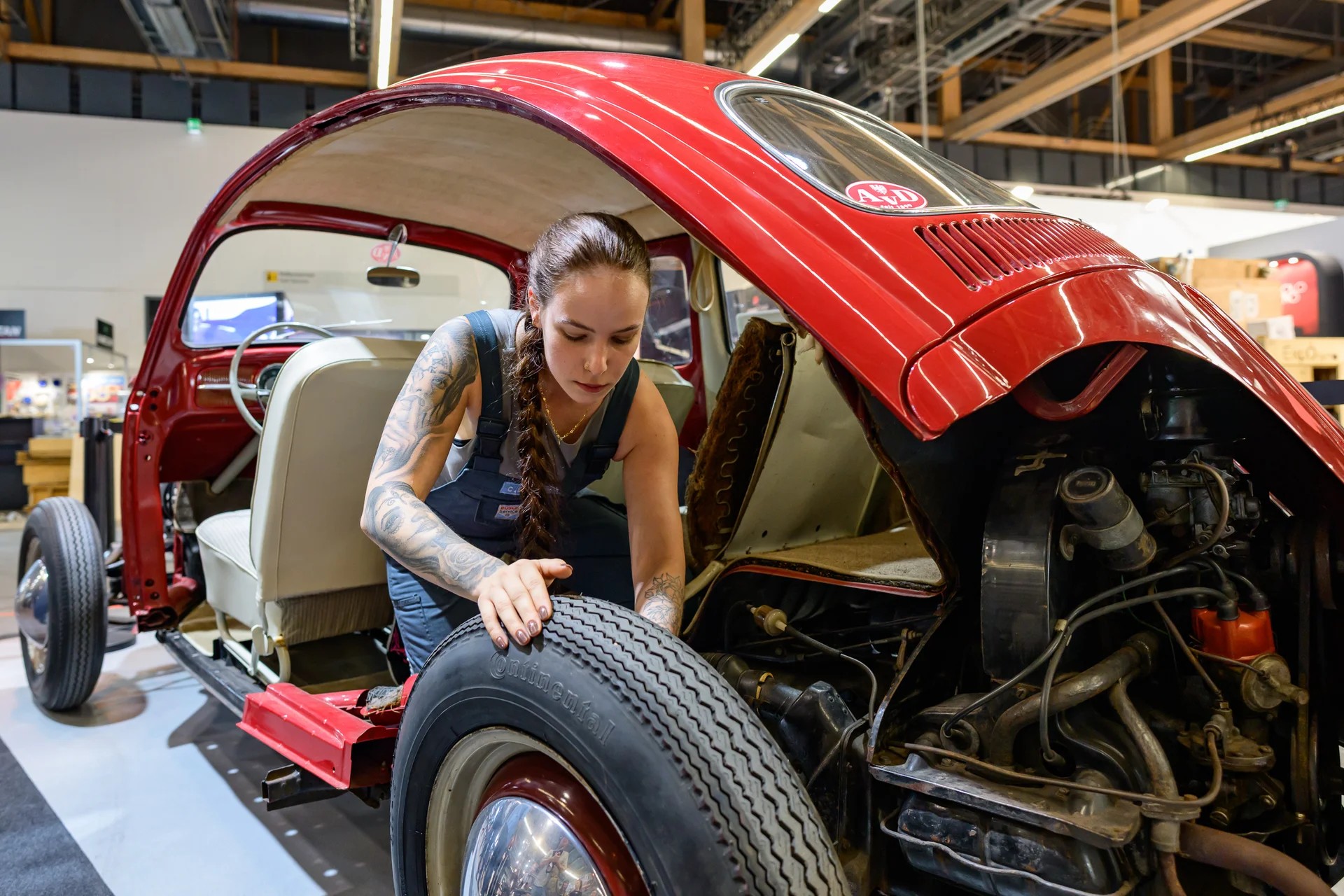
The Future Mobility Park acts as a live laboratory. Visitors are granted hands-on access to vehicles utilizing solar, hydrogen, and advanced electric propulsion systems. This move toward experiential learning allows technicians and business owners to see exactly how these emerging technologies will manifest in their daily service operations.
Official Responses: Resilience in Challenging Times
Detlef Braun, a member of the board of management at Messe Frankfurt, emphasized the resilience of the event in his opening remarks. Despite the macroeconomic headwinds—ranging from supply chain fragility to geopolitical instability—the show has seen a five percent increase in exhibitor participation compared to previous cycles.
"The success story of Automechanika Frankfurt continues," Braun noted. "In times of ongoing geopolitical crises, Automechanika enables us to strengthen resilience and market presence. We are seeing a fully booked exhibition centre, which speaks volumes about the industry’s commitment to growth and cooperation."
The sentiment from leadership is clear: the automotive aftermarket is in a state of "controlled transition." While the economic climate is demanding, the necessity of the aftermarket sector—keeping the world’s mobility fleet functional and safe—remains an immutable pillar of the global economy.
Implications: The Future of the Aftermarket
The implications of Automechanika Frankfurt 2024 are profound for the global automotive landscape. Several key trends are emerging as the defining factors of the next few years.
1. The AI Integration
The IBM study, AI in Motion, presented at the show, is a watershed moment. It highlights that the future of aftersales is not merely reactive (fixing a broken part) but predictive (fixing a part before it fails). Workshops that fail to integrate AI-driven diagnostic tools will find themselves at a distinct competitive disadvantage.
2. The Sustainability Imperative
Remanufacturing is no longer a niche market; it is a regulatory and economic necessity. As governments tighten environmental standards, the ability to refurbish components to "as-new" condition is becoming the standard for fleet management and insurance-led repairs. Automechanika’s dedication to this topic signals a permanent shift toward the circular economy.
3. The Democratization of Technology
By hosting the AMBITION program, the industry is acknowledging that it cannot innovate if it cannot staff its workshops. The event is essentially rebranding the automotive technician as a "systems engineer," an essential pivot if the industry is to attract the tech-savvy younger generation.
4. Navigating Geopolitics
The fact that over 80 countries are represented, even amidst global geopolitical fragmentation, suggests that the automotive industry remains one of the few truly integrated global sectors. Automechanika Frankfurt functions as a neutral ground where the exchange of technical standards and best practices overrides political friction.
Conclusion: A Blueprint for What Lies Ahead
Automechanika Frankfurt 2024 is more than just a trade fair; it is a barometer for the automotive industry’s health and strategic direction. By balancing the practical, "grease-under-the-fingernails" reality of vehicle repair with the abstract, high-level challenges of AI, data legislation, and sustainable mobility, the event successfully positions itself as the industry’s most vital resource.
As the doors close on September 12, the thousands of professionals in attendance will return to their respective markets armed with new diagnostic capabilities, a better understanding of the legislative environment, and a roadmap for how to survive—and thrive—in the age of the software-defined, sustainable vehicle. The message from Frankfurt is resolute: the automotive aftermarket is not disappearing; it is evolving, and it is doing so with remarkable speed and precision.
