





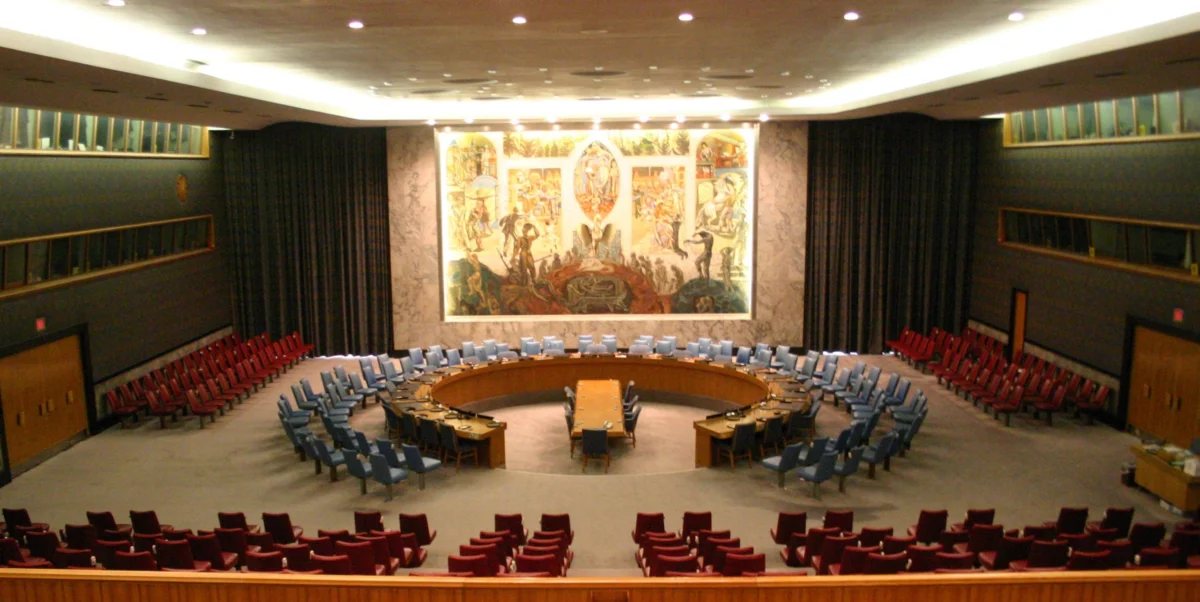
In a significant diplomatic breakthrough, the United Nations Security Council (UNSC) has formally endorsed a landmark agreement reached by Libya’s long-feared rival factions. The August 30 accord, forged by the "Smaller Convening"—a 4+4 committee representing Libya’s fractured political landscape—is being hailed by the international community as the most viable path toward holding the nation’s first unified national elections in over a decade. Facilitated by the United Nations Support Mission in Libya (UNSMIL), the agreement aims to dismantle the institutional walls that have kept the North African nation in a state of political paralysis since the 2011 ouster of Muammar Gaddafi.
Main Facts: The Anatomy of the Agreement
The agreement represents a rare moment of consensus between the Government of National Unity (GNU), the General Command, the House of Representatives, and the High Council of State. For years, these entities have operated as competing power centers, often backed by varying international stakeholders and local militias.
The core of the August 30 agreement centers on two primary obstacles that have derailed previous attempts at democratization: the composition of the High National Elections Commission (HNEC) and the legal framework governing presidential and parliamentary polls. Under the new terms, the parties have committed to:
- Institutional Overhaul: A complete reconstitution of the HNEC board to ensure administrative impartiality.
- Dual Citizenship and Military Participation: In a controversial but necessary concession, the deal permits dual nationals to run for office, provided they renounce non-Libyan citizenship upon victory. Furthermore, military personnel are now granted the right to vote and stand for election, provided they officially step down from their military posts prior to candidacy.
- Electoral Reform: The agreement decouples presidential and legislative election results, ending the previous requirement that linked the two. Furthermore, it scraps the mandatory second-round runoff if a candidate secures an absolute majority, streamlining the voting process.
- A 24-Month Roadmap: The signatories have pledged to hold elections within a two-year window, under the oversight of a singular, unified executive authority.
Chronology: A Decade of Disrupted Transitions
To understand the weight of this agreement, one must view it against the backdrop of Libya’s volatile post-2011 history. The collapse of central authority following the NATO-backed uprising triggered a decade of institutional fragmentation and brutal internecine conflict.
- 2011–2015: The "Post-Revolution Chaos" period, characterized by the rise of militias and the erosion of the rule of law.
- 2015: The Skhirat Agreement was signed in Morocco. While it created the Government of National Accord (GNA), it ultimately failed to unite the country, as the House of Representatives in the East remained at odds with the Tripoli-based administration.
- 2021: The Government of National Unity (GNU) was formed under UN auspices with the mandate to hold elections. However, disputes over the electoral law and the eligibility of candidates led to the collapse of the entire process in December 2021, deepening the mistrust between the Tripoli and Tobruk-based factions.
- 2023–2024: UNSMIL intensified pressure, with UN Special Representatives repeatedly warning that the status quo—defined by two competing governments—was unsustainable. The mission pushed for legislative reforms that would finally address the "Libyan-led" criteria for democracy.
- August 30, 2026: The current "Smaller Convening" agreement is signed, marking the first time in years that the major power brokers have put pen to paper on a comprehensive, time-bound electoral framework.
Supporting Data: Why This Time is Different
The failure of the 2021 elections was largely attributed to the "spoiler effect," where competing factions used legal ambiguity as a pretext to sabotage the process. The current agreement attempts to mitigate this through specific, granular changes to the electoral law.
Data from recent UNSMIL assessments suggest that the Libyan public is increasingly weary of the political stalemate. Economic instability, fueled by the closure of oil fields and the misappropriation of state funds, has created an urgent public demand for a legitimate, elected government. The inclusion of military personnel in the electoral process, while contentious, acknowledges the reality that the Libyan National Army (LNA) remains a central power player that cannot be sidelined if peace is to be sustained. By formalizing their path into politics, the agreement attempts to transition these actors from "warriors" to "politicians."
The commitment to develop an implementation framework within one month is a critical safeguard. By seeking national endorsement to elevate the agreement to a "constitutional document," the parties are attempting to provide the deal with a legal bedrock that would be difficult for any single faction to overturn unilaterally.
Official Responses: International and Local Perspectives
The United Nations Security Council has been effusive in its praise, describing the deal as an "important step." In their official statement, members of the Council underscored that the agreement represents the best chance to restore the country’s sovereignty.
"The Council commends the parties for their constructive engagement," the UNSC statement read. "We reaffirm our commitment to a Libyan-led and Libyan-owned political process."
However, the international community remains cautious. Past agreements have been undermined by foreign interference—a persistent thorn in Libya’s side. The UNSC has used this occasion to reiterate the necessity of respecting the UN arms embargo, noting that the presence of foreign fighters and mercenaries remains a primary threat to the integrity of the upcoming elections.
Domestically, the reaction has been one of "cautious optimism." While political elites have signed the document, civil society organizations have expressed concern over whether these leaders will prioritize national interests over their own grip on power when the time comes to surrender their posts.
Implications: The Path Toward Stability
The implications of this agreement extend far beyond the borders of Libya. For the Mediterranean region, a stable, unified Libya is essential for curbing human trafficking, managing energy exports, and containing regional security threats.
Security and Military Unification
The agreement implicitly acknowledges that elections cannot take place in a vacuum of violence. The push for a unified military and security institution is the most difficult hurdle ahead. Without a unified security apparatus, the risk of armed groups intimidating voters or blocking polling stations remains high.
The Economic Dividend
A unified government would allow for the centralization of the Central Bank of Libya’s operations and the transparent distribution of oil revenues. Currently, the "dual-budget" system—whereby both the East and West claim control over resources—has led to hyperinflation and the degradation of public services.
The Test of Political Will
The coming months will be a test of political will. The requirement to draft an implementation framework within 30 days will force the factions to move from rhetoric to reality. If they fail to meet this deadline, the credibility of the UN-facilitated process could be shattered, potentially leading to a return to open hostilities.
Conclusion: A Fragile Opportunity
The August 30 agreement is not a panacea for Libya’s deep-seated trauma, but it is an essential foundation. By addressing the technical, legal, and structural flaws that scuttled the 2021 elections, the 4+4 committee has provided a blueprint for peace.
The international community, led by the UNSC, now faces the task of holding these signatories to their word. The path to the ballot box will be fraught with challenges, including potential sabotage from spoilers within both camps and the logistical nightmare of registering voters in a country still recovering from conflict. Yet, for the first time in a decade, there is a coherent, signed, and internationally backed map leading toward a future where the Libyan people—rather than militia commanders or foreign proxies—will decide their nation’s fate at the polls. Whether this agreement becomes a historic milestone or another failed chapter in Libya’s transition will depend entirely on the commitment of the signatories to move from the negotiating table to the implementation phase with urgency and transparency.
