




Introduction: A Relentless Campaign Against Dissent
In a damning joint report released this Thursday, Human Rights Watch (HRW) and the Abdorrahman Boroumand Center for Human Rights in Iran have leveled grave accusations against the Iranian state, alleging a systematic and unlawful campaign of execution targeting protesters and political dissidents. The report paints a harrowing picture of a judicial system weaponized to suppress domestic unrest, characterized by “grossly unfair trials” and the arbitrary application of capital punishment on a weekly basis.
As Iran faces deepening internal instability, the authorities have increasingly relied on the gallows to silence opposition. With at least 59 men executed on vaguely defined “national security” charges within the last five months alone, the international community is once again confronting the reality of a regime that appears to view the right to life as secondary to the preservation of its political order.
The Facts: A Pattern of Arbitrary Judicial Violence
The statistics provided by the joint report are stark. Of the 59 individuals executed in recent months, at least 32 were directly linked to protest movements, including the civil unrest that erupted between December 2025 and January 2026, as well as the enduring echoes of the “Woman, Life, Freedom” movement that began in 2022.
What makes these executions particularly egregious, according to human rights monitors, is the demographics of the victims. Many were teenagers or young adults, aged 18 and 19, whose lives were extinguished by a state machinery that prioritizes intimidation over justice. Perhaps most disturbing is the tactical use of public executions. In five documented cases, authorities utilized truck-mounted cranes to hang prisoners in public squares—a medieval practice designed to terrorize the local populace and stifle any nascent desire for further dissent. International law strictly prohibits such acts, categorizing them as torture and cruel, inhuman, or degrading treatment.
The Erosion of Due Process
The report highlights a long-standing, systematic failure of the Iranian judiciary: the denial of legal counsel. In almost every case, capital offense suspects were blocked from consulting with attorneys during the investigative phase. Furthermore, when these individuals reached the trial stage, they were barred from hiring independent counsel, forced instead to rely on state-approved lawyers who often act as extensions of the prosecution.
Crucially, in 16 of the documented cases, the death penalty was applied for charges that did not involve any allegations of killing. Under international human rights law, the application of the death penalty is restricted solely to the "most serious crimes," generally interpreted as intentional killing. By expanding the use of capital punishment to cover political offenses and vague charges of "enmity against God" or "corruption on earth," Iran is in direct violation of the International Covenant on Civil and Political Rights (ICCPR), to which it is a signatory.
Chronology of Crisis: From 2022 to the Present
The “Woman, Life, Freedom” Movement (2022)
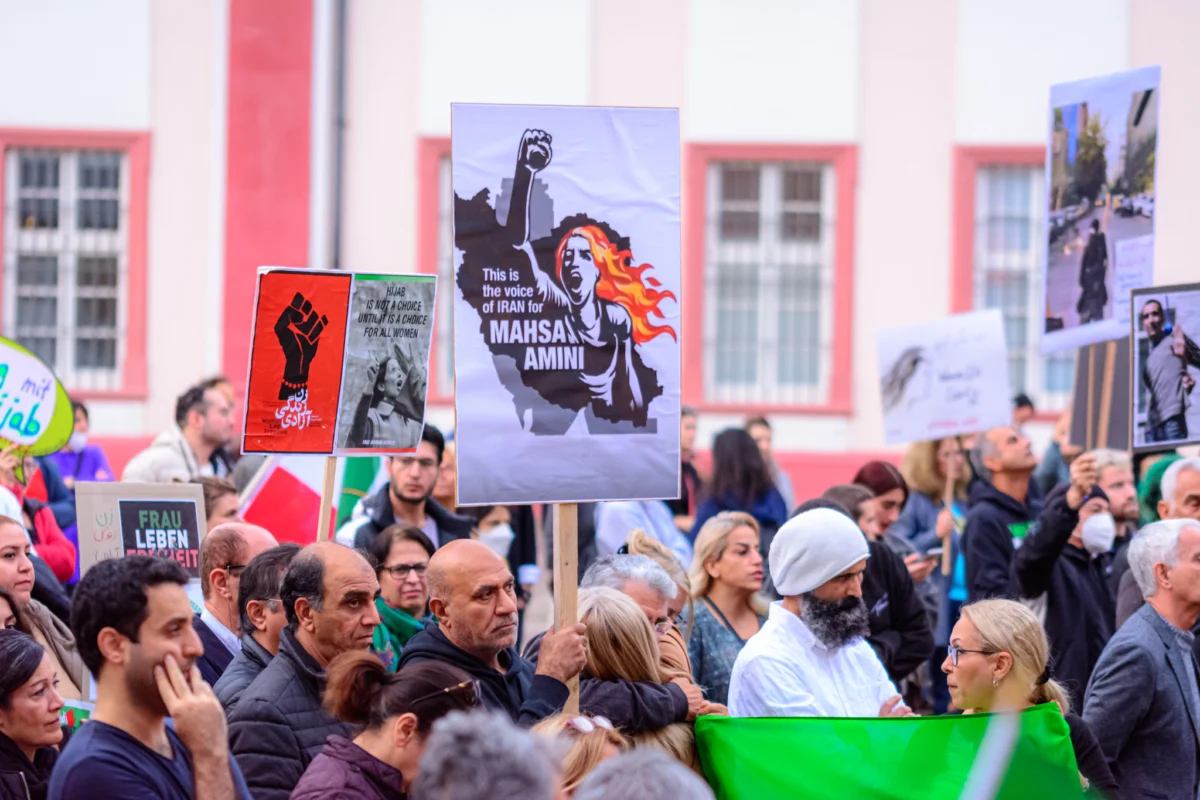
The current climate of repression is rooted in the 2022 protests, which were sparked by the death of 22-year-old Jina Mahsa Amini while in the custody of the "Morality Police." Her death for an alleged hijab violation triggered months of nationwide demonstrations, marking a shift in the Iranian public consciousness. The regime’s brutal crackdown on these protests set a dangerous precedent for the use of lethal force as a primary response to social grievances.
The December 2025–January 2026 Uprising
The most recent wave of unrest began on December 28, 2025, fueled by the rapid collapse of the Iranian currency, the rial. As hyperinflation decimated the purchasing power of ordinary Iranians, calls for fundamental political reform reached a fever pitch. The government’s response was immediate and violent. By January 8, 2026, authorities had effectively severed the country from the global internet to conceal a campaign of mass shootings and the use of prohibited weaponry against unarmed demonstrators. This information blackout served as a shield, allowing the regime to conduct mass arrests and expedited trials away from the prying eyes of the international press.
Historical Context: A Legacy of Mass Execution
To understand the current cycle of violence, one must look to the 1988 mass executions. Following a fatwa issued by then-Supreme Leader Ruhollah Khomeini, the Iranian state extrajudicially executed between 2,800 and 5,000 political prisoners. The victims were buried in unmarked mass graves, and their families were never notified of their deaths or the locations of their remains.
This historical trauma continues to define the relationship between the Iranian people and the state. Today, the intimidation tactics used against families seeking accountability—including harassment, threats, and surveillance—mirror the methods used in the aftermath of the 1988 massacre. The regime’s refusal to acknowledge these past atrocities or conduct independent investigations serves as a persistent barrier to national reconciliation and human rights progress.
Implications and International Responsibility
The findings of Human Rights Watch and the Abdorrahman Boroumand Center serve as a clarion call for the international community. The report explicitly urges UN member states to move beyond symbolic condemnation and adopt concrete diplomatic measures.
The Path to Accountability
The primary recommendation is the utilization of "universal jurisdiction." This legal principle allows national courts to prosecute individuals for serious international crimes—such as torture, war crimes, and crimes against humanity—regardless of where the crimes were committed or the nationality of the perpetrators. By targeting specific officials responsible for the current execution spree, the international community could create a tangible deterrent against future abuses.
Furthermore, the report emphasizes that silence is an enabler. The ongoing use of enforced disappearances and state-sanctioned murder requires a coordinated global response that prioritizes human rights over geopolitical convenience. As the regime continues to isolate itself, the leverage of the international community rests on its ability to document these abuses meticulously and ensure that those who carry out these "legalized" murders are held accountable under international law.
Conclusion: A Nation at a Crossroads
The situation in Iran represents a fundamental clash between the aspirations of a population demanding dignity and a state apparatus determined to maintain its grip on power through fear. With executions occurring weekly, the clock is ticking for those currently detained in Iran’s notorious prison system.
The international community stands at a crossroads. It can continue to issue standard statements of concern, or it can leverage the mechanisms of international justice to ensure that the Iranian authorities pay a price for their actions. As history has shown, when a government is permitted to kill its own citizens with impunity, the cycle of violence only deepens. The preservation of the lives of current protesters and the pursuit of justice for the families of the victims of the 1988 and 2026 purges are not merely matters of internal Iranian politics; they are tests of the global commitment to universal human rights.
