





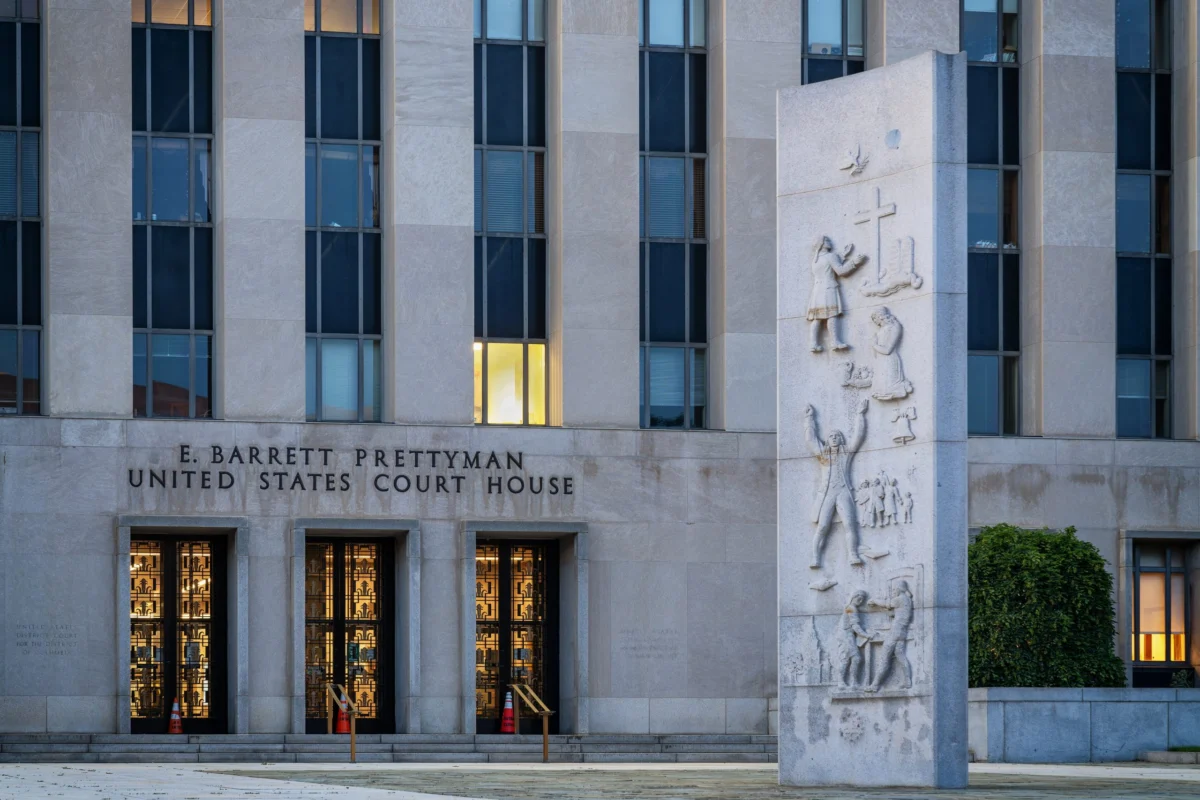
In an unprecedented application of specialized federal judicial authority, the United States Alien Terrorist Removal Court (ATRC) has issued its first-ever deportation order. The ruling, handed down on Friday, mandates the removal of Nazira Haji Zada, an Afghan national accused of providing material support to a foiled 2024 terror plot. The case marks the inaugural activation of a tribunal that has remained dormant since its legislative inception three decades ago, sparking a renewed national debate regarding the balance between clandestine national security measures and the fundamental rights of non-citizens within the U.S. justice system.
Zada’s case reached its conclusion through a negotiated agreement with the U.S. Department of Justice (DOJ). By conceding her status as an "alien terrorist," Zada effectively bypassed a protracted adversarial hearing, bringing an abrupt end to a case that legal scholars have monitored closely as a litmus test for the court’s operational capacity and constitutional standing.
The Genesis of a Shadow Court
To understand the gravity of the ATRC’s decision, one must look back to the legislative atmosphere of the mid-1990s. The court was established under the Antiterrorism and Effective Death Penalty Act (AEDPA) of 1996, a reactionary piece of legislation spurred by the harrowing 1995 Oklahoma City bombing.
The rationale provided by Congress at the time was clear: traditional immigration courts were deemed insufficient for cases involving classified intelligence. Legislators feared that the standard disclosure requirements of federal litigation would force the government to compromise sensitive sources and methods to secure a deportation. Consequently, the ATRC was designed as a "specialized" venue, operating under a veil of secrecy to handle individuals suspected of terrorist ties.
The legal architecture was further reinforced by Public Law 104-208, an omnibus appropriations act passed later that same year, which tightened restrictions on an immigrant’s access to evidence used against them. For thirty years, the ATRC existed only on paper—a "nuclear option" for the intelligence community that remained unlit until the Zada case.
Chronology of the Zada Proceedings
The legal path to Friday’s order was as discreet as the court itself. The case originated from an investigation into a foiled terror plot in 2024, in which Zada was alleged to have assisted her son and son-in-law.
- The Investigation: Federal authorities identified Zada’s involvement, linking her to logistical support for the plotters.
- The DOJ Application: The Department of Justice initiated proceedings by filing a request with the ATRC, asserting that there was probable cause to believe Zada was engaged in "terrorist activity" as defined under Section 212(a)(3)(B) of the Immigration and Nationality Act (INA).
- The Negotiated Settlement: Rather than proceeding to a full removal hearing—which would have tested the court’s untested evidentiary rules—the defense and the DOJ reached a plea-like agreement. Zada formally conceded her status as an alien terrorist, leading the court to issue the removal order.
- The Final Ruling: On Friday, the ATRC finalized the order, closing the first chapter in the court’s history.
Procedural Mechanics: How the ATRC Operates
The ATRC is unique in its composition and its rules of procedure. The Chief Justice of the U.S. Supreme Court is responsible for appointing five federal trial court judges to serve on the bench. Notably, these judges concurrently serve on the Foreign Intelligence Surveillance Court (FISC), a body that operates under similar, highly confidential parameters.
A Two-Step Legal Process
The court’s operations are bifurcated into two distinct phases:
- The Probable Cause Phase: The DOJ must demonstrate that the individual is engaged in "terrorist activity." Under current law, this definition is exceptionally broad. It encompasses not only direct participation in violence but also providing "material support," such as housing, transportation, or even financial assistance, to individuals or groups labeled as terrorists.
- The Removal Hearing: If the application clears the first hurdle, it proceeds to a formal hearing. Here, the evidentiary standard is lowered from the criminal law requirement of "beyond a reasonable doubt" to a "preponderance of the evidence."
The Absence of Standard Protections
For defendants appearing before the ATRC, the landscape is starkly different from a standard federal criminal trial. The Federal Rules of Evidence—which dictate what information can be admitted in court—do not apply. Furthermore, the accused lacks the right to a trial by jury, leaving their fate entirely in the hands of a single judge.
Perhaps most controversially, the court allows the government to withhold or redact classified evidence. While the immigrant may be provided with a summary of the evidence, they are not granted the right to confront the full scope of the information used against them. This raises profound questions about due process, as the defendant’s ability to mount a rebuttal is hampered by the government’s ability to keep its primary evidence behind a veil of national security.
Supporting Data and Legal Definitions
The legal definitions underpinning the ATRC are intentionally expansive to capture a wide array of potential threats. Under the INA, a "terrorist organization" is defined as any group of two or more individuals that has utilized a weapon or vehicle to damage property. When coupled with the definition of "terrorist activity," which can include the activities of children or spouses, the court is granted significant latitude in determining who falls under its jurisdiction.
The Brennan Center for Justice has long scrutinized the ATRC, arguing that the lack of adversarial testing in these proceedings creates a dangerous precedent. While the government maintains that these measures are essential for national security, legal experts point to the fact that this specific statute has not been subjected to the rigors of appellate review. In previous, non-ATRC contexts, federal courts have expressed skepticism toward the use of secret, undisclosed evidence as the primary basis for depriving individuals of liberty.
Official Responses and Political Implications
In the wake of the ruling, the administration has signaled that the activation of the ATRC is a milestone in national security policy. Attorney General Todd Blanche issued a statement describing the outcome as "a win for national security and the rule of law." The statement emphasized that the DOJ will continue to utilize every tool at its disposal to protect the public, suggesting that the ATRC may no longer be a dormant entity.
However, the political and civil rights implications are significant. By successfully utilizing the ATRC, the government has established a clear roadmap for future cases. This invites a new wave of criticism from human rights advocates who argue that the court’s structure undermines the U.S. commitment to open justice.
The Debate Over Due Process
The core tension remains the "secret evidence" problem. If the government can secure a deportation based on evidence that the defendant cannot fully challenge, does the process constitute a fair trial? Proponents argue that in the context of international terrorism, the threat to national security outweighs the interest in public disclosure. Opponents, conversely, fear that the ATRC will become a "black box" where the government can bypass constitutional safeguards simply by labeling an immigrant as a security threat.
Looking Forward: The Precedent of 2026
The case of Nazira Haji Zada serves as the foundational precedent for the ATRC. As the court continues to develop its procedures, legal scholars will be watching for how the judges handle future challenges to the government’s evidentiary submissions.
For now, the DOJ has successfully demonstrated that the ATRC is a functional instrument of state power. Whether this will lead to a broader, more frequent use of the court to address foreign nationals suspected of terrorism remains to be seen. What is certain is that the balance between secrecy and transparency in the American judicial system has shifted, and the legal community must now grapple with the realities of a court that operates largely in the shadows.
As the ATRC moves out of its 30-year hibernation, it brings with it a complex set of legal questions that will likely define the contours of immigration and national security law for years to come. The Zada case is not merely a conclusion; it is an opening statement in a debate over how much of the democratic process can be sacrificed in the name of safety.
