





In a landmark development for human rights and the rule of law in Central America, the Guatemalan judiciary has officially closed criminal proceedings against four prominent Indigenous leaders. These men—Luis Pacheco, Héctor Chaclán, Basilio Puac, and Esteban Toc—had been ensnared in a protracted legal battle following their leadership roles in the nationwide protests of October 2023. Amnesty International, which has advocated for the group since their initial arrest, hailed the court’s decision as a definitive victory for the right to freedom of assembly and a crucial step toward dismantling the systemic criminalization of Indigenous activism in Guatemala.
The resolution of these cases marks a turning point in a period of intense political instability that began with the 2023 general elections. While the closure of these specific cases provides long-awaited relief for the leaders and their families, international observers caution that the underlying patterns of judicial harassment against human rights defenders remain a significant threat to the nation’s democratic health.
The Chronology of Resistance and Retribution
The roots of the legal assault against these leaders lie in the political climate of 2023, a year defined by profound uncertainty regarding the transfer of power to President Bernardo Arévalo.
The October 2023 Protests
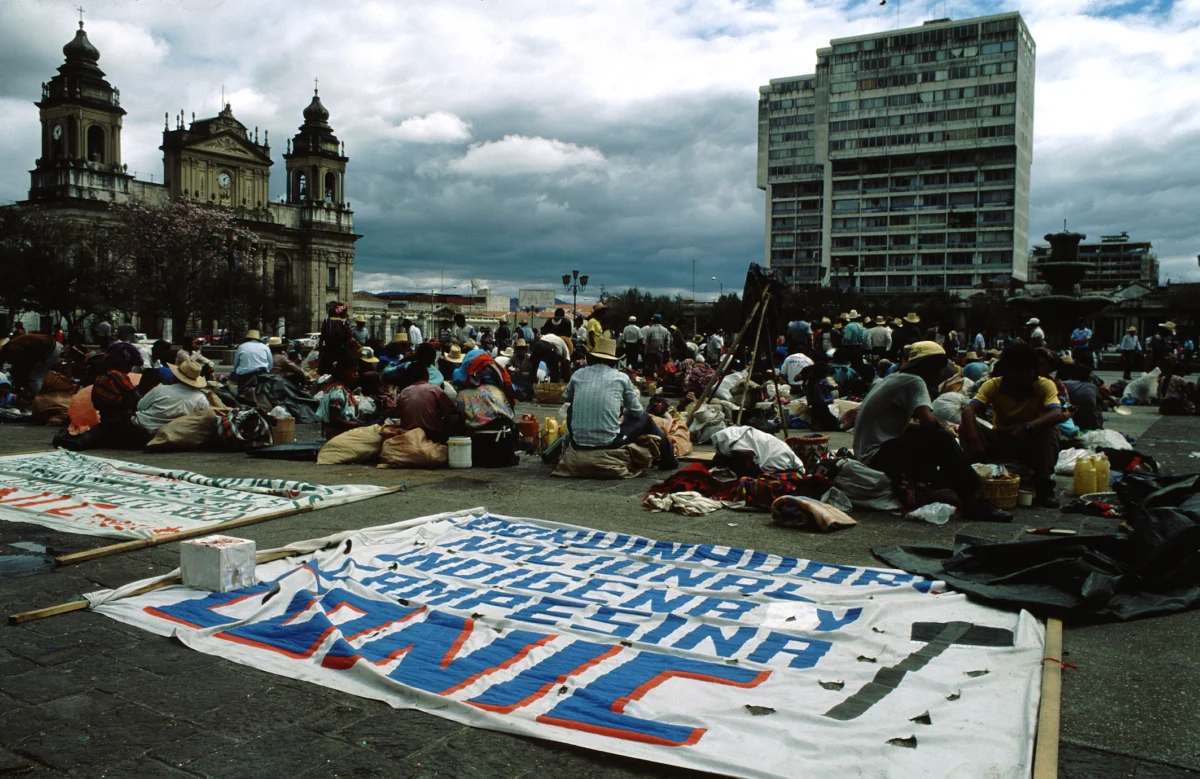
When prosecutors launched aggressive legal maneuvers to challenge the legitimacy of the presidential election results, Indigenous communities—led by ancestral authorities—initiated massive, nationwide strikes. These protests, which spanned weeks, were instrumental in ensuring that the democratic mandate of the electorate was respected. The 48 Cantones of Totonicapán, a historically significant Indigenous governing body, stood at the forefront of these demonstrations.
The Wave of Arrests
The state’s response was swift and, according to human rights organizations, retaliatory. On April 23, 2025, Luis Pacheco and Héctor Chaclán, who served as president and treasurer of the Maya K’iche’ Council of Community Mayors of the 48 Cantones, respectively, were taken into custody. They were followed shortly thereafter by Basilio Puac and, in August 2025, Esteban Toc, a member of the Indigenous Mayor’s Office of Sololá.
Pretrial Detention and "Prisoners of Conscience"
The four men were subjected to a barrage of serious criminal charges, including unlawful association, terrorism, obstruction of justice, sedition, and obstruction of criminal prosecution. The severity of these charges carried potential cumulative sentences exceeding 30 years. Pacheco and Chaclán spent over 15 months in pretrial detention, an ordeal that led Amnesty International to officially designate them as "prisoners of conscience" in May 2026. This label signified that the organization recognized their imprisonment as a direct result of their identity and political beliefs rather than any legitimate criminal act. While the men were eventually transferred to house arrest, the specter of the charges hung over them until this recent judicial reversal.
Supporting Data: The Anatomy of Legal Harassment
The case against the Indigenous leaders has been widely analyzed by international legal bodies, which have characterized the proceedings as a textbook example of "lawfare"—the misuse of legal systems to persecute political opponents.
The Charges vs. The Reality
The accusations leveled by the Public Prosecutor’s Office were characterized by an expansive interpretation of criminal law. By framing peaceful protests as "sedition" and "terrorism," the prosecution sought to strip the Indigenous leaders of their legitimacy as community representatives. Human Rights Watch and the Inter-American Commission on Human Rights (IACHR) have both documented how these charges were devoid of evidentiary substance, intended instead to intimidate the broader movement that protected the 2023 election results.
The International Legal Scrutiny
In April 2025, the IACHR issued a scathing assessment of the Guatemalan government’s actions. The Commission explicitly stated that the prosecutions were a "politically motivated misuse of criminal law." They noted that the leaders being targeted were the very individuals who had played an "instrumental role in preserving democratic order" during the state’s constitutional crisis.
Furthermore, the Vance Center for International Justice and the New York City Bar Association filed an amicus brief with the UN Working Group on Arbitrary Detention, providing a comprehensive legal analysis that argued the detention of these leaders violated international human rights standards. This international pressure played a vital role in keeping the cases in the global spotlight, preventing the charges from disappearing into the obscurity of a domestic court system often accused of bias.
Official Responses and Stakeholder Perspectives
The closure of the case has triggered a range of responses from the stakeholders involved, reflecting the deep polarization that still permeates Guatemalan society.
Amnesty International’s Stance
Astrid Valencia, Deputy Research Director for the Americas at Amnesty International, expressed cautious optimism. "Luis Pacheco and Héctor Chaclán should never have been imprisoned," Valencia remarked. "This ruling is a first step towards ending the arbitrary actions against them, but the state must ensure that this is not merely a tactical retreat, but a genuine commitment to ending the criminalization of social protest."
The Perspective of the Ancestral Authorities
For the 48 Cantones and the Indigenous Mayor’s Office, the closure is a vindication of their right to self-governance. For years, these ancestral structures have served as the moral compass of the nation. By targeting these leaders, the state attempted to silence the voice of Indigenous communities. The leaders have maintained throughout their ordeal that their actions were rooted in the defense of democracy and the constitution, rather than any intent to obstruct justice or cause public harm.
The Government’s Silence
The Public Prosecutor’s Office, which has been at the center of the controversy, has remained largely reticent regarding the dismissal of the charges. Critics argue that the office’s silence masks a deeper issue of institutional capture, where the judiciary and investigative bodies have been utilized to serve the interests of political elites who opposed the democratic transition.
Implications for Guatemala’s Democratic Future
While the closure of these proceedings brings relief to four families and their communities, the implications for Guatemala are broader and more concerning.
The Precedent of Criminalization
The use of the legal system to target dissenters creates a "chilling effect" on civic participation. When protest is equated with terrorism, ordinary citizens are discouraged from engaging in public advocacy. The fact that these charges were sustained for over a year serves as a warning to other human rights defenders and journalists in the country.
Continued Monitoring
Amnesty International has made it clear that while this case is closed, their work in Guatemala is far from over. The organization has committed to monitoring "similar cases" against other Indigenous leaders and activists currently pending in the court system. The persistence of these cases suggests that the structural conditions that allowed for the initial arrests remain largely intact.
Strengthening Judicial Independence
The resolution of this case underscores the vital importance of an independent judiciary. In countries where the rule of law is fragile, the court is often the final barrier against authoritarianism. The dismissal of these charges serves as a reminder that when the judiciary functions as intended—based on evidence and human rights standards rather than political pressure—it acts as a protector of democracy.
The Path Forward
For Guatemala to move past this dark chapter, the government must undertake a thorough review of the prosecutorial practices that led to these arrests. Ensuring that the Public Prosecutor’s Office operates with transparency and accountability is essential. Furthermore, the state must recognize the role of Indigenous authorities as legitimate partners in the national dialogue, rather than viewing their mobilization as an existential threat.
The victory for Pacheco, Chaclán, Puac, and Toc is a victory for the thousands of Guatemalans who marched in the streets to defend their right to choose their own leaders. As the country looks toward the future, the lessons from this case must serve as a guide for building a more inclusive and democratic society—one where the right to protest is protected, and where the law is used to defend the rights of the people, not to facilitate their suppression.
