

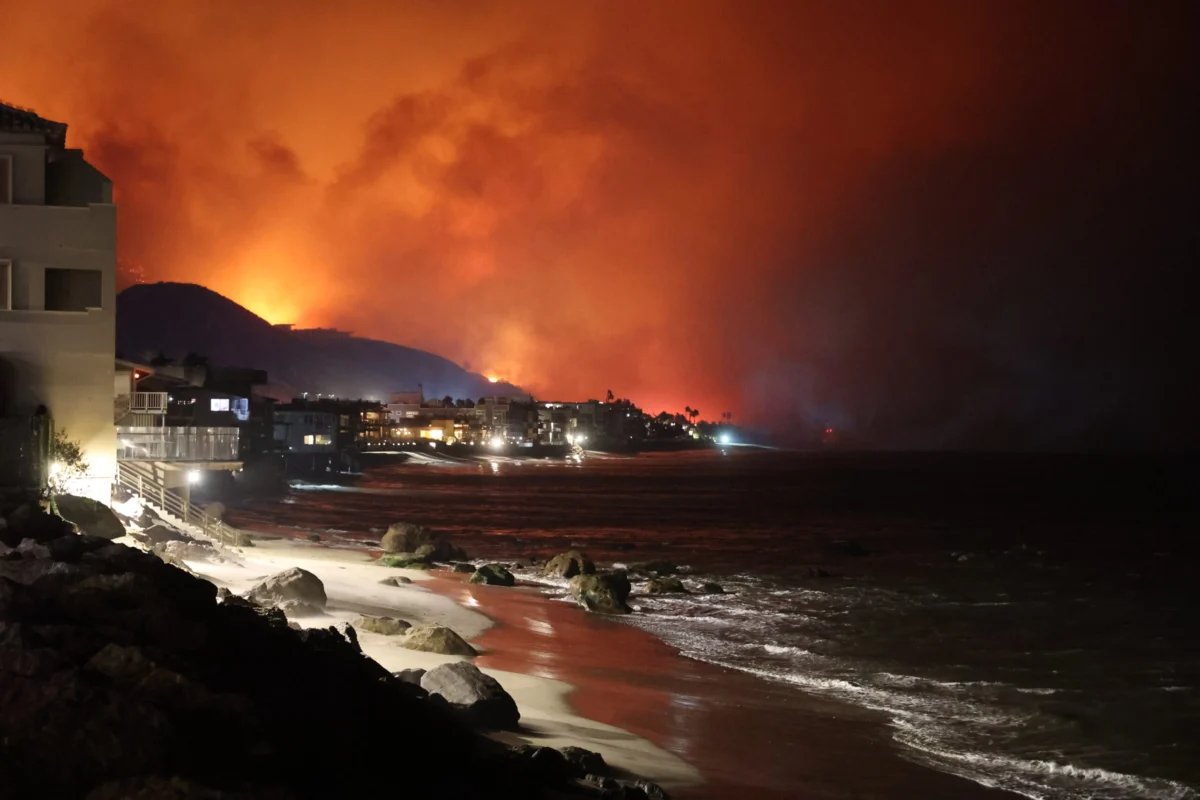
In a decisive move to bolster consumer protections against the lingering, often invisible impacts of California’s increasingly frequent wildfire seasons, Governor Gavin Newsom signed Assembly Bill 1795—the Smoke Damage Recovery Act—into law this Tuesday. The legislation marks a significant shift in the state’s insurance landscape, establishing clear, mandatory standards for the investigation, testing, and remediation of homes contaminated by wildfire smoke.
For years, smoke damage has remained a contentious "grey area" in insurance litigation. While structural fire damage is easily quantified, the microscopic, toxic particulate matter left behind by smoke has often led to protracted disputes between policyholders and insurance carriers. By codifying a presumption of coverage and mandating rigorous restoration standards, AB 1795 aims to close a critical consumer protection gap that has left thousands of Californians in limbo.
The Core Provisions: A New Framework for Recovery
Authored by Assemblymember Mike Gipson and championed by California Insurance Commissioner Ricardo Lara, AB 1795 addresses the complexities of smoke-related property claims through three primary pillars:
- The Presumption of Causation: The law creates a legal presumption that smoke damage found in homes within a designated wildfire impact area is, in fact, a result of the wildfire. This shifts the burden of proof, preventing insurers from reflexively denying claims by arguing that the damage was pre-existing or unrelated to the specific fire event.
- Mandatory Testing and Sampling: Insurers are now legally required to cover the costs of professional testing and sampling to determine the extent of smoke-borne toxins. This ensures that remediation efforts are based on empirical data rather than speculative assessments.
- Protection of Living Expenses: Perhaps most crucially, the law prohibits insurance companies from terminating Additional Living Expense (ALE) benefits until a home is officially certified as restored and safe for human habitation. This prevents insurers from forcing families to move back into contaminated, hazardous environments before the remediation process is complete.
Chronology: From Boyle Heights to the Governor’s Desk
The journey to AB 1795 was accelerated by a series of high-profile incidents that exposed the inadequacies of the existing regulatory framework.
The Catalyst: The Boyle Heights Warehouse Fire
The legislative impetus gained significant momentum following a massive industrial fire at a Lineage Logistics cold storage warehouse in Boyle Heights in June. The 491,000-square-foot facility burned for days, sending plumes of thick, dark smoke over dense residential neighborhoods. Residents reported long-term respiratory issues and persistent odors, yet many struggled to secure coverage for specialized cleaning and air quality remediation. The incident served as a wake-up call for lawmakers, highlighting that smoke damage is not merely a "wildfire" issue, but a broader public health and insurance concern.
The Smoke Claims and Remediation Task Force
Following the Boyle Heights incident and a string of earlier L.A.-area wildfires, Insurance Commissioner Ricardo Lara convened the Smoke Claims and Remediation Task Force. This coalition—comprising public health experts, wildfire survivors, and consumer advocates—conducted an exhaustive review of current claims practices. The Task Force’s findings were damning: wildfire victims were frequently falling through the cracks, trapped between insurance adjusters who undervalued smoke remediation and contractors who lacked standardized guidance on how to safely clean a home of fine particulate matter.
Legislative Progression
With the Task Force’s recommendations in hand, Assemblymember Gipson introduced AB 1795. Throughout the legislative session, the bill faced intense scrutiny from stakeholders on all sides. Consumer advocates argued that the bill was essential to prevent "bad faith" claim denials, while insurance industry representatives sought to ensure that the new mandates would not lead to an unmanageable surge in premium costs. After a series of amendments, the bill passed both the Assembly and the Senate with broad bipartisan support before landing on the Governor’s desk.
Supporting Data: The Hidden Costs of Smoke
The urgency of this legislation is rooted in the evolving nature of California’s fire climate. Modern wildfires are increasingly consuming synthetic materials, plastics, and industrial chemicals, creating smoke plumes that are significantly more toxic than those produced by forest fires of the past.
Data collected by the Department of Insurance indicates that smoke damage claims have increased by nearly 40% over the last five years. These claims are notoriously difficult to process because "smoke damage" is not a monolith. It includes:
- Particulate Matter (PM2.5): Tiny particles that penetrate deep into HVAC systems, porous walls, and furniture.
- Volatile Organic Compounds (VOCs): Chemical gases released by burning synthetics that can cause long-term neurological and respiratory health risks.
- Soot and Char: Physical deposits that, if not cleaned using specific high-efficiency particulate air (HEPA) techniques, can continue to off-gas toxins long after the fire is extinguished.
Prior to AB 1795, the lack of standardized testing protocols meant that one insurance company might deem a home "clean" after a simple wipe-down, while another might require full professional decontamination. The new law mandates that the California Department of Insurance and the Office of Emergency Services (CalOES) work in tandem to develop uniform testing standards, ensuring that "restored" means truly safe.
Official Responses and Industry Perspectives
The reception to the new law has been largely positive, though industry groups have signaled that the success of the legislation will hinge entirely on its implementation.
The Insurance Perspective
The American Property Casualty Insurance Association (APCIA) issued a statement acknowledging the bill as a "meaningful step" toward transparency. However, the association emphasized a note of caution regarding the regulatory roadmap. "As these new regulations are developed, they must be grounded in credible science, valid methodologies, and the best available technical expertise," the statement read. The APCIA reiterated its commitment to working with regulators to balance consumer protections with the need to keep insurance products available and affordable in a high-risk state.
The Consumer Advocacy Perspective
For wildfire survivors, the law is viewed as a victory for basic dignity. "For too long, survivors have been forced to act as amateur industrial hygienists, fighting with adjusters while living in trailers or hotels," noted a representative from a California wildfire recovery advocacy group. "By forcing insurers to cover the testing and preventing them from cutting off ALEs prematurely, the state is finally acknowledging that the trauma of a wildfire doesn’t end when the flames stop."
Implications: A New Era for Homeowners
The signing of AB 1795 carries profound implications for the California insurance market and for homeowners living in the "Wildland-Urban Interface" (WUI).
Strengthening Consumer Protections
The most immediate impact is the financial stability provided to families during the recovery process. By prohibiting the premature termination of Additional Living Expenses, the law ensures that households are not forced back into homes that haven’t been properly remediated. This protects families from the long-term health consequences of living in smoke-compromised environments.
Regulatory Evolution
The directive for the Department of Insurance and CalOES to evaluate future contamination events suggests that California is moving toward a more proactive, rather than reactive, stance on fire-related insurance. This could eventually lead to a standardized "Smoke Remediation Certification" for contractors, further professionalizing an industry that has historically been fragmented and unregulated.
The Affordability Challenge
While the law is a victory for consumer rights, the insurance industry remains focused on the long-term economic viability of the California market. As climate change continues to increase the frequency and severity of wildfires, the cost of these new mandates will be closely monitored. Policymakers will face the delicate task of ensuring that these new protections do not inadvertently drive insurers out of the state or cause premiums to spike for homeowners who are already struggling with rising costs.
Conclusion
Assembly Bill 1795 represents a necessary evolution in California’s disaster recovery framework. By acknowledging the complex reality of smoke damage and placing the responsibility for scientific, thorough remediation back where it belongs—with the insurers—the state has set a new national standard.
As California looks toward an uncertain future of climate-driven disasters, the Smoke Damage Recovery Act serves as a reminder that consumer protection must evolve alongside the threats faced by the public. The success of the law will now depend on the diligent, science-based implementation by state regulators and the continued cooperation of the insurance industry, ensuring that for thousands of Californians, the path back to a safe home is finally clear.
