



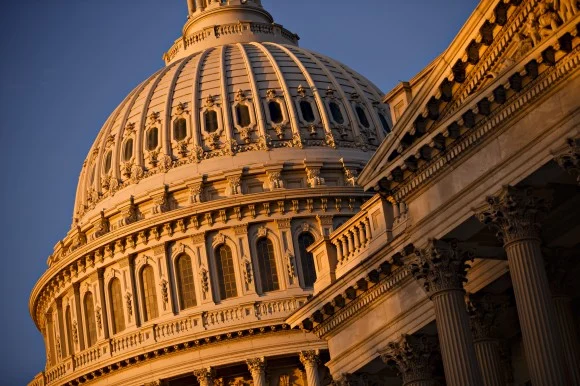
In a rare display of bipartisan consensus, the U.S. Senate Banking Committee voted 24-0 on September 17 to advance the Terrorism Risk Insurance Program Reauthorization Act of 2026 (S. 4395). This legislative milestone sets the stage for a floor vote in the full Senate, signaling a robust commitment to maintaining the economic stability of the nation’s commercial insurance markets.
The move follows a decisive show of support from the House of Representatives, which passed its own version of the extension in June. As the program—originally birthed from the ashes of the September 11, 2001, terrorist attacks—nears its current expiration date of December 31, 2027, the legislative push to extend it through 2037 has become a top priority for both policymakers and the commercial insurance sector.
The Foundation of Economic Stability: A Chronology of TRIA
The Terrorism Risk Insurance Act (TRIA) was never intended to be a permanent feature of the federal landscape; rather, it was a necessary stopgap measure to prevent a total collapse of the commercial real estate and construction markets. In the immediate aftermath of 9/11, primary insurers and reinsurers began excluding terrorism coverage from commercial policies, fearing that the catastrophic, unpredictable nature of such events made them uninsurable.
Key Milestones in TRIA’s History:
- 2002: The Birth of TRIA: Congress enacted the original act to provide a temporary federal backstop, ensuring that businesses could continue to operate and obtain the insurance coverage required by lenders.
- 2005: First Reauthorization: Recognizing that the market had not fully stabilized, Congress extended the program, signaling its intent to keep the backstop in place as long as the threat environment remained elevated.
- 2007: Extending the Horizon: The program was further extended, moving the focus toward long-term risk management.
- 2015: The TRIPRA Act: Following a period of intense debate, the Terrorism Risk Insurance Program Reauthorization Act (TRIPRA) introduced more rigorous requirements for insurers, including increased private-sector retention and "make available" requirements.
- 2019: Modernization: Congress extended the program again, reinforcing the federal role in the event of a certified act of terrorism.
- 2027: The Impending Cliff: The current expiration date looms as the next major hurdle for American business continuity.
The 2026 reauthorization process, embodied by S. 4395, is the most ambitious yet, seeking to cement the program’s role in the national economy for another decade.
Why TRIA Remains Essential: The Unpredictable Nature of Modern Threats
The primary argument for the extension of TRIA lies in the fundamental difference between traditional insurance risks—such as fire, theft, or natural disasters—and the intentional, malicious nature of terrorism.
"Extending TRIA is critical because terrorism poses uniquely unpredictable risk," says Jimi Grande, senior vice president of federal and political affairs for the National Association of Mutual Insurance Companies (NAMIC). "We don’t know where or when terrorists will strike, and unlike natural disasters, terrorists can and will adapt to counter any efforts to protect ourselves."
Unlike a hurricane, which follows predictable meteorological patterns, or a building fire, which has statistical frequency, terrorism is a "black swan" event. It is driven by human agency, evolving geopolitical tensions, and an asymmetric strategy designed to cause maximum economic disruption. Without the federal backstop, insurers would be forced to charge prohibitive premiums for terrorism coverage or, more likely, retreat from the market entirely. A lack of coverage would trigger a domino effect: lenders would refuse to issue loans for large-scale construction or commercial property, stalling economic growth and development across the country.
A Unified Industry Front: The July 2026 Call to Action
The push for reauthorization has been driven by a massive, unified coalition of industry stakeholders. In late July, a powerhouse group of trade organizations—including NAMIC, the American Property Casualty Insurance Association (APCIA), the Independent Insurance Agents & Brokers of America (Big I), the Reinsurance Association of America (RAA), the Wholesale & Specialty Insurance Association (WSIA), the Council of Insurance Agents & Brokers (CIAB), and the Vermont Captive Insurance Association—penned a formal letter to Senate leadership.
The message was clear: "Avoid market disruptions and continue the economic certainty provided by the program."
This coalition represents the entire ecosystem of American risk management. Their collective voice highlights that the stability of the program is not merely a concern for insurance companies, but for the brokers who advise clients, the captive insurers that help corporations manage internal risks, and the reinsurers who sit at the top of the risk-transfer chain. The unanimous vote in the Senate Banking Committee is a direct response to this industry-wide consensus.
Implications for Global Risk Management
As the legislative wheels turn, the private sector is simultaneously undergoing a paradigm shift in how it views geopolitical exposure. According to Joe Peiser, CEO of Risk Capital for Aon, the timing of this reauthorization is particularly relevant to the current global climate.
"Completion of congressional action on a long-term reauthorization of TRIA comes at a time when organizations are taking a fresh look at geopolitical risk," Peiser noted. "Recent events have prompted many businesses to reassess how they approach terrorism, political violence, critical infrastructure disruption, and other complex exposures that can have far-reaching operational and financial consequences."
The modern threat landscape has expanded far beyond the traditional concepts of "terrorism" that defined the post-9/11 era. Today, businesses must contend with:
- Cyber-Terrorism: The use of digital attacks to cripple national infrastructure, a threat that continues to blur the lines between traditional warfare and criminal activity.
- Political Violence: The rise of civil unrest and its impact on property and business operations in major urban centers.
- Supply Chain Disruption: How a single terrorist incident at a key logistics hub can cascade through a globalized economy.
The extension of TRIA through 2037 acknowledges that these risks are not going away. By providing a long-term horizon, the government is enabling businesses to plan their capital expenditures and risk management strategies with a degree of confidence that would otherwise be impossible in a volatile world.
The Mechanics of the Backstop: How TRIA Protects the Market
It is a common misconception that TRIA acts as a "bailout" for insurance companies. In reality, the program functions as a loss-sharing mechanism. Under the program, the federal government only becomes involved after a "certified act of terrorism" has occurred and insurance industry losses have reached a specific "program trigger" amount.
Even then, insurers are required to pay a significant deductible before federal assistance kicks in. Furthermore, the federal government recoups a portion of the assistance provided through mandatory policyholder surcharges. This structure ensures that the private market retains "skin in the game" while the federal government acts as the insurer of last resort for catastrophic losses that exceed the capacity of the private global insurance market.
The Road Ahead: From Senate Floor to President’s Desk
With the Senate Banking Committee’s 24-0 vote, the path to the Senate floor is clear. Given the overwhelming support in the House, the legislation is widely expected to pass the Senate with a comfortable margin.
However, political observers remain cautious. While the consensus on TRIA is broad, legislative scheduling in the final months of the year can be unpredictable. The primary goal for leadership is to avoid the uncertainty of a last-minute expiration, which could cause immediate ripples in the commercial lending market. By moving to finalize the extension well before the 2027 deadline, Congress is acting to prevent a "liquidity crunch" that could arise if lenders became uncertain about the availability of terrorism coverage for long-term commercial loans.
Summary of Strategic Importance:
- Economic Continuity: Ensures that commercial real estate and major infrastructure projects remain financeable.
- Market Stability: Prevents a sudden spike in insurance premiums or a withdrawal of capacity by major global insurers.
- Geopolitical Resilience: Signals to the global community that the United States is prepared for the long-term reality of evolving security threats.
Conclusion
The unanimous advancement of S. 4395 is a testament to the success of a public-private partnership that has proven its worth over more than two decades. While the world of 2026 looks vastly different from the world of 2002, the need for a collaborative, government-backed safety net for terrorism risk has only increased.
As the legislation moves toward the President’s desk, the message to the American business community is one of stability. By extending the Terrorism Risk Insurance Program through 2037, Congress is providing the necessary framework for businesses to grow, invest, and innovate in an era characterized by unpredictable and complex global risks. The program remains a vital pillar of the U.S. economy, proving that even in a polarized political climate, the protection of the nation’s economic backbone remains a shared national objective.
