



While the Atlantic basin has remained uncharacteristically quiet during the early stages of this hurricane season, meteorologists at the National Hurricane Center are currently tracking a system east of Bermuda that bears the hallmarks of potential tropical development. However, for the insurance industry and risk analysts, the focus has shifted from the immediate forecast to a looming, long-term catastrophe: the sheer financial exposure created by a century of rapid urbanization in the Sunshine State.
A new report from the Swiss Re Institute serves as a sobering wake-up call, suggesting that a repeat of historical hurricane scenarios in today’s economic climate would result in financial losses that would dwarf any previous catastrophe in human history. With population density and asset values at all-time highs, the industry is bracing for a potential $300 billion insurance event—a figure that would test the very foundations of the global reinsurance market.
The Calculus of Catastrophe: A Century of Exposure
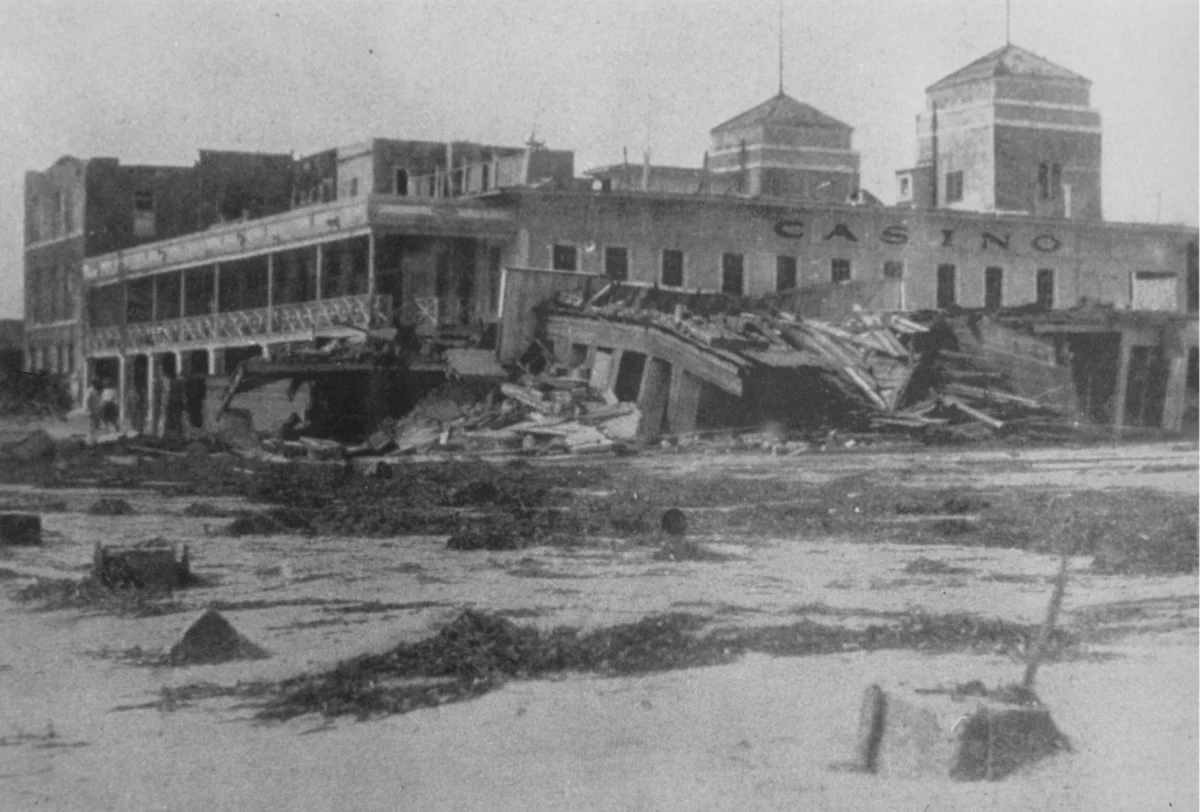
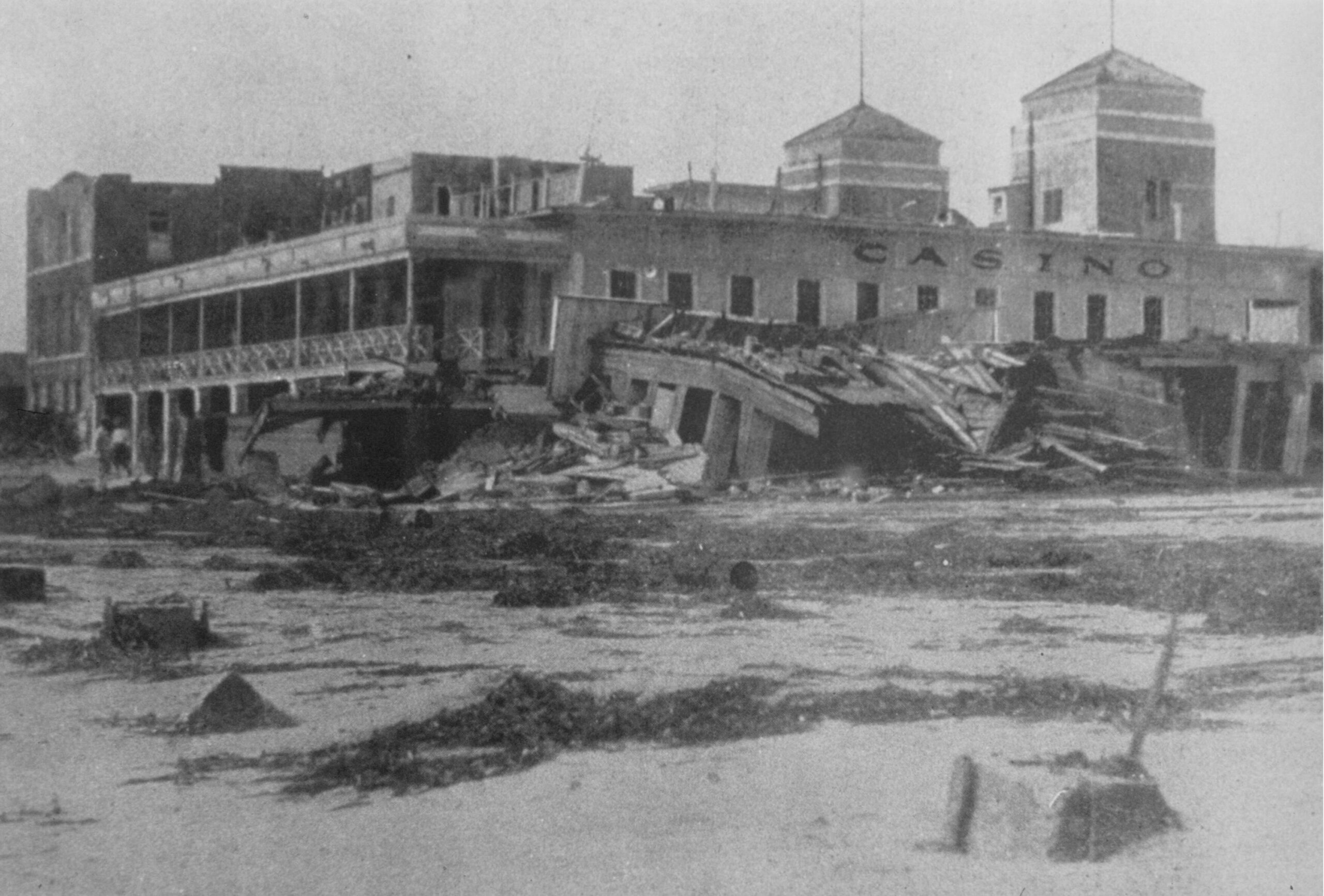
The Swiss Re analysis centers on a chilling premise: the vulnerability of a region is not merely a function of the storm’s intensity, but of what the storm encounters upon landfall. To illustrate this, the report contrasts the modern landscape with the 1926 Great Miami Hurricane, which struck South Florida a century ago.
If an event of that magnitude—a Category 4 storm with similar wind speeds and dimensions—were to strike the Miami-Dade area today, Swiss Re estimates it would trigger $200 billion in insured losses. When factoring in the possibility of a Category 5 "monster storm" hitting a major metropolitan hub like Miami or Tampa Bay, that figure swells to over $300 billion.
To put this in perspective, the 2022 Hurricane Ian, which devastated parts of western Florida as a Category 4 storm, resulted in approximately $63 billion in insured losses, according to data from Karen Clark & Co. The projected $300 billion catastrophe would represent a nearly five-fold increase in financial impact, underscoring the compounding effect of hyper-development in high-risk zones.
Chronology of Vulnerability: From 1926 to the Present
The historical progression of Florida’s hurricane risk is a story of explosive growth. In 1926, Miami-Dade County was home to roughly 100,000 residents. Today, that same geography supports a population of approximately 2.8 million people. This transformation has turned once-empty stretches of coastline into high-density corridors of glass, steel, and concrete.
The Andrew Benchmark
The report also provides a critical look at the impact of Hurricane Andrew, which made landfall near Miami 34 years ago. While Andrew was a defining moment for Florida’s building codes and construction standards, the economic reality of 1992 vs. today is stark. Adjusted for inflation and current property values, a storm of Andrew’s intensity striking the same path today would generate nearly $100 billion in insured losses. In its original 1992 context, Andrew resulted in roughly $25 billion in insured losses.
This gap between the historical loss and the modern projection highlights the "accumulation problem." It is not simply that the storms are becoming more intense; it is that we have built significantly more, and significantly more expensive, property in the path of these storms.
Supporting Data: The Concentration of Risk
The scale of the potential damage is driven by the massive concentration of wealth in vulnerable coastal areas. Swiss Re’s research highlights that in the Miami metropolitan area alone, there are more than two million homes with a combined reconstruction cost exceeding $600 billion. These assets are categorized as being at "moderate or greater" risk of hurricane wind damage.
The report’s data reveals a clear trend:
- 1926 Population (Miami-Dade): ~100,000
- 2024 Population (Miami-Dade): ~2,800,000
- Total Reconstruction Value (Miami Metro): >$600 Billion
- Projected Loss (Category 5 Strike): >$300 Billion
This concentration of capital creates a "tail risk" that is increasingly difficult to manage. The reliance on alternative capital, such as catastrophe (cat) bonds, has become a cornerstone of the market’s stability. Currently, U.S. wind risk accounts for the dominant share of the $60 billion global cat-bond market, acting as a crucial shock absorber for the insurance industry.
Official Responses and Industry Perspectives
Balz Grollimund, head of catastrophe perils at Swiss Re, emphasized that the industry must look beyond meteorological modeling to understand the evolving nature of the threat.
"One hundred years after the Great Miami Hurricane, the question is not simply how powerful the next major hurricane will be, but what it will encounter when it reaches shore," Grollimund stated. "That lesson extends well beyond Florida: As populations and asset values increase in areas exposed to natural catastrophes, so does the potential for large insured losses."
However, the report is not entirely pessimistic. It notes that Florida’s insurance carriers are arguably better prepared for a major disaster today than they were decades ago, thanks to sophisticated catastrophe modeling, disciplined accumulation management, and the integration of alternative reinsurance capital.
The authors of the report—Lucia Bevere, Erik Lindgren, and James Finucane—point to the efficacy of updated building codes as a primary defense mechanism. Newer homes in Florida demonstrated increased resilience during Hurricane Ian, and the widespread adoption of storm-proof roofing and reinforced windows has measurably reduced the vulnerability of the residential housing stock.
Implications for the Future: A New Era of Risk Management
The findings from Swiss Re suggest that the era of "business as usual" for coastal property insurance is coming to a close. The implications for policymakers, insurers, and homeowners are profound:
1. The Mitigation Mandate
As exposure continues to grow, the industry must pivot from a reactive model to a proactive one. Robust mitigation—such as hardening public infrastructure and incentivizing the retrofitting of older properties—is no longer a luxury but a prerequisite for insurability. The report highlights that stronger building codes have already paid dividends, and the next decade must see a doubling down on these standards.
2. Capital Resilience
The reliance on both traditional and alternative reinsurance is a delicate balancing act. As risk accumulates, the supply of risk-transfer capital must keep pace. The current stability of the Florida market relies heavily on the appetite of global investors for catastrophe-linked securities. If a $300 billion event were to occur, it would necessitate a massive infusion of capital to prevent a systemic collapse of the regional insurance market.
3. The Urban Planning Paradox
The most uncomfortable implication of the report is the tension between economic growth and environmental risk. Florida’s economy has been fueled by the very development that now creates such staggering risk. Addressing this will require a fundamental shift in how cities are zoned and how developers are held accountable for the long-term climate risks of their projects.
Conclusion: Preparing for the "Big One"
The threat of a $300 billion hurricane is not a hypothetical alarmism; it is a mathematical certainty based on current demographic and economic trajectories. While the current Atlantic season may start quietly, the lessons provided by the Swiss Re Institute remind us that a single, well-placed storm can change the financial landscape of a state in a matter of hours.
For the insurance industry, the mission for the next decade is clear: leverage the power of advanced modeling to guide investment, enforce stringent construction standards to reduce physical vulnerability, and ensure that the financial architecture is robust enough to withstand the "tail risk" of a modern-day Great Miami Hurricane. The buildings of the 21st century have reached heights and densities that the architects of 1926 could scarcely imagine; it is now the responsibility of the modern industry to ensure that these assets can survive the winds of the future.
