





For decades, the United States has stood as a global anomaly: a premier economic superpower and a beacon of technological innovation that remains tethered to a sluggish, mid-20th-century passenger rail network. While nations from Japan to Spain and China have revolutionized domestic travel with high-speed rail (HSR) networks that stitch together distant metropolitan hubs, the U.S. continues to struggle with cost overruns, political inertia, and a fundamental misunderstanding of infrastructure economics.
Jonathan McDonald, an executive consultant at Raul V. Bravo + Associates and a board member at the Commuter Rail Coalition, argues that the frustration felt by millions of Americans is not merely a failure of engineering, but a failure of institutional design. To bridge the gap between American ambition and reality, the nation requires a paradigm shift—moving away from the binary choice of taxpayer-funded government projects or private-sector apathy, and toward a unified, public-private ecosystem.
Main Facts: The Structural Bottleneck
The fundamental challenge to American high-speed rail is not a lack of demand, but a lack of infrastructure ownership. Unlike Europe or East Asia, where the state typically maintains control over national rail rights-of-way, the vast majority of U.S. rail mileage is privately owned.
Of the roughly 136,000 miles of track currently operating in the U.S., the overwhelming majority are dedicated to freight, owned by major private railroad corporations. Amtrak, the national passenger service, owns a mere 530 miles of track—mostly concentrated in the Northeast Corridor. This discrepancy creates a "zero-sum" environment. Freight railroads, whose business model relies on heavy, slow-moving cargo, are inherently resistant to sharing their corridors with high-speed passenger trains.
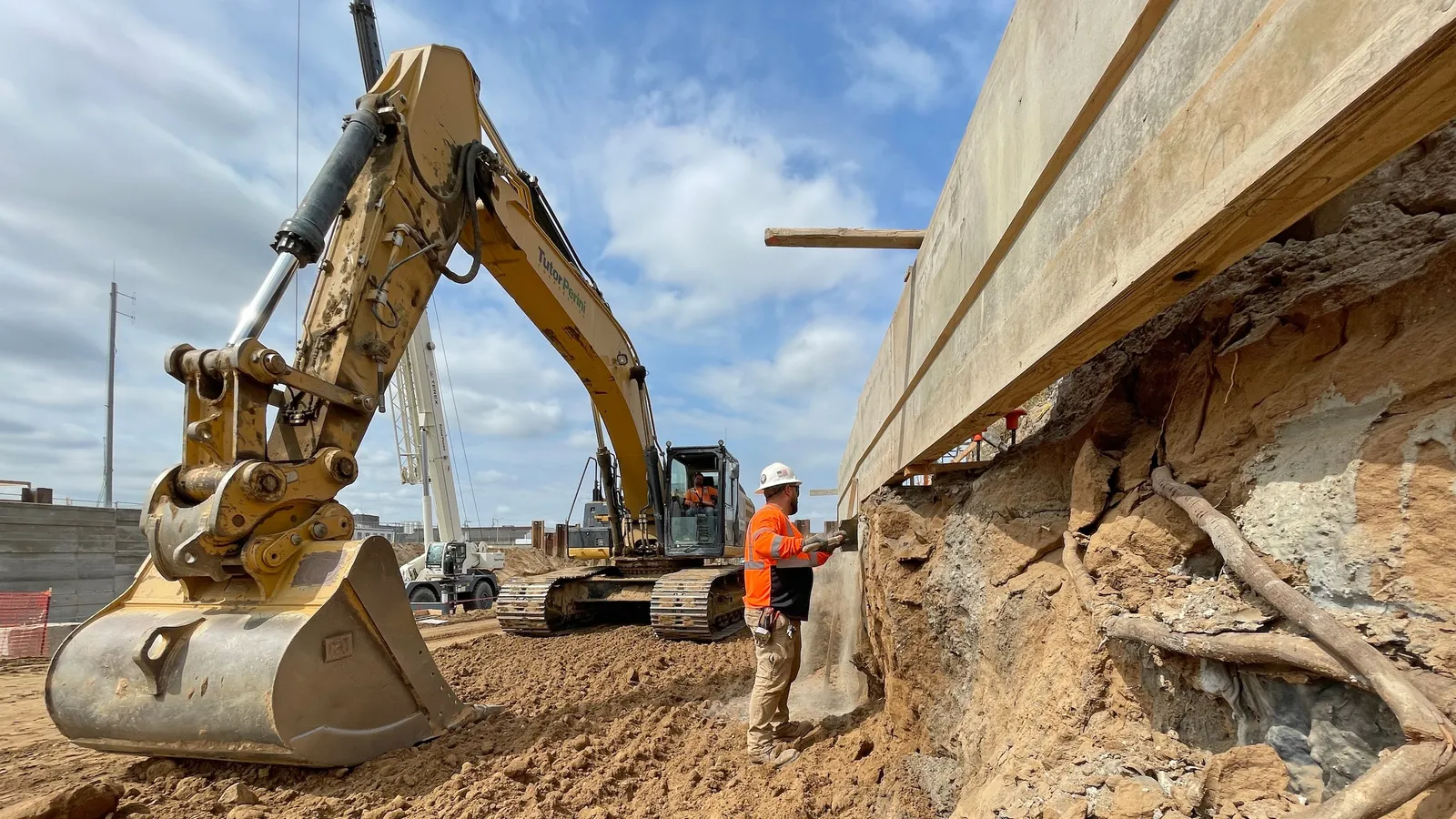
High-speed rail requires specialized, grade-separated tracks; the weight of a freight train is sufficient to damage the precise tolerances required for high-speed infrastructure. Consequently, any new HSR project must start from the ground up, facing massive land-acquisition costs and construction timelines spanning 15 to 20 years. With costs frequently exceeding $100 million per mile, the fiscal burden has made HSR a "third-rail" issue for politicians, as voters remain wary of the tax hikes required to fund these gargantuan undertakings.
Chronology: A History of Stalled Ambition
The quest for U.S. high-speed rail has been marked by a series of fragmented initiatives rather than a coherent national strategy:
- 1964: The inauguration of Japan’s Shinkansen serves as the first global benchmark for HSR, leaving the U.S. to rely on aging diesel-powered infrastructure.
- 1991: The Intermodal Surface Transportation Efficiency Act (ISTEA) identifies several high-speed corridors, yet most fail to secure sustained federal funding.
- 2009: The American Recovery and Reinvestment Act allocates $8 billion for high-speed rail. While this fuels regional projects, it fails to create a national, cohesive network, leading to isolated lines that struggle with integration.
- 2010s: The California High-Speed Rail project experiences significant cost escalations and delays, becoming a lightning rod for critics who view HSR as an inefficient use of public capital.
- 2020s: The emergence of private-sector attempts, such as Brightline in Florida, demonstrates that "higher-speed" rail can be profitable when it avoids the bureaucratic hurdles of traditional public projects, yet these remain limited in scope and speed.
Supporting Data: The Case for a New Model
The economic argument for HSR extends beyond mere speed. High-speed rail acts as an economic multiplier, transforming "static" regions into vibrant hubs of commerce and residential growth. However, the current model of taxpayer-funded infrastructure is failing to capture this value.
The Cost-Benefit Imbalance
Current projects are often bogged down by political cycles. A project that takes two decades to build will inevitably face changes in administration, funding priorities, and environmental regulations. This volatility drives up costs through "stop-start" construction cycles.
The Infrastructure Gap
The U.S. possesses one of the most efficient freight rail networks in the world, but it is functionally incompatible with modern passenger transit. McDonald posits that the only way to resolve this is to treat rail as a national utility—managed by a neutral, non-operating entity—that leases capacity to the highest-performing operators.
Official Responses and Stakeholder Dynamics
To successfully implement a new rail strategy, a "no-harm" principle must be applied to the existing ecosystem. Any viable plan must address the concerns of:
- Freight Railroads: They must be assured that new infrastructure will not disrupt their freight corridors. By utilizing a "National Railroad Infrastructure Bank," the focus shifts to building parallel, dedicated passenger corridors, protecting freight revenue.
- Amtrak: As the current operator of the Northeast Corridor, Amtrak remains a vital component. The proposed model would allow Amtrak to focus on being a world-class operator, rather than being forced to act as an infrastructure maintainer—a role that historically drains its resources.
- Organized Labor: A robust, long-term construction and operation plan creates thousands of high-skilled, permanent jobs. By engaging labor as partners in the expansion, the industry can avoid the adversarial relationships that often plague transit projects.
- State Governments: States are currently the primary drivers of regional rail. Under the proposed model, states act as the "de-riskers," conducting feasibility studies and identifying corridors, while the private sector assumes the risks associated with construction and operational efficiency.
Implications: A National Infrastructure Bank
The core of the solution is the creation of a National Railroad Infrastructure Bank. This entity would fundamentally change the ownership structure of American rail.
Ownership vs. Operation
The Bank would own the infrastructure—starting with the transfer of the Northeast Corridor—but it would explicitly not maintain or operate the trains. By separating ownership from operations, the Bank avoids the conflict of interest inherent in current systems. It would function as an asset manager, issuing long-term, public-private partnership contracts that mandate open access to all qualified service providers.
The Role of Private Developers
Under this framework, a private infrastructure manager would be contracted to build the rail assets. Crucially, this manager would be incentivized by profit—not just from rail tickets, but from transit-oriented development (TOD) around stations. This model allows developers to maximize capacity because their profit is tied to the efficiency and volume of the system.
Protecting the Taxpayer
The taxpayer is shielded from the most volatile elements of infrastructure development. By shifting the construction and operational risk to private firms operating under performance-based contracts, the public is no longer on the hook for cost overruns or operational failures. If a concessionaire fails to meet its performance goals, the contract is re-bid, ensuring that the system remains dynamic and responsive to market demand.
Conclusion: Toward a Connected Future
High-speed rail in the United States is not a technological fantasy; it is an organizational challenge. By leveraging the specific strengths of the federal government (policy and oversight), state governments (local planning and risk mitigation), and the private sector (capital efficiency and operational expertise), the U.S. can move beyond the "expensive and underwhelming" projects of the past.
The path forward requires a pragmatic, non-partisan approach. It demands that we stop viewing rail as a purely political project and start viewing it as an essential, high-performance utility. By building the infrastructure correctly the first time—through a model that incentivizes private participation and protects public interest—we can foster an economic boom that transcends state lines, improves the quality of life for millions, and binds the nation together in a way no other technology can.
The infrastructure is ready to be built. The question is no longer whether we have the technology to travel at high speeds, but whether we have the institutional courage to build the tracks upon which that future will run.
