





Colin Chapman, the visionary founder of Lotus Cars, famously boiled down the essence of automotive engineering to a single, immutable commandment: "Simplify and add lightness." It was a mantra that defined the British sports car aesthetic, giving birth to the Lotus Seven—a minimalist, open-wheeled roadster so devoid of creature comforts that it essentially functioned as a street-legal go-kart.
However, in the world of automotive customization, someone eventually decided that Chapman’s philosophy was more of a suggestion than a rule. A recently surfaced listing on Bring a Trailer showcases a machine that stands in direct, thundering opposition to everything the Lotus Seven represents. It is a custom-built, V8-powered, circle-track-focused monster that trades agility for raw, unadulterated displacement.
Main Facts: A Seven in Name Only
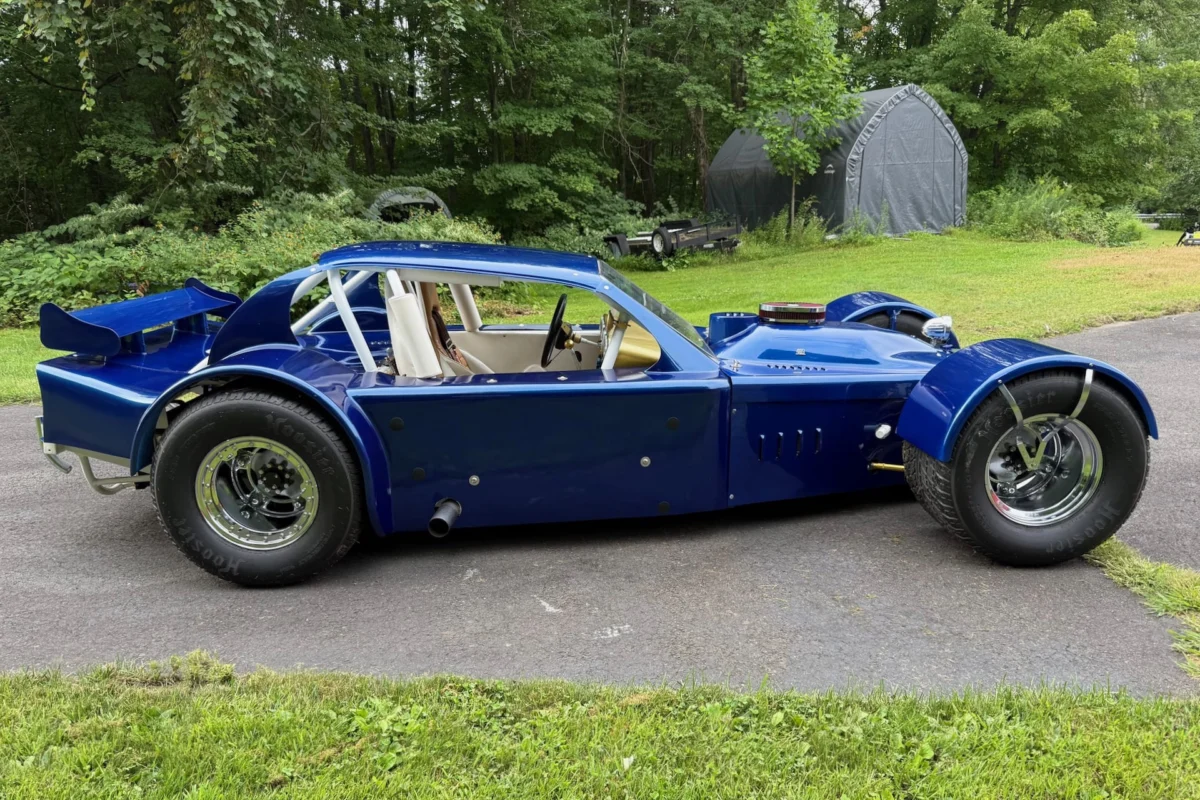
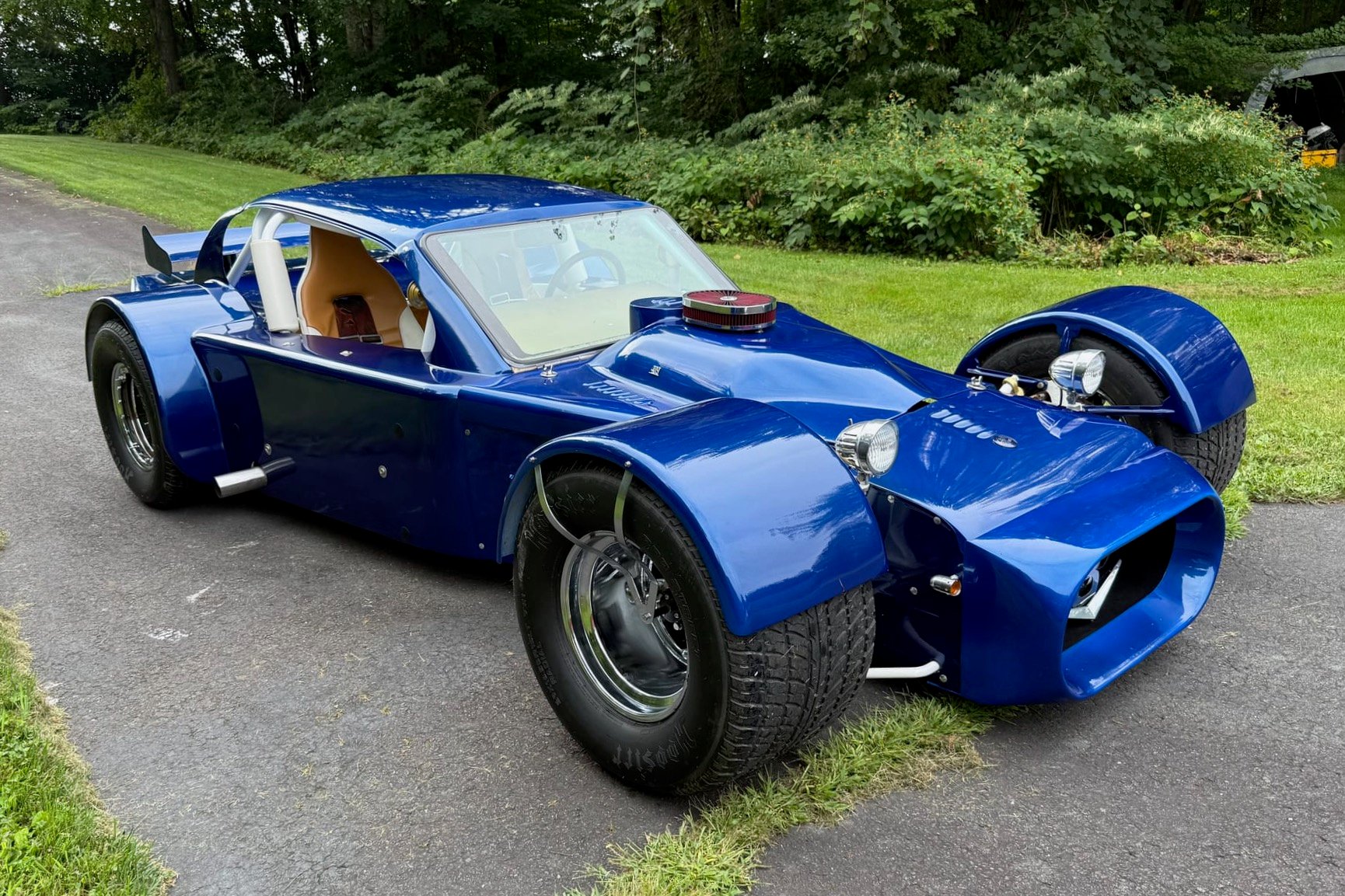
At first glance, the vehicle resembles a Lotus Seven, but a closer inspection reveals a machine built for a life of left-hand turns and high-G cornering. This is not a car designed for a Sunday morning canyon run; it is a tube-frame, purpose-built competition vehicle that has been shoehorned into a classic aesthetic.
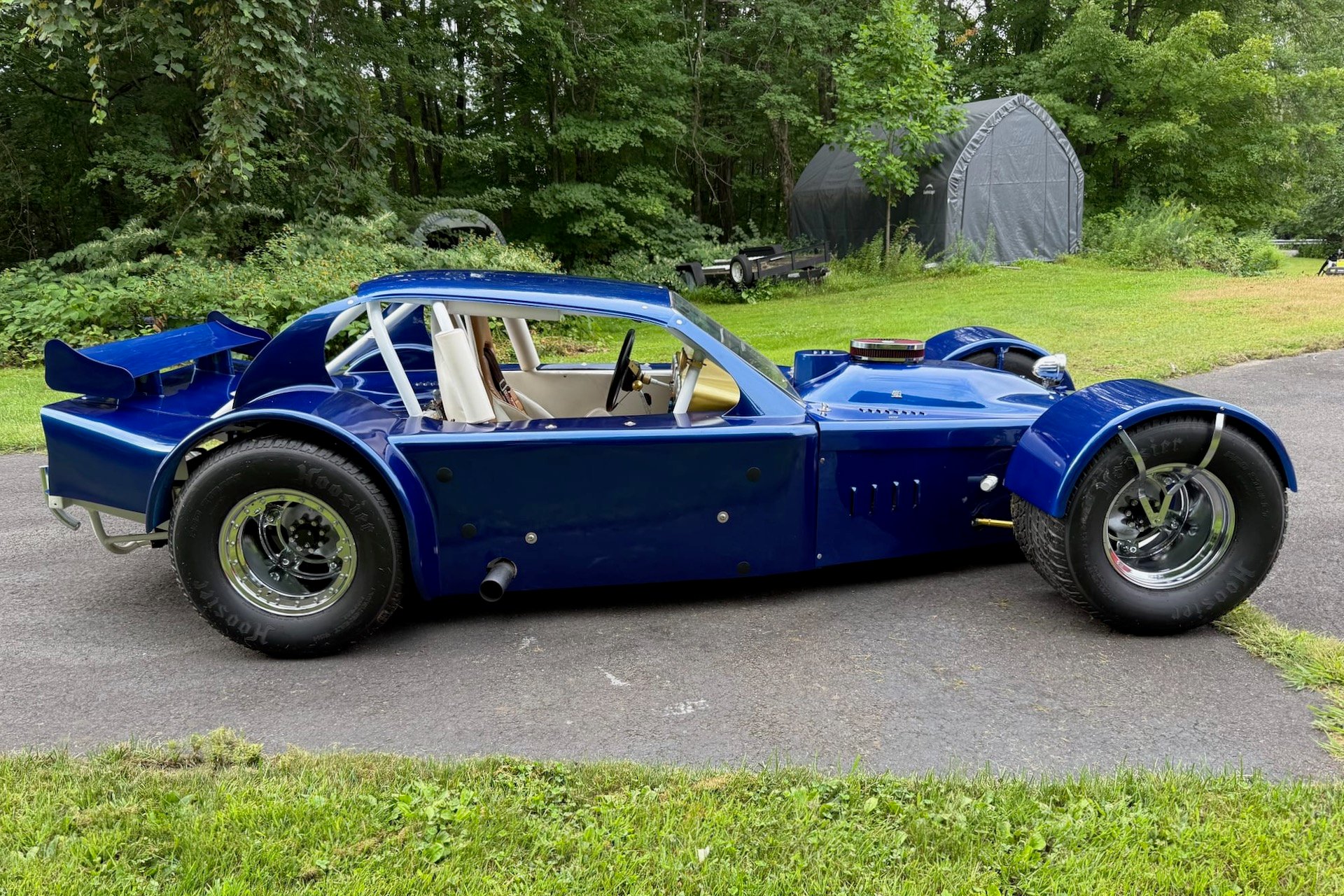
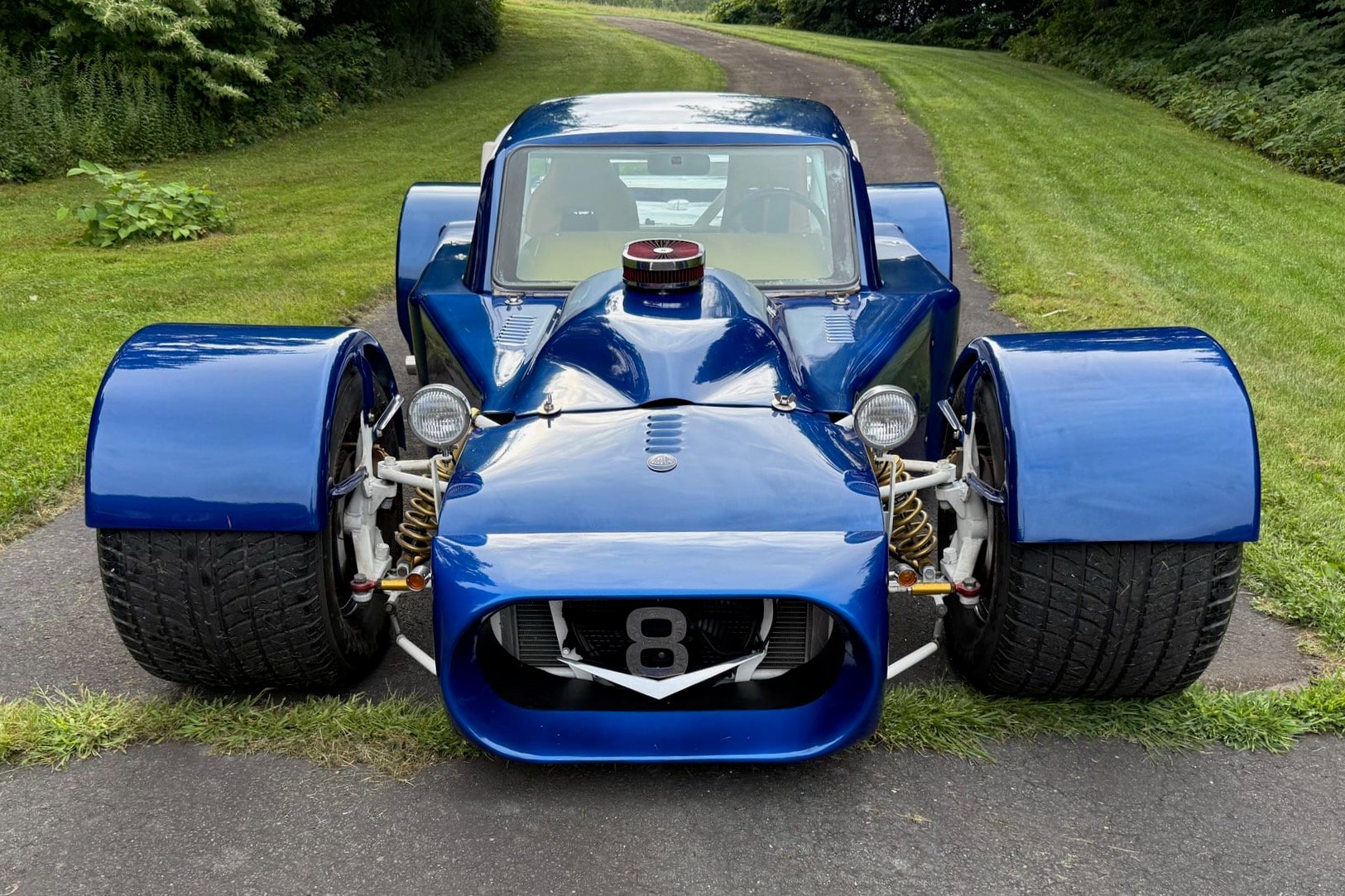
The car, which recently appeared on the auction block, ditches the dainty, aluminum-skinned chassis of a traditional Seven for a robust, industrial tube-frame skeleton protected by an integrated roll cage. While the roof is constructed of steel, the remainder of the body panels are fiberglass, mimicking the silhouette of the classic Lotus while accommodating the massive physical requirements of a circle-track setup.
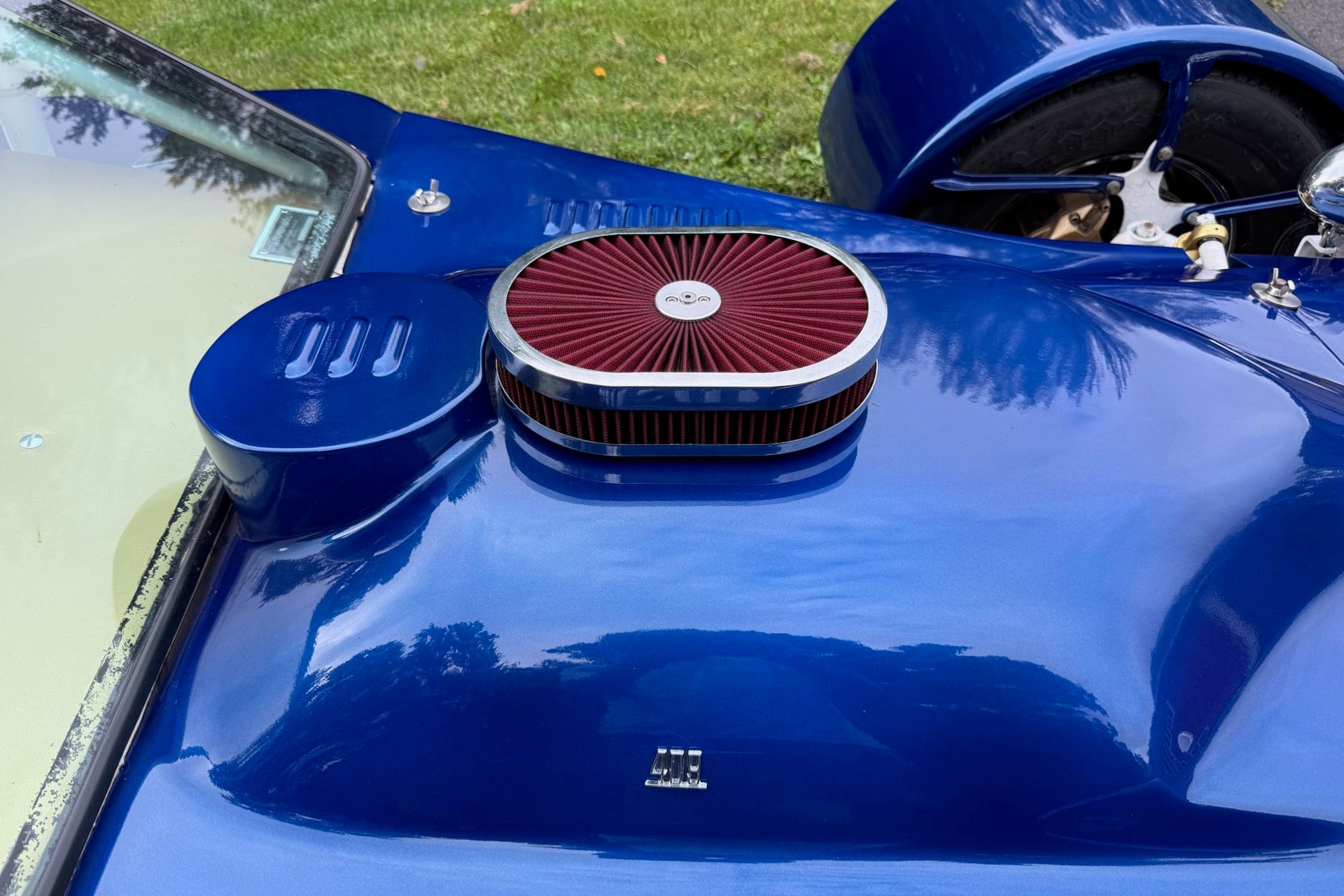
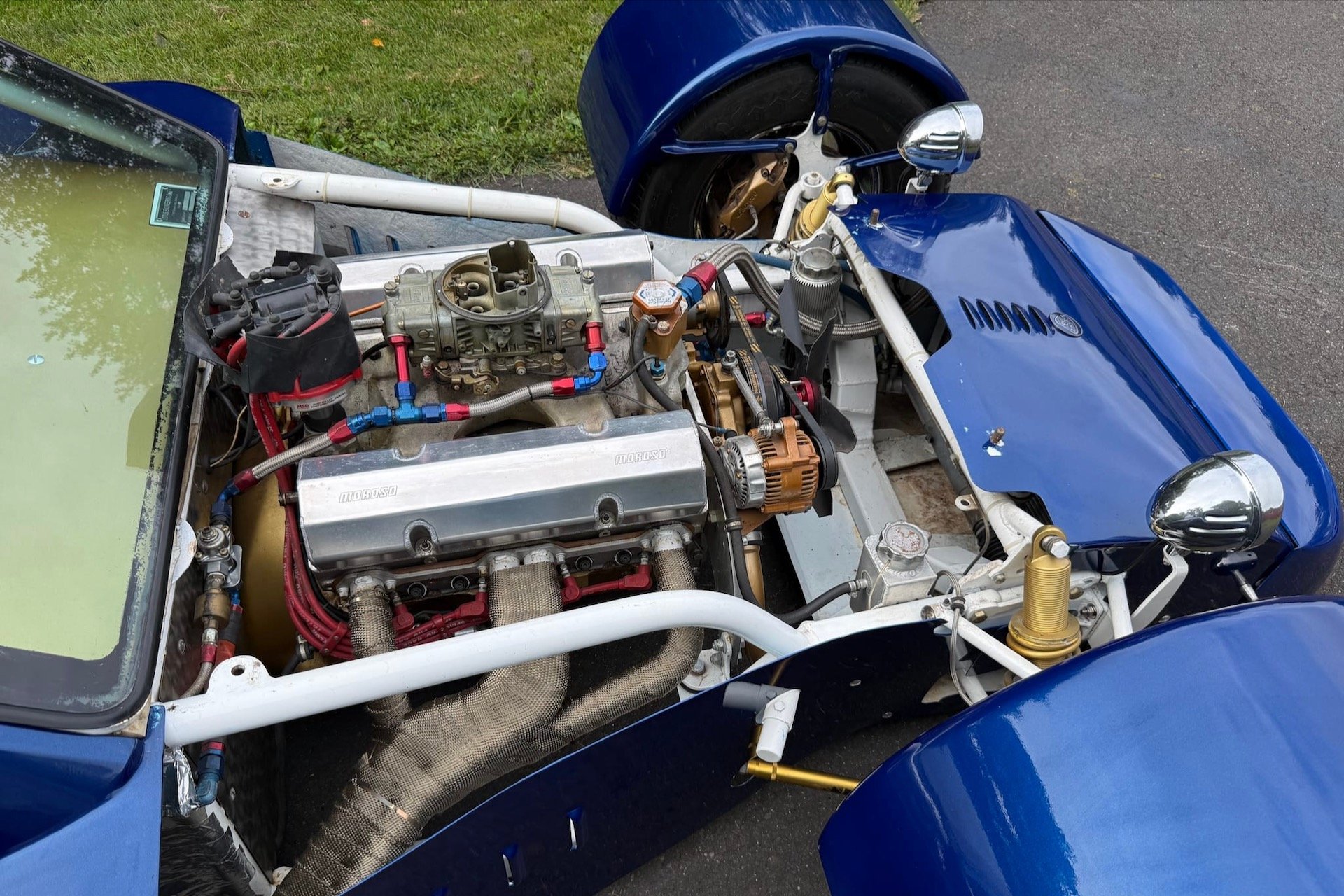
Perhaps the most jarring departure from the Lotus ethos is the engine bay. The original Seven was famously powered by modest, high-revving four-cylinder engines. This build, however, swaps that heritage for a blueprinted 409-cubic-inch (6.7-liter) Chevrolet V8. Fed by a Holley four-barrel carburetor, the engine generates enough torque to make a standard Lotus chassis look like a toy. Power is routed to the rear wheels via a Tremec five-speed manual transmission, coupled with a Winters quick-change locking differential—a staple of the oval-track world that allows for rapid gear ratio adjustments depending on the track’s banking and length.
Chronology: The Evolution of a Frankenstein Project
The history of this vehicle is as murky as the track conditions it was likely designed to dominate. Reports indicate that the build was commissioned and completed in the early 2000s, a period when the "kit car" scene was seeing a surge in high-performance, non-traditional engine swaps.
- The Concept (Early 2000s): The builder aimed to merge the visual heritage of the Lotus Seven with the visceral, high-torque reality of American oval-track racing.
- Fabrication Phase: The chassis was constructed from scratch, opting for a tube-frame design that would offer the structural rigidity required for the rigors of circle-track racing, moving far beyond the space-frame design of the original Lotus.
- Component Sourcing: The selection of a 409-cubic-inch Chevrolet V8 signifies a departure from the "lightness" philosophy. The inclusion of a Winters quick-change rear end confirms the vehicle’s intended purpose: to be a specialized, track-only weapon.
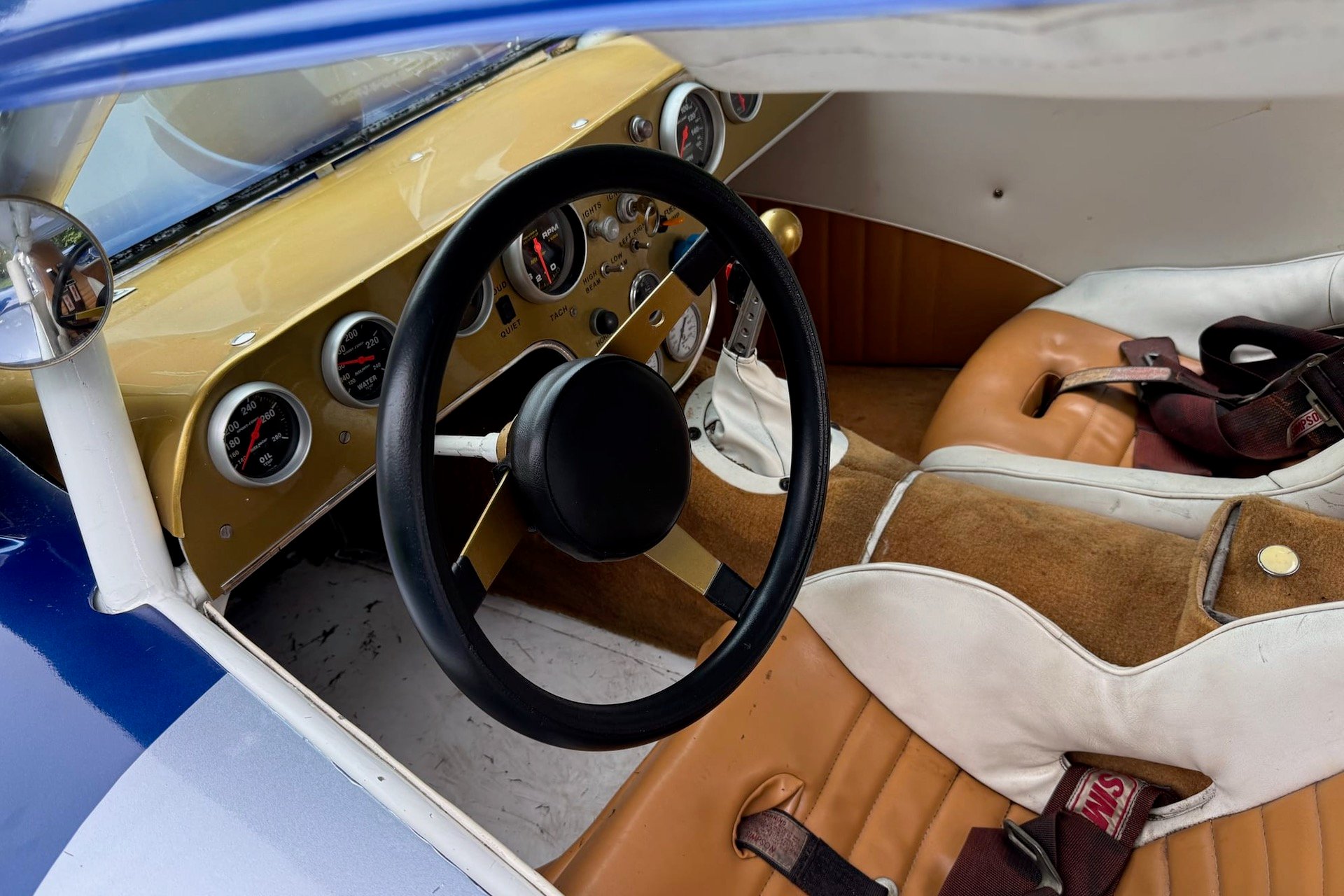
- Finishing and Aesthetics: The interior, surprisingly, received a high level of attention, incorporating two-tone leather bucket seats and custom gold trim—a level of refinement rarely seen in purpose-built oval track racers.
- The Modern Era: The car eventually landed on Bring a Trailer, surfacing as an enigmatic piece of automotive history with a title that raises more questions than it answers.
Supporting Data: The Mechanical Specs
To understand the absurdity of this vehicle, one must look at the technical specifications. The car has been stripped of the "dainty" nature of the Seven and replaced with aggressive track-oriented hardware.
Engine and Drivetrain
- Engine: Blueprinted 409-cubic-inch (6.7L) Chevrolet V8.
- Induction: Holley four-barrel carburetor.
- Transmission: Tremec five-speed manual.
- Differential: Winters quick-change locking differential.
- Wheels: 15-inch-wide track-spec wheels.
Chassis and Construction
- Framework: Full tube-frame chassis with integrated roll cage.
- Body: Fiberglass body panels with a steel roof.
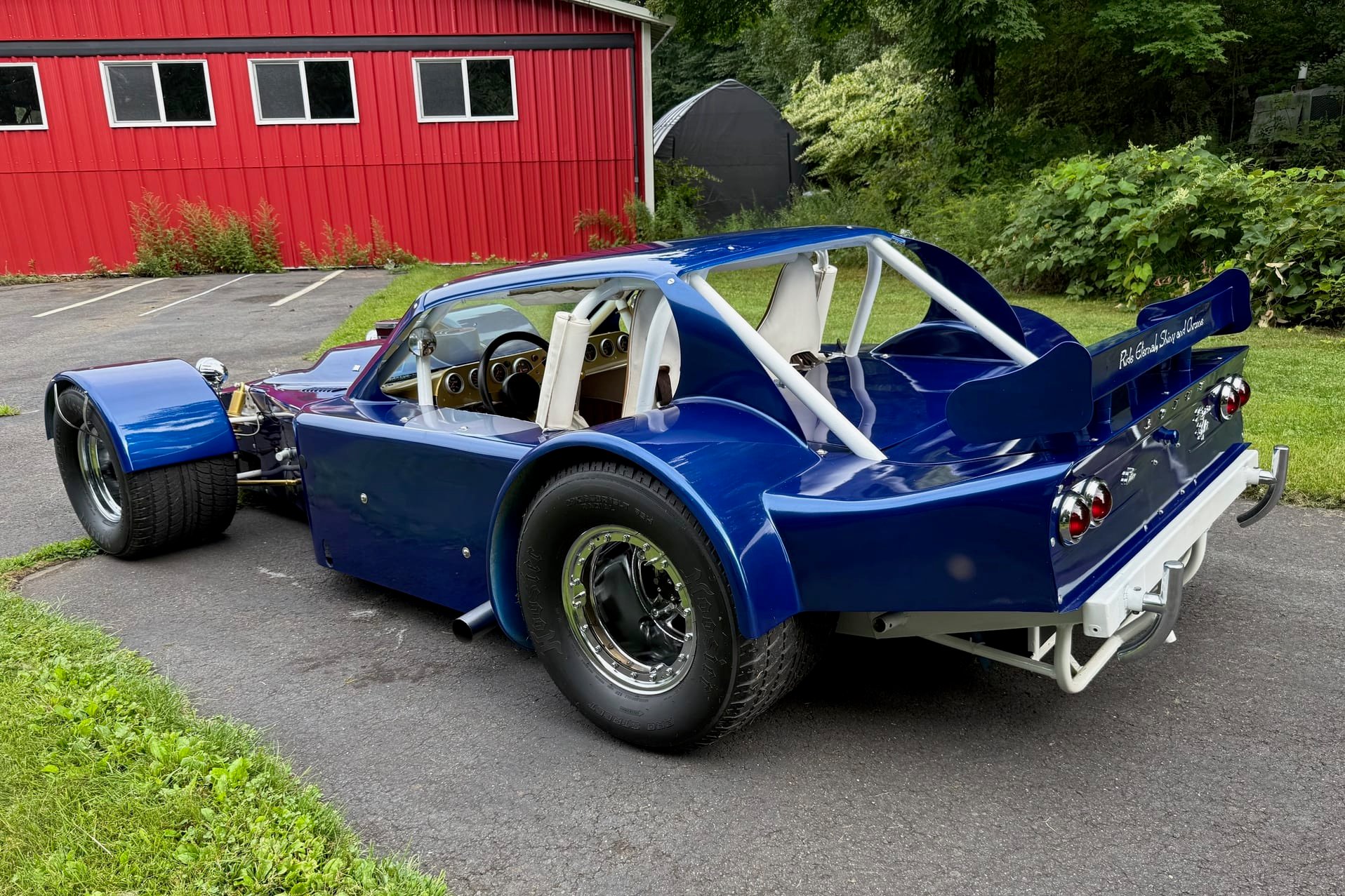
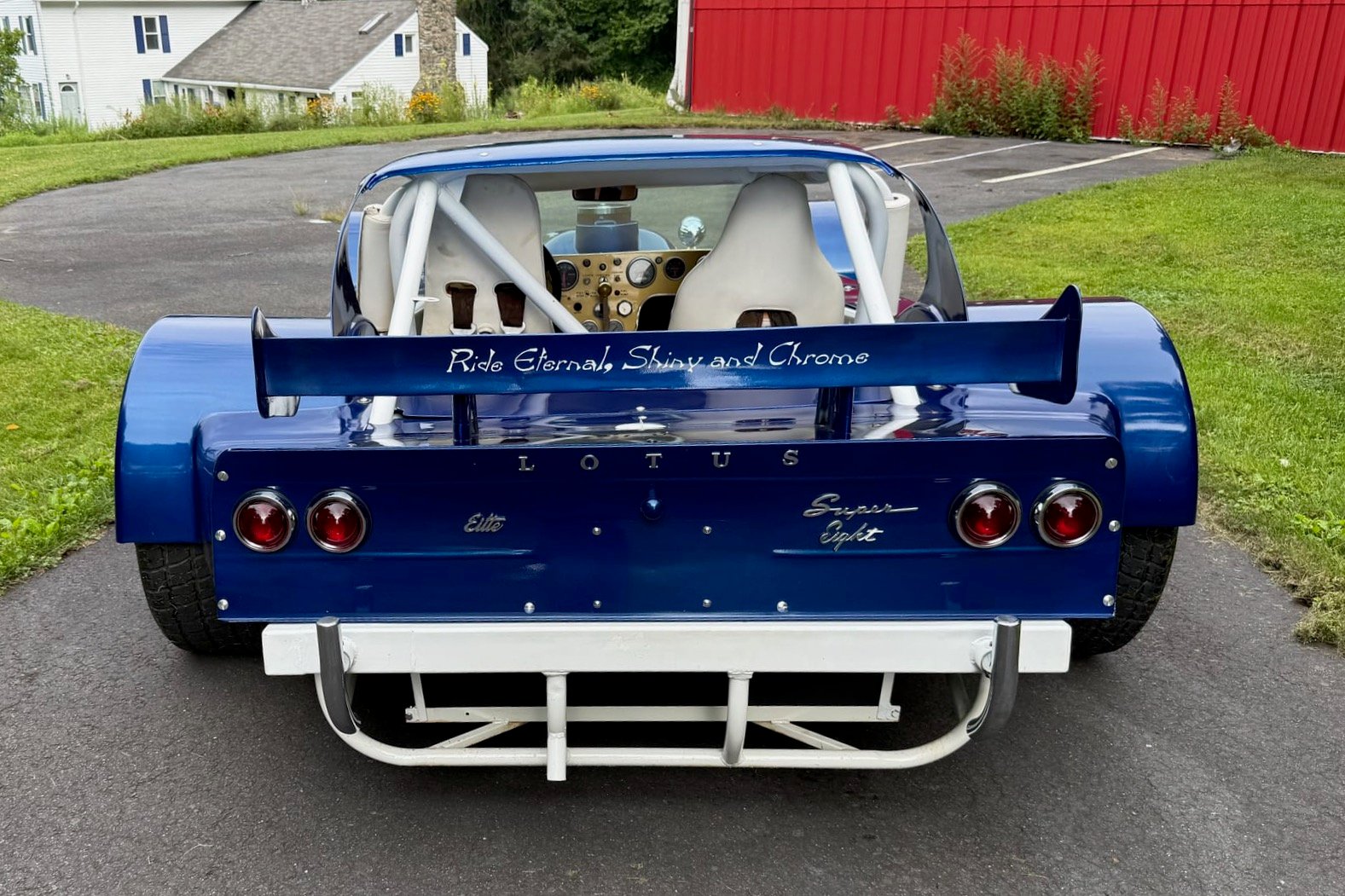
- Safety/Utility: Push bars for contact-heavy racing and a rear spoiler featuring a quote from Mad Max: Fury Road.
The "7" emblem on the front grille has been replaced with a stylized "V8" badge, a subtle nod to the engine transplant that fundamentally changes the character of the car. The stance, with its bulging hood and wide, sticky rubber, makes it clear that the car is intended to be a force on the asphalt, rather than a precision-handling roadster.
Official Responses and Documentation
The most intriguing aspect of the vehicle is its documentation. Despite being a custom-built, tube-frame circle-track car, it possesses a Lotus identification plate and is titled as a 1974 Lotus Elite.
In the world of vehicle registration, this is a glaring anomaly. A 1974 Lotus Elite is a completely different vehicle—a front-engine, rear-wheel-drive GT car—and the mechanical differences between that car and this V8-powered beast are insurmountable. The title is issued in Montana, a state notorious for its lenient registration requirements for modified and specialty vehicles.
For a potential buyer, this raises significant questions regarding legality. While the vehicle could technically be registered in specific jurisdictions, it is essentially a race car. The recommendation from automotive experts is to treat it as a dedicated track toy. Trying to pass this off as a vintage Lotus on a public road would likely result in a very short, and very loud, conversation with law enforcement.
Implications: The "Kit Car" Paradox
This vehicle serves as a perfect case study for the "Kit Car" paradox. Enthusiasts often build cars to pay homage to a specific brand or model, yet they quickly realize that the original platform lacks the power or structural integrity they desire for their specific driving needs.
The Shift in Design Philosophy
By replacing lightness with raw power, the builder has moved the vehicle into an entirely different performance category. The Lotus Seven was designed for corner entry speed and mid-corner balance. This build, however, is designed for corner exit acceleration. The inclusion of the quick-change rear end—a device used to tune a car for specific track lengths—indicates that the vehicle was likely campaigned on local oval tracks where the goal was to hook up, power through the turn, and dominate the straightaways.
The Aesthetics of Excess
The choice to include a Mad Max: Fury Road quote on the rear spoiler is telling. It suggests the owner viewed the car not just as a machine, but as a statement. It is a post-apocalyptic, V8-breathing interpretation of a British classic. It is a rebellion against the refinement of the modern sports car, opting instead for the visceral, sensory overload of a large-displacement American engine in a minimalist frame.
The Future of the Build
As this vehicle moves into the hands of a new owner, its future remains uncertain. It is unlikely to ever be competitive in a sanctioned vintage racing series, given its custom-built, non-standard nature. However, it will undoubtedly find a home as an "exhibition" piece—a car meant for track days, car shows, and the occasional high-speed burnout.
Conclusion
The V8-powered, circle-track-ready Seven is a testament to the fact that, in the world of car culture, there are no rules—only suggestions. Colin Chapman may have wanted lightness, but the builder of this car clearly wanted something else entirely: the ability to melt tires and rattle windows.
While it lacks the historical purity of a factory-original Lotus, it possesses something arguably more compelling: a sense of humor and a total disregard for the status quo. It is a mashup that shouldn’t work, yet the audacity of its existence makes it one of the most interesting machines to cross an auction block in years. Whether it is viewed as a desecration of a legend or a masterpiece of custom engineering, one thing is certain: it is a machine that demands attention, one thunderous V8 roar at a time.
