


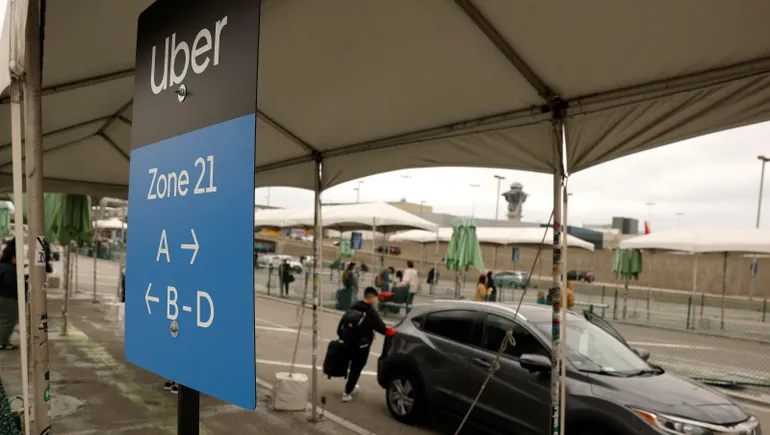
In a move that signals a seismic shift in the transportation landscape, Uber Technologies Inc. has initiated a massive strategic pivot. Following the announcement in early September of a workforce reduction affecting 10% of its staff—roughly 3,300 employees—the company is doubling down on a capital-intensive future centered on autonomous vehicles (AVs). Reports indicate the ride-hailing giant is committing upwards of $10 billion to secure its position in the robotaxi market, a move that fundamentally changes the company’s DNA from a software-based marketplace to a heavy-asset owner-operator.
The Core Transformation: From Broker to Fleet Owner
For over a decade, Uber’s business model was defined by its asset-light approach: connecting independent contractors with passengers. However, the rise of specialized AV companies has forced a change. Spencer Penn, CEO of AI procurement operating system LightSource and a former executive at Tesla and Waymo, notes that the current layoffs are distinct from the company’s core operations.
"A company that never owned a car now has more than $7 billion in vehicle purchase commitments, its own depots, and a double-digit stake in Lucid," Penn observed. By transitioning into a role that involves managing depots, charging infrastructure, and vehicle procurement, Uber is attempting to insulate itself from the existential threat posed by dedicated robotaxi developers.
Chronology: The Evolution of the Robotaxi Race
The race toward a driverless future has accelerated rapidly over the last several years, marked by both strategic partnerships and inevitable divestments.
- 2025 (Early): Uber begins integrating Waymo robotaxis into its app in major metropolitan markets like Atlanta and Austin, creating a "frenemy" dynamic between the two industry titans.
- May 2026: Uber and Waymo formally dissolve their three-year partnership in Phoenix, signaling the beginning of a shift toward direct competition.
- April 2026: Uber enters a landmark agreement with Rivian to deploy 10,000 fully autonomous vehicles, with options to scale up to 50,000 units by 2030.
- September 4, 2026: Tesla launches its purpose-built "Cybercab" operations in Austin, Texas, marking a significant escalation in the direct-to-consumer robotaxi model.
- Late 2026: Uber CEO Dara Khosrowshahi confirms that Lucid-manufactured robotaxis are slated for public deployment in the San Francisco Bay Area and Los Angeles.
- 2028 (Projected): Waymo is expected to fully sever its remaining partnership ties with Uber in Atlanta and Austin, leaving both entities to vie for the same customer base.
- 2030 (Projected): The target horizon for full-scale commercialization, with mass-market deployment of Rivian-backed fleets in cities like San Francisco and Miami.
The Competitive Landscape: Disruption at the Doorstep
The urgency behind Uber’s investment is clear: the threat of disruption is no longer theoretical. Spencer Penn highlights the case of San Francisco, where Waymo managed to capture roughly 25% of the total ride-hailing market within just 20 months of operation.
The competitive field is becoming increasingly crowded. Waymo now operates in 15 cities, maintaining a lead in safety-certified autonomous miles. Meanwhile, Zoox has established a presence in Las Vegas and is currently navigating the permitting process for San Francisco. Tesla, leveraging its massive fleet of Model Y vehicles and the newly launched Cybercab, is aggressively expanding across Florida and Texas.
For Uber, the challenge is maintaining its dominant market share while its previous partners—who possess the proprietary software and hardware—increasingly opt to bypass the Uber platform entirely. Uber is currently hedging its bets, maintaining autonomous partnerships with Avride in Dallas and Motional in Las Vegas, while simultaneously building out its own proprietary fleet through agreements with Lucid, Rivian, and Nuro.
Infrastructure: The Hidden Bottleneck
While the debate often focuses on software algorithms and sensor suites, the physical reality of supporting a robotaxi fleet is proving to be a massive logistical hurdle. Frank Reig, CEO of fleet-charging company Voltera, emphasizes that infrastructure is the "silent" decider in the AV race.
"Any robotaxi company that wants to have a presence in multiple markets by 2030 needs to be getting everything ready now," Reig explained. The infrastructure required to support these vehicles—specifically depots for charging, cleaning, and maintenance—can take three or more years to establish.
These depots are not mere parking lots; they are industrial-scale operations that require significant electrical power, complex zoning permits, and long-term real estate stability. "Even if the zoning and the permit and utility stuff matches up, do you have a landlord willing to actually sell or lease to you for 30 years?" Reig asked. As Voltera continues its expansion via its merger with Revel, it is positioning itself as the backbone of this new autonomous era, acknowledging that the tech is ready, but the city-level integration is lagging.
Implications: The Battle for the Passenger
As the industry approaches 2030, the market is fragmenting into three distinct strategic philosophies. As Penn describes it: "Waymo is betting on safety and experience, Tesla on price, Uber on availability."
1. The Safety-First Model (Waymo)
By prioritizing a high-fidelity sensor suite and rigorous testing, Waymo is positioning itself as the premium, reliable choice. They are betting that passenger trust will ultimately dictate the market share.
2. The Cost-Optimization Model (Tesla)
Tesla’s strategy centers on the economies of scale. By utilizing their existing manufacturing capabilities and the specialized Cybercab, they aim to drive the cost of a ride down to a level that makes personal vehicle ownership feel like an expensive, redundant burden.
3. The Network-Availability Model (Uber)
Uber is betting on its massive existing user base. Their strategy is to ensure that no matter where a customer is, an autonomous vehicle is available through their interface. Whether that vehicle is provided by an external partner or an Uber-owned fleet, the goal is to make the "Uber" brand synonymous with the act of autonomous transport.
Conclusion: The Clock is Ticking
The transition of Uber from an asset-light middleman to a fleet-managing titan is a high-stakes gamble. The success of this pivot rests on a precarious trifecta: the perfection of autonomous software, the manufacturing of reliable hardware, and the successful navigation of local regulatory and zoning landscapes.
As Penn notes, "No head start is safe in a competitive technology space." While Waymo currently leads in public perception and operational maturity, the sheer scale of Uber’s capital deployment suggests they are prepared for a long, grueling war of attrition. Ultimately, the industry is approaching a threshold where the quality of the autonomous ride becomes indistinguishable across providers. Once that happens, the battle will shift entirely to logistics, pricing, and the sheer density of the fleet—a arena where Uber feels most comfortable.
The next four years will be defining for the industry. As infrastructure projects break ground and the first fleets of Rivian and Lucid-branded robotaxis hit the streets, the cities of tomorrow are being built in the depots and charging stations of today. The question remains whether the market will reward the incumbents who pivoted, or the disruptors who built the autonomous ecosystem from the ground up.
