





The Decision Brief: Navigating the Frontier of Agentic AI
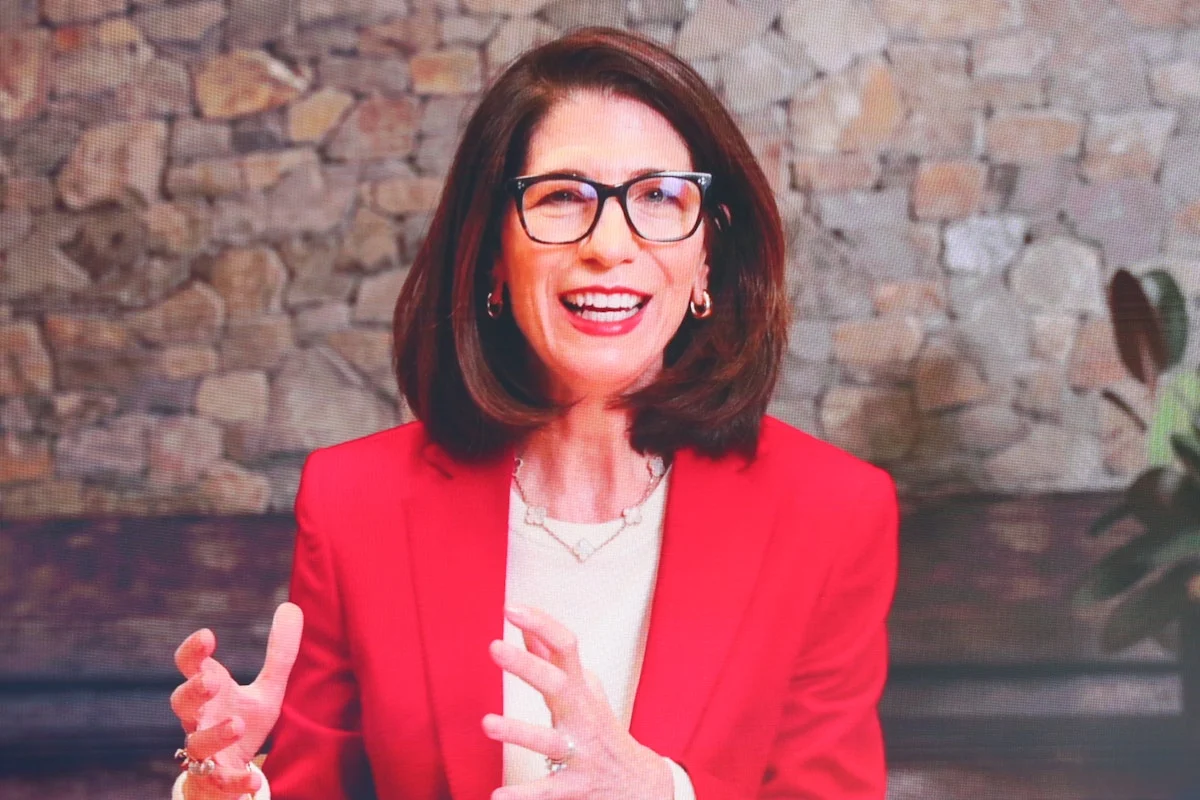
In an era defined by the rapid ascent of generative artificial intelligence, travel industry leaders are grappling with an existential strategic choice: embrace the new wave of "agentic" AI platforms or risk obsolescence. At the recent Skift Global Forum, Expedia Group CEO Ariane Gorin provided a definitive answer to this industry-wide conundrum.
During a session moderated by Skift’s Dennis Schaal, Gorin confirmed that Expedia will be actively participating on Meta’s "Muse," the AI agent that has garnered significant industry attention for its rapid user adoption—reportedly becoming an "instant hit" within weeks of its launch. This move serves as a bellwether for the travel sector, signaling a shift from defensive posturing to active experimentation. For Expedia, the goal is clear: to remain an integral part of the conversation as the future of travel planning is rewritten by algorithms.
The Chronology of Integration: A Proactive Approach
The integration of Expedia’s vast inventory into third-party AI agents did not happen in a vacuum. It is the result of a calculated, multi-year shift in how Expedia views its distribution channels.
Phase 1: The Recognition of Disruption
Following the public launch of ChatGPT in late 2022, the travel industry entered a period of intense reflection. Expedia realized that consumers were no longer just searching for travel; they were beginning to ask questions of conversational interfaces. By mid-2023, the focus shifted from simple search engine optimization to "model optimization."
Phase 2: Building the Experimental Infrastructure
Recognizing that no single AI platform would dominate the entire ecosystem, Expedia began building a flexible API infrastructure. This allowed them to pivot quickly. The company established dedicated internal teams specifically tasked with forging partnerships across the AI landscape, engaging simultaneously with tech titans including Google, OpenAI, Anthropic, and Meta.
Phase 3: The Launch of Meta’s Muse
When Meta unveiled Muse, it represented a turning point for social-media-integrated AI. Unlike static search engines, Muse promised a high level of personalization. Recognizing the speed at which users adopted this new tool, Expedia’s leadership determined that the risk of "losing control" of the customer interface was outweighed by the risk of being completely absent from the platform where users are spending their time.
Supporting Data: Why "Agentic" AI Matters
The shift toward agentic AI—systems capable of executing tasks rather than just providing information—is driven by a fundamental change in user behavior.
- The Velocity of Adoption: Muse’s status as an "instant hit" underscores a growing consumer preference for conversational planning. Unlike traditional OTA (Online Travel Agency) apps, which require users to navigate filters and lists, AI agents simulate a travel agent experience, often leading to higher conversion intent.
- The Multimodal Landscape: Expedia’s data indicates that the "AI funnel" is increasingly fragmented. Users are not sticking to one platform; they are jumping between search-based models (like Google’s Gemini), creative models (like OpenAI’s ChatGPT), and social-integrated models (like Meta’s Muse).
- Market Pressure: Industry analysts note that for major OTAs, the cost of customer acquisition (CAC) is a primary concern. By meeting users where they are—on AI platforms—Expedia is effectively lowering the friction required to get their inventory in front of the consumer, even if it means ceding some of the traditional "branded experience" of their own app.
Official Responses and Strategic Philosophy
During the discussion at the Skift Global Forum, Ariane Gorin offered insights into the philosophy driving Expedia’s aggressive AI posture.
"You want to be at the table as discussions evolve," Gorin stated. This comment encapsulates a "seat-at-the-table" strategy that favors proximity over perfection. Expedia is not waiting for these AI agents to mature into perfect revenue-generating machines; they are participating in the training and testing phases to ensure that when these agents eventually dominate travel commerce, Expedia’s inventory is the default.
Gorin emphasized that the company’s approach is fundamentally "case-by-case." This suggests that Expedia is not signing blanket deals that give away its data for free. Instead, they are vetting each partnership based on the specific capabilities of the AI agent and the demographic reach of the platform. By remaining "experimental," Expedia maintains the agility to pull back if a partnership fails to deliver value or begins to compromise the integrity of their supplier relationships.

Implications for the Travel Industry
The decision by Expedia to join Meta’s Muse carries profound implications for stakeholders across the travel ecosystem, from independent hotels to global airlines.
1. The Erosion of the Direct-Booking Moat
For years, travel providers have fought to keep customers on their own direct websites. However, the rise of AI agents creates a "middleware" layer. If a user asks Muse to "book a luxury hotel in Paris under $500," and the agent executes the booking via an Expedia API, the hotelier may lose the ability to capture first-party data or upsell additional services.
2. The New Search Engine Optimization (SEO)
The industry is currently witnessing the birth of "Answer Engine Optimization" (AEO). Companies that are not integrated into these AI platforms risk becoming invisible. If an AI agent does not "see" a hotel, that hotel essentially does not exist for the AI-reliant traveler. Expedia’s role here is to act as a massive aggregator that ensures its partners remain visible within these new ecosystems.
3. The Power of Data Partnerships
The ultimate winners in this new era will be those who can negotiate the best terms with AI providers. Expedia’s massive scale gives it leverage. Smaller travel agencies may find it difficult to gain access to the same high-level partnerships, leading to potential consolidation in the travel technology space.
4. A Shift in Consumer Loyalty
When the AI makes the recommendation, where does the brand loyalty lie? If a consumer trusts Meta’s Muse to plan their trip, does the brand of the OTA matter? Expedia is betting that by providing the best inventory and the most reliable booking engine behind the scenes, they can remain the "plumbing" of the travel industry, regardless of which front-end interface the consumer chooses.
Future Outlook: The Road Ahead
As we look toward 2026 and beyond, the battle for the "AI Agent" space will only intensify. The key takeaway for any travel company watching this space is that the landscape is fluid.
Expedia’s strategy of radical engagement with diverse AI partners suggests that the company is preparing for a future where "the platform" is not a destination, but a fluid, omnipresent assistant. Whether it is through smart glasses, mobile chatbots, or voice-activated home assistants, the ability to execute a transaction seamlessly is the new competitive advantage.
For industry observers, the lesson from the Skift Global Forum is clear: Inaction is the greatest risk. Companies must balance the tension between protecting their core assets and embracing the disruptive nature of new technology. As Gorin aptly put it, you don’t have to know exactly where this journey ends to know that you must be present for every step of the evolution.
The travel industry is moving from the age of "Search" to the age of "Solve." In this new environment, Expedia is positioning itself not just as a booking site, but as the engine room for the future of travel intelligence. Whether this gamble pays off will depend on the company’s ability to maintain its margin while navigating the complex, and often unpredictable, policies of Big Tech’s AI gatekeepers.
