





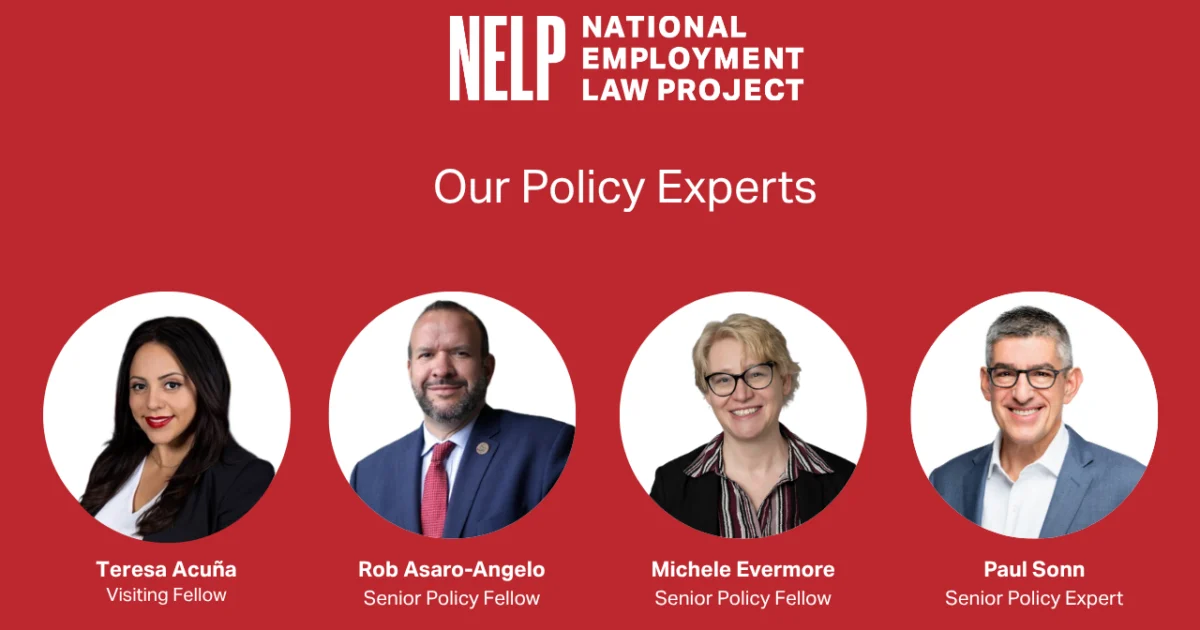
August 28, 2026 — As the American labor landscape navigates the complexities of a post-industrial, tech-integrated, and climate-conscious era, the National Employment Law Project (NELP) has signaled a definitive shift in its strategic mission. Celebrating its seventh decade of advocacy, the organization has announced the appointment of four high-profile policy architects tasked with institutionalizing the "Good Jobs Economy"—a vision where every job, regardless of sector, serves as a pathway to stability, dignity, and economic mobility.
Led by President and CEO Rebecca Dixon, NELP’s latest maneuver is not merely a staffing update; it is an aggressive consolidation of expertise. By bringing together leaders who have navigated the halls of the U.S. Department of Labor, state-level cabinet positions, and the front lines of the Fight for $15, NELP is positioning itself to bridge the gap between abstract policy theory and the tangible realities of the modern workforce.
The Nucleus: Meet the New Policy Architects
The newly formed leadership cohort brings together a rare blend of legislative, regulatory, and grassroots experience. Each appointee has been selected for their specific track record in translating bold economic theories into durable, pro-worker policy.
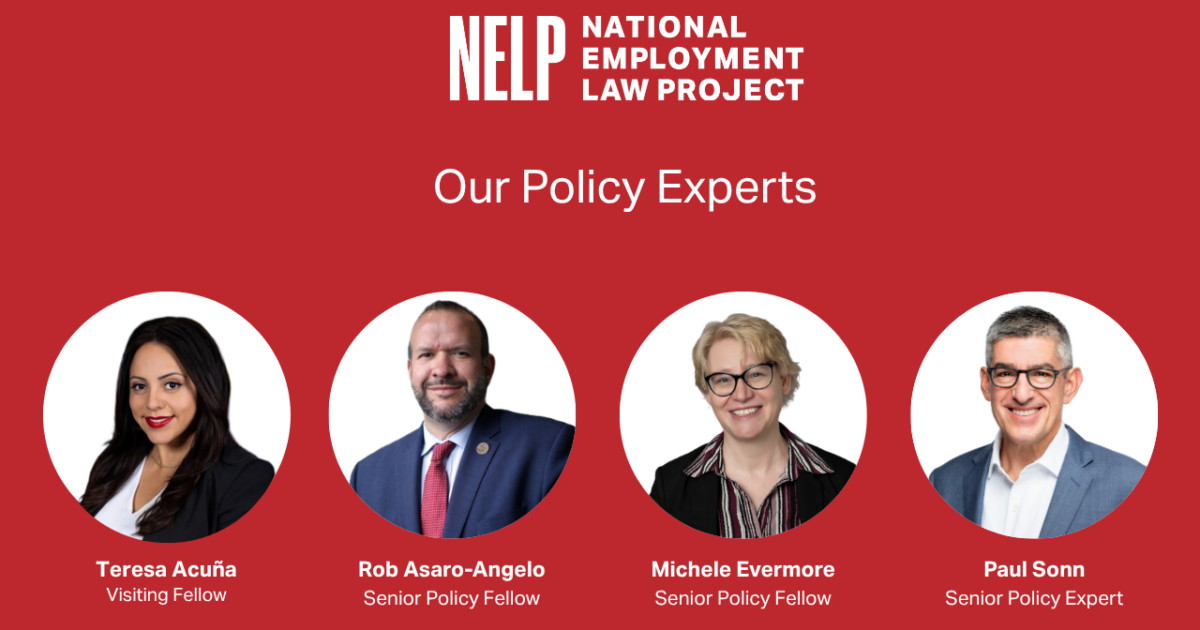
Teresa Acuña: Visiting Fellow for Good Jobs Democracy
Acuña enters the fold as a veteran of the Biden-Harris administration, where she served as the Director of the Good Jobs Initiative at the Department of Labor. Her mandate at NELP will focus on the nexus of public investment and worker quality. As the federal government pours billions into infrastructure, clean energy, and manufacturing, Acuña’s expertise ensures that these public dollars are not just creating employment, but creating quality employment—high-wage, union-friendly, and sustainable roles that revitalize both urban centers and rural communities.
Rob Asaro-Angelo: Senior Policy Fellow for Worker-First Protections
Having served as the Commissioner of the New Jersey Department of Labor and Workforce Development from 2018 to 2026, Asaro-Angelo brings a practitioner’s perspective to the table. His tenure under Governor Phil Murphy was marked by a modernization of workforce protections that balanced the needs of a diverse, shifting labor market with rigorous enforcement of labor standards. At NELP, his focus will be on the operationalization of worker-first protections—moving beyond the written law to ensure that these protections are actually felt by the workers they are intended to serve.
Michele Evermore: Senior Policy Fellow for Economic Security and Worker Transitions
Returning to the NELP fold, Evermore’s career represents a critical chapter in modern labor history. During the height of the COVID-19 pandemic, her research and advocacy were instrumental in the historic expansion of Unemployment Insurance (UI). Her subsequent role as Deputy Director for Policy in the U.S. Department of Labor’s Office of Unemployment Insurance Modernization gives her a unique insight into the systemic fragility of our safety nets. She returns to NELP to address the next frontier: ensuring that as the economy shifts, worker transitions are managed with a robust, modernized social safety net.
Paul Sonn: Senior Policy Expert for Wages and Affordability
A luminary in the living wage movement, Sonn has been a steady hand in NELP’s state policy programs for years. As the strategist behind the first city-level minimum wage laws and a foundational advisor to the Fight for $15, Sonn’s transition to this new role signals a renewed focus on wage compression and the cost-of-living crisis. His work will focus on the next generation of affordability policy—ensuring that wage growth is not merely reactive to inflation, but proactive in building sustainable household wealth.
A Chronology of Advocacy: Seven Decades of NELP’s Evolution
To understand the significance of these appointments, one must look at the arc of NELP’s history, which spans the late 20th century to the current day.
- 1960s–1980s: The Foundations. NELP began as an organization focused on legal aid and the protection of basic labor standards. During this period, the focus was largely on defensive litigation—ensuring that existing statutes were applied to marginalized worker populations.
- 1990s–2010: The Strategic Pivot. The organization began to transition from pure litigation to legislative advocacy. This era saw the rise of the "Living Wage" movement, where NELP provided the technical support needed for local municipalities to set wage floors higher than the federal minimum.
- 2010–2020: National Scaling. The Fight for $15 marked a watershed moment. NELP’s role moved from supporting local ordinances to shaping national discourse, forcing the issue of wage inequality to the center of the political stage.
- 2020–2026: Crisis and Modernization. The pandemic served as an accelerant for labor reform. The necessity of expanding UI and the subsequent focus on "essential workers" shifted the public’s perception of labor rights.
- 2026 and Beyond: The Good Jobs Economy. The current leadership shuffle represents the next logical step: moving from defensive protections to offensive, proactive infrastructure building for the modern labor market.
Supporting Data: The Economic Imperative
The necessity of this new leadership team is underscored by the current economic climate. As of late 2026, the American workforce faces three distinct pressures that these experts are uniquely positioned to address:
- Wage Stagnation vs. Inflation: While wage growth has seen spikes, it has often lagged behind the structural increases in housing, healthcare, and education costs. Paul Sonn’s focus on wage-affordability alignment addresses the reality that a "higher wage" is meaningless if purchasing power remains stagnant.
- The "Good Jobs" Gap in Green Energy: Federal data indicates that the manufacturing sector is currently experiencing a labor shortage. However, the labor movement argues this is not a shortage of workers, but a shortage of quality offers. Teresa Acuña’s work will focus on setting the standards for these new industrial roles.
- The Fragility of UI Systems: Despite improvements during the pandemic, the underlying infrastructure of the Unemployment Insurance system remains fragmented. Michele Evermore’s expertise will be crucial in pushing for federal standards that ensure consistency, regardless of which state a worker resides in.
Official Responses and Strategic Outlook
In her announcement, Rebecca Dixon articulated a vision that defines the organization’s trajectory for the remainder of the decade. "Creating a Good Jobs Economy for all workers—where every job is a good job—requires leaders with deep policy expertise and a clear vision to achieve bold, lasting change," Dixon noted.
The internal sentiment at NELP is one of renewed momentum. By integrating individuals who have served as regulators (Asaro-Angelo and Acuña) with those who have acted as architects of grassroots movements (Sonn and Evermore), the organization is effectively closing the loop between the government office and the picket line.
Implications for the Future of Labor
What does this shift mean for the American worker? The implications are three-fold:
1. The Professionalization of Grassroots Strategy
By bringing in veteran policymakers, NELP is signaling that the labor movement is no longer just about protest; it is about policy sophistication. They are preparing to write the legislation of the 2030s, not just react to the crises of the 2020s.
2. A Focus on Structural Inequality
The appointment of this team suggests that NELP is moving away from "siloed" advocacy. Rather than treating wages, unemployment security, and job quality as separate issues, this team will treat them as a single, integrated economic ecosystem.
3. Strengthening the Federal-State Pipeline
The inclusion of leaders like Rob Asaro-Angelo, who understand the constraints and potential of state-level governance, indicates that NELP plans to leverage state successes to force federal action. This "bottom-up" pressure remains the most effective tool in the American political arsenal for securing labor rights.
As NELP enters this new chapter, the stakes for the American worker have never been higher. With the rapid evolution of automation, the transition toward a green economy, and the persistent challenges of wage inequality, the "Good Jobs Economy" is no longer just a slogan—it is a policy objective that this new team is now tasked with making a reality.
Under the stewardship of Dixon and her four new leads, NELP is clearly betting that the future of labor will be defined by those who can master the technical details of policy while keeping the moral urgency of the worker’s rights movement at the forefront. Onward.
