




By Policy Analysis Desk | August 31, 2026
As the global labor market stands on the precipice of an Artificial Intelligence-driven transformation, the United States remains tethered to an outdated, crumbling safety net. While the predicted “AI apocalypse” of mass job displacement has not yet arrived in full force, experts warn that our current Unemployment Insurance (UI) system is fundamentally incapable of handling a sudden surge in layoffs.
Michele Evermore, Senior Policy Fellow for Economic Security at the National Employment Law Project (NELP), argues that the U.S. is repeating the mistakes of the past. By ignoring systemic weaknesses in our social safety net, we are leaving the economy—and millions of workers—vulnerable to the next inevitable shock.
The Core Problem: A System in Decay
The fundamental purpose of Unemployment Insurance is clear: to provide income stabilization, facilitate a bridge to new employment, maintain workforce attachment, and act as a countercyclical economic stabilizer. Economically, the impact is profound; data suggests that every dollar spent on UI benefits generates nearly two dollars of economic activity within local communities.
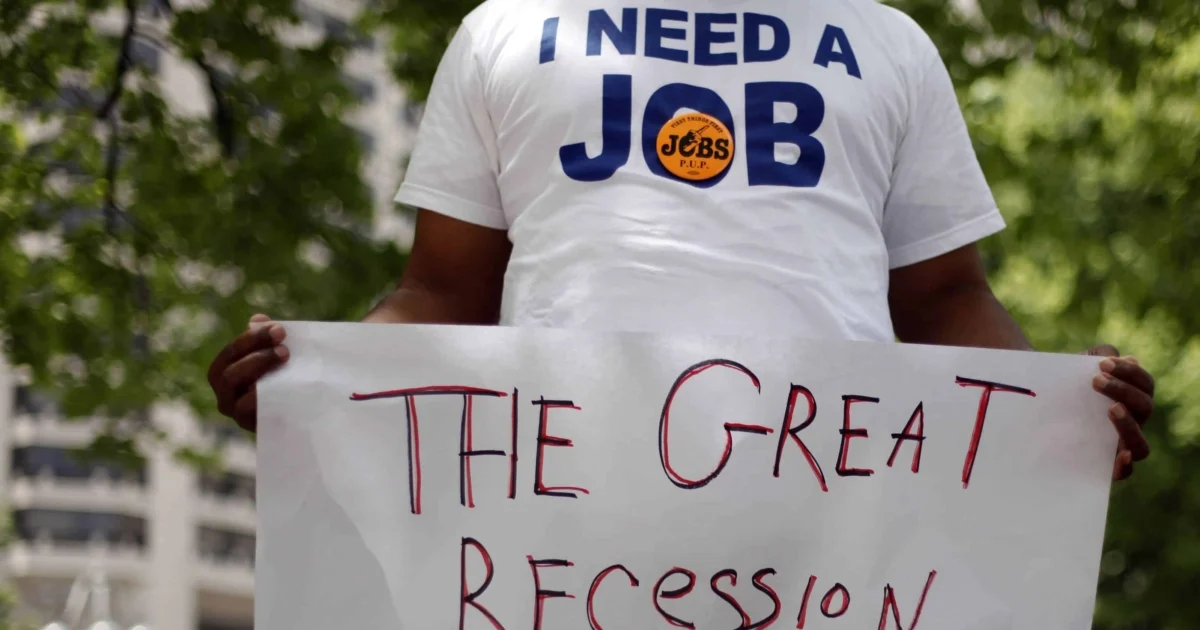
Yet, in many states, these objectives have become unattainable. Since the Great Recession, a “race to the bottom” has defined state-level UI policy. Lawmakers have systematically eroded the system by reducing the duration of benefits, tightening eligibility requirements, and slashing the income replacement ratios. The result is a hollowed-out system that fails to protect workers during normal economic fluctuations, let alone during a structural shift driven by automation.
Chronology of Neglect: From 1980 to the AI Frontier
The failures of today were not inevitable; they were predicted. A historical review reveals that the current crisis is the result of decades of bipartisan inaction:
- 1980: A bipartisan commission issues a comprehensive report recommending fundamental improvements to UI systems to ensure they remain robust. These recommendations are largely shelved.
- 1996: A second bipartisan commission echoes these warnings, calling for federal standards to modernize and fortify the UI system. These suggestions also fail to gain legislative traction.
- 2008–2010 (The Great Recession): States begin aggressive cost-cutting measures, narrowing the scope of benefits to stabilize their own unemployment trust funds at the expense of the workforce.
- 2020 (The COVID-19 Pandemic): The system faces a stress test. With agencies operating at a 50-year low in funding, the federal government is forced to scramble, creating three brand-new emergency programs to handle the influx of claims.
- 2022–2025: Antiquated technology and skeleton staffing levels, exacerbated by work-from-home transitions, leave systems vulnerable to sophisticated, large-scale criminal fraud operations.
- 2026: As AI adoption accelerates across sectors, the labor market faces a new, complex reality: record low labor force participation and a rise in "fake" job postings.
Supporting Data: The Reality of the Modern Labor Market
The challenges facing jobseekers today are not merely cyclical; they are structural. The labor market has become increasingly opaque and frustrating for the average worker.
The Rise of the "Ghost" Job
Recent industry reports indicate that as many as one in three job postings online are now "fake." These postings may be created to collect resumes for future use, to give the appearance of company growth, or simply to gauge market interest. This practice creates a psychological and financial drain on workers who are already struggling.
Long-term Unemployment Trends
As workers send out hundreds of resumes with little to no response, a trend of discouragement is setting in. The rise in long-term unemployment is particularly concerning, as these individuals often lose the specialized skills and professional networks required to pivot into new, AI-integrated roles. The Employment Service—the government entity designed to match workers with opportunities—has been so steadily dismantled over the past few decades that it currently lacks the capacity to assist the millions of Americans seeking a transition.
Funding Deficits
The under-investment in Department of Labor agencies is not just a bureaucratic issue; it is a human rights issue. Decades of budget cuts have resulted in staff shortages, antiquated mainframe systems that cannot interface with modern digital tools, and a lack of training for the current demands of the digital economy.
Official Responses and Legislative Proposals
There is a growing chorus of lawmakers who recognize that the status quo is unsustainable. Bipartisan efforts to modernize the UI system are finally gaining momentum, drawing directly from the recommendations made by the commissions of 1980 and 1996.
Legislation championed by Senator Ron Wyden (D-OR), Senator Michael Bennet (D-CO), and Congressman Don Beyer (D-VA) seeks to overhaul the UI system by setting federal standards that prevent states from further gutting benefits. The proposed legislation focuses on three key areas:
- Federal Minimum Standards: Ensuring that benefit duration and income replacement meet a threshold that actually prevents poverty during layoffs.
- Infrastructure Investment: Allocating the necessary funding to update the technology infrastructure of state workforce agencies, ensuring they can withstand future spikes in claims without relying on emergency, ad-hoc programs.
- Modernizing the Employment Service: Reinvigorating the U.S. Department of Labor’s Employment Service division to provide real-time career counseling and job matching that is sensitive to the changing demands of an AI-driven economy.
These bills represent a shift toward viewing UI not as a "handout" but as essential infrastructure, akin to roads or power grids, required for a functioning modern economy.
Implications: The High Cost of Inaction
If the United States fails to reform its unemployment infrastructure before the widespread adoption of AI in the workplace, the economic and social consequences will be severe.
Social and Economic Instability
When workers are left without a safety net, they stop consuming. This leads to a contraction in local economies, potentially creating a feedback loop of business closures and further job losses. Furthermore, the erosion of the middle class’s financial security is a recipe for political volatility and social unrest.
The Skills Gap
The transition to AI will require millions of workers to reskill. An effective unemployment system could provide the time and the resources (through education grants or job-matching services) for workers to transition into emerging fields. Without it, we risk creating a permanent class of discouraged, long-term unemployed individuals who are effectively locked out of the digital economy.
The Vulnerability to Fraud
As evidenced during the pandemic, a broken system is an easy target for criminal syndicates. If the government does not invest in modern, secure, and efficient systems, any future stimulus or benefit program will be plagued by the same massive fraud that cost the taxpayer billions during the COVID-19 crisis.
Conclusion: The Time to Act is Now
We are currently in a period of relative calm before what could be a significant storm. The integration of AI into sectors from manufacturing to law and software engineering will inevitably lead to labor market churn. Whether that churn results in personal bankruptcy for millions or a well-managed transition into new careers depends entirely on the policy decisions made in Washington today.
We have the blueprints. We have the data. We have the legislative vehicles to fix the system. The only thing missing is the political courage to stop waiting for a crisis to hit before we decide to build a foundation that works for everyone. As Michele Evermore notes, breaking the habit of reactive governance is the most important policy challenge of the next decade. If we do not act now, we are essentially choosing to let the next wave of technological progress wash away the security of the American worker.
