





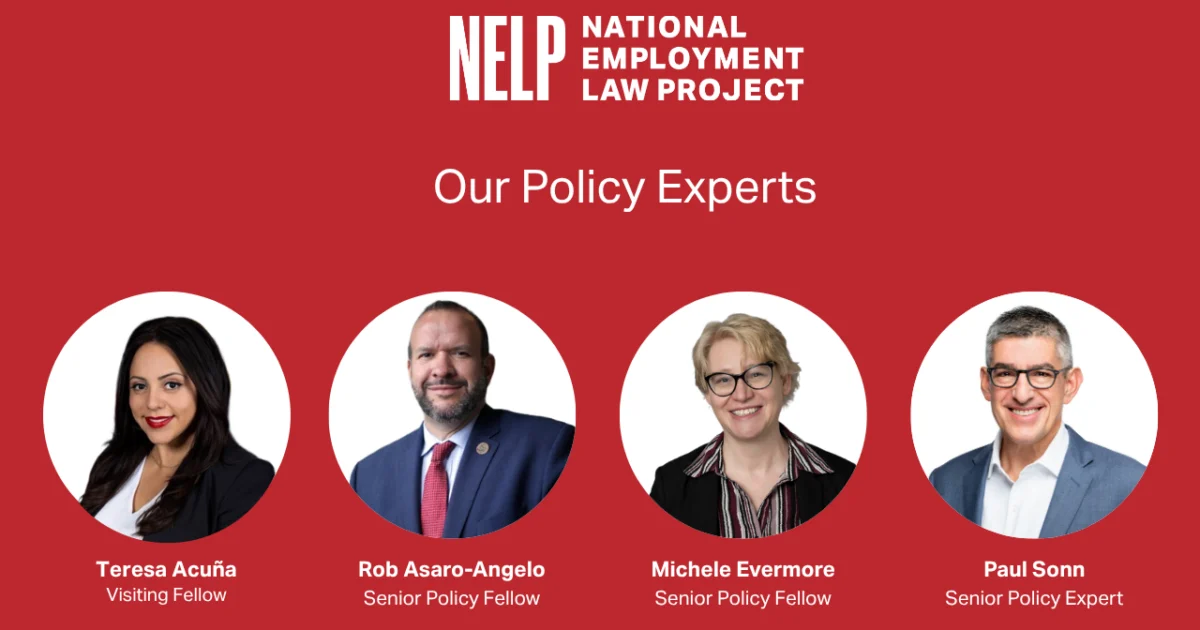
August 28, 2026 — As the American labor landscape faces a transformative period defined by rapid technological shifts, the transition to green energy, and persistent questions regarding economic equity, the National Employment Law Project (NELP) has announced a significant expansion of its leadership team. By appointing four veteran policy architects to key roles, the organization is signaling an aggressive, data-driven approach to its goal of ensuring that every job in the United States becomes a “good job.”
This strategic infusion of talent, announced by NELP President and CEO Rebecca Dixon, brings together a "nucleus" of experts who have previously held high-ranking positions within the federal government and state labor departments. Their combined mandate is to bridge the gap between abstract policy design and the lived reality of the American workforce, ensuring that federal investments translate into tangible improvements for laborers across all sectors.
The Strategic Shift: Building a "Good Jobs" Economy
For seven decades, NELP has stood as a bulwark for workers’ rights, evolving from a legal aid-focused organization into a powerhouse of policy innovation. The current strategy, according to leadership, is predicated on the idea that systemic change requires more than just advocacy; it requires deep-tissue policy expertise that can navigate the complexities of modern industrial policy and state-level governance.
"Creating a Good Jobs Economy for all workers requires leaders with deep policy expertise and a clear vision to achieve bold, lasting change," said Rebecca Dixon in the announcement. By bringing in individuals who have spent years navigating the bureaucratic machinery of the Department of Labor (DOL) and state agencies, NELP is positioning itself to hold the private sector and government accountable for the outcomes of major economic policies.
Chronology: A Legacy of Advocacy and Modern Evolution
To understand the significance of this leadership expansion, one must look at the trajectory of the organization over the last several years.
- 1960s – 2010s: NELP established itself as the premier legal organization for the unemployed and low-wage workers, successfully challenging discriminatory hiring practices and securing foundational protections for vulnerable laborers.
- 2012 – 2020: The organization became a central architect of the “Fight for $15” movement, providing the legal and economic research that underpinned the first municipal and state-level minimum wage increases.
- 2020 – 2022: Amidst the COVID-19 pandemic, NELP was at the forefront of the fight to expand Unemployment Insurance (UI), providing critical support to workers during the economic shutdown.
- 2023 – 2025: The organization pivoted toward "Industrial Policy," focusing on how federal infrastructure and green energy investments could be leveraged to create unionized, high-quality jobs.
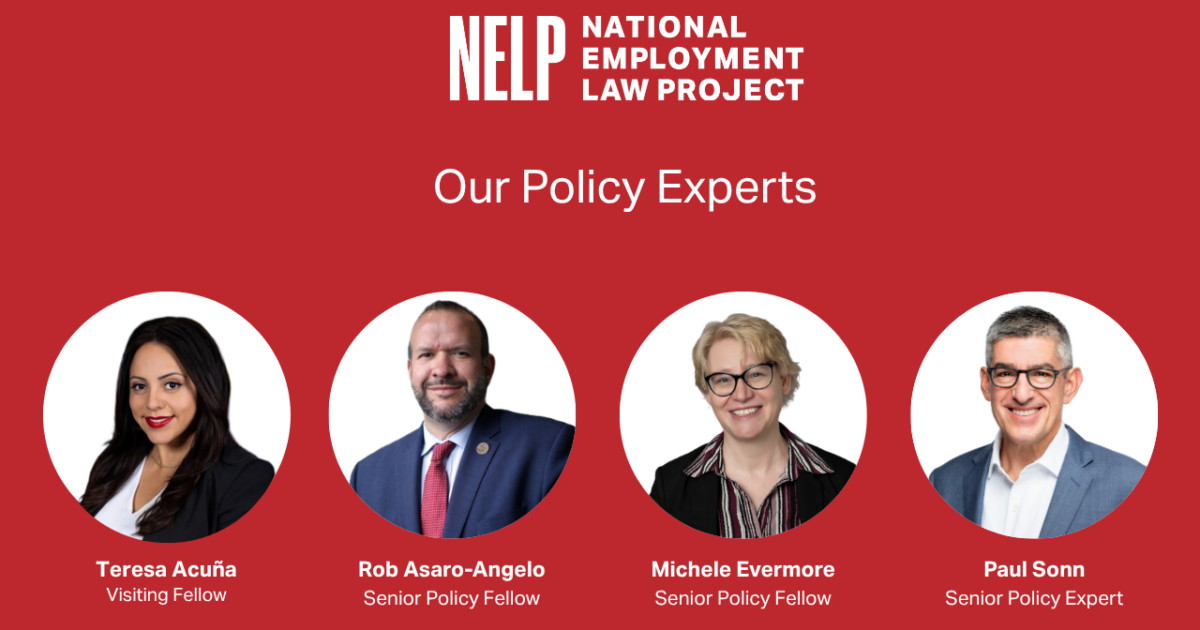
- August 2026: The appointment of Teresa Acuña, Rob Asaro-Angelo, Michele Evermore, and Paul Sonn marks the beginning of a new phase, focusing on the intersection of democracy, worker protection, and economic security.
Meet the Architects: Profiles in Policy Leadership
The newly appointed leadership team brings a rare mix of administrative experience and grassroots campaign success.
Teresa Acuña: Visiting Fellow for Good Jobs Democracy
Acuña’s appointment is perhaps the most direct reflection of the current administration’s focus on industrial policy. As the former director of the Good Jobs Initiative at the U.S. Department of Labor, she was instrumental in ensuring that the billions of dollars flowing into infrastructure and manufacturing were tied to labor standards. Her role at NELP will focus on how to democratize these investments, ensuring that urban and rural communities receive equitable economic benefits.
Rob Asaro-Angelo: Senior Policy Fellow for Worker-First Protections
Having served as the Commissioner of the New Jersey Department of Labor and Workforce Development (NJDOL) from 2018 to 2026, Asaro-Angelo brings executive-level experience in managing complex workforce systems. During his tenure in New Jersey, he managed some of the nation’s most robust worker protections, including paid family leave and sophisticated unemployment systems. His move to NELP suggests an interest in scaling these state-level successes to a national level.
Michele Evermore: Senior Policy Fellow for Economic Security and Worker Transitions
A returning veteran to the NELP fold, Evermore’s expertise is in the mechanics of economic safety nets. Her work on UI modernization during the pandemic is considered a benchmark in public policy circles. Her return signals that NELP intends to remain a primary authority on how to modernize the social contract for the modern worker, particularly as the labor market deals with the displacement caused by automation and climate-related industrial shifts.
Paul Sonn: Senior Policy Expert for Wages and Affordability
Sonn is the institutional memory of the modern wage movement. Having led NELP’s state policy program for years, his transition to this specialized role indicates that NELP is not satisfied with the current minimum wage baseline. Sonn will focus on long-term affordability strategies, seeking to design mechanisms that keep wage growth in lockstep with the rising cost of living, moving beyond static minimum wage figures.
Supporting Data: The Economic Reality
The need for this leadership team is underscored by the current economic data, which reveals a bifurcated labor market. While unemployment remains relatively low by historical standards, the quality of jobs—measured by benefits, job security, and real wage growth—remains a point of contention.
- Wage Stagnation: Despite periodic spikes, real wages for the bottom quartile of workers have struggled to keep pace with the hyper-inflation in housing and healthcare seen in the mid-2020s.
- The Infrastructure Boom: Billions in federal funding have been allocated for the clean energy transition. However, early data shows that without strong “Good Jobs” standards, these investments often rely on temporary or contract labor rather than long-term, career-track positions.
- UI Gaps: The pandemic exposed the fragility of state-run Unemployment Insurance systems. Research from NELP suggests that nearly 30% of eligible workers still struggle to access benefits due to outdated technological infrastructure and overly restrictive eligibility criteria.
Official Perspectives: The Vision Forward
The internal consensus at NELP is that the organization is moving away from purely reactive advocacy toward a proactive, "architectural" phase of influence.
"We aren’t just looking to protect workers from the worst outcomes anymore," said a spokesperson for the organization. "We are looking to build a framework where the incentives for employers are aligned with the interests of workers."
The Biden-Harris administration’s focus on “bottom-up and middle-out” economics has provided a blueprint that NELP is now looking to institutionalize. By placing leaders like Acuña and Evermore in policy roles, the organization is effectively embedding its advocacy goals into the administrative processes that govern the flow of capital and labor across the country.
Implications: What This Means for the American Worker
The appointment of these four leaders signals three major shifts in the national discourse on labor:
1. The Professionalization of Labor Advocacy
The era of labor advocacy being purely external—protesting from the outside—is shifting. The new NELP strategy relies on "insider-outsider" dynamics, where advocates possess the technical, legal, and bureaucratic knowledge to sit at the table with policymakers, effectively co-designing the regulations that dictate labor standards.
2. A Focus on "Industrial Policy as Labor Policy"
The appointment of Teresa Acuña signifies that labor rights are no longer a separate "silo" from industrial policy. For the next decade, the primary battleground for workers will be in the manufacturing, energy, and infrastructure sectors. NELP’s new team is specifically equipped to ensure that the "Green Transition" is also a "High-Wage Transition."
3. The Long-Term Battle for Wage Indexing
Paul Sonn’s mandate suggests that the next generation of policy will focus on "affordability" rather than just "minimums." This implies a shift toward advocating for automated wage indexing and cost-of-living adjustments that are tied to regional economic indicators, a strategy that would move the labor movement away from the cycle of constant, hard-fought legislative battles for small dollar-amount increases.
Conclusion
As the United States navigates a complex economic future, the National Employment Law Project has fortified its ranks with a formidable team. By marrying the intellectual rigor of policy experts with the practical experience of high-level government administrators, NELP is preparing for a period of sustained influence.
The task ahead is immense: to prove that a modern, efficient, and technologically advanced economy can—and must—be one that works for everyone. With these four new leaders at the helm of its policy and advocacy work, NELP is not merely reacting to the economy of 2026; it is attempting to define the economy of the next several decades. As Rebecca Dixon concluded in her address to the staff and stakeholders, the path forward is clear: "Onward."
