


In a significant show of confidence for Australia’s burgeoning deep-tech sector, venture capital giant Airtree has injected an additional $5 million into Adelaide-based artificial intelligence startup Metacognition. This latest capital infusion arrives barely a month after the company secured $10 million in a pre-seed round, bringing the total raised by the startup to $15 million in an remarkably short timeframe.
The investment marks a pivotal moment in the Australian technology landscape, reflecting a broader strategic shift in how local venture capital firms are viewing the nation’s role in the global AI arms race. By backing Metacognition—a company focused on building a robust operating system for the next generation of robotics—Airtree is placing a definitive stake in the ground against the perception that Australia is destined to remain a mere “model-hosting backwater.”
The Core Mission: Building the Operating System for Robotics
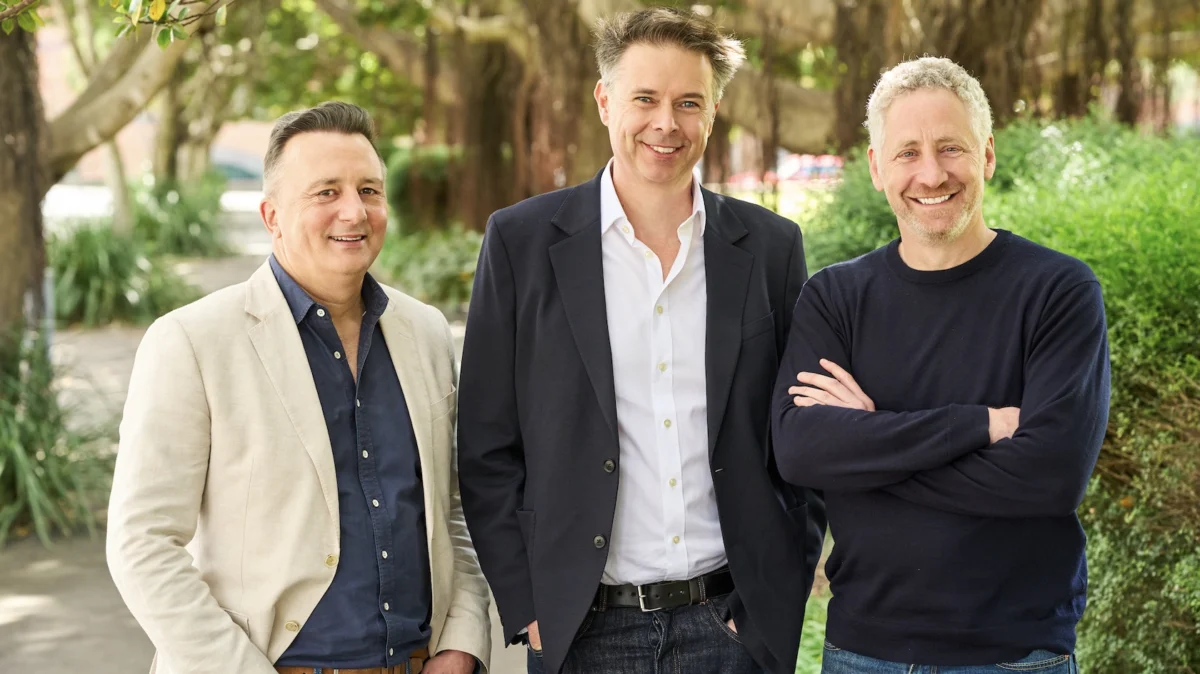
Metacognition was established earlier this year by a trio of heavyweights in the Australian academic and research community: Professor Anton van den Hengel, Professor Stephen Gould, and Dr. Paul Dalby.
The startup’s objective is ambitious: to create a foundational operating system that bridges the gap between high-level artificial intelligence and physical robotics. While the global AI frenzy has largely focused on Large Language Models (LLMs) and generative text or image platforms, the "physical" side of AI—the ability for robots to perceive, navigate, and interact with the real world in real-time—remains a massive, largely unsolved technical frontier.
Metacognition is developing the software stack required to unify robotic hardware with advanced AI decision-making. By creating an "OS" for robots, they aim to lower the barriers for deployment, allowing industrial and consumer robots to become more autonomous, adaptable, and intelligent.
Chronology of a Rapid Rise
The trajectory of Metacognition has been characterized by breakneck speed, reflective of the urgency felt by investors in the sector.
- Q1 2026: Metacognition is officially incorporated in Adelaide, drawing on years of foundational research from its three co-founders.
- September 2026: The startup secures a landmark $10 million pre-seed funding round, signaling strong institutional support for its proprietary approach to robotics intelligence.
- October 2026: Following a rapid assessment of the company’s technological milestones and market potential, Airtree leads an additional $5 million extension, ballooning the pre-seed total to $15 million.
- Current Status: The company is currently scaling its engineering team in Adelaide, moving from the research-and-development phase toward the construction of a commercial-grade prototype.
The Strategic Imperative: Escaping the “Hosting Trap”
The decision by Airtree to double down on Metacognition is deeply tied to the philosophical concerns expressed by its co-founder, Craig Blair. For years, Australia has been a prolific consumer of international technology, often serving as a regional hub for hosting data centers and cloud services for major global providers.
However, Blair argues that "hosting" is a low-margin, low-innovation game. If Australia merely provides the electricity and infrastructure for models trained in Silicon Valley or elsewhere, the nation fails to capture the long-term economic value of the intellectual property.
The “Value Walks Out the Door” Thesis
Blair’s recent commentary has resonated across the Australian tech ecosystem. He noted, “If all we do is keep the lights on for models trained elsewhere, the value walks out the door with the tenants.”
This sentiment highlights a critical vulnerability in the current digital economy. When a nation is purely a host, it remains dependent on the decisions of foreign entities regarding pricing, data privacy, and technological direction. To achieve technological sovereignty, Australia must shift from being a customer to being a creator.
“We don’t need to win everything,” Blair remarked in a recent briefing, “but we do need to be in the game, which means backing the people building the missing pieces.”
Implications for the Australian Economy
The implications of the Metacognition investment extend far beyond the balance sheets of a single startup. There are three primary ways this development impacts the Australian economic and technological outlook:
1. Retention of High-Value Talent
Australia has long suffered from a “brain drain,” where elite researchers—such as professors van den Hengel and Gould—are often recruited by international tech giants like Google, Meta, or OpenAI. By creating a world-class startup environment in Adelaide, Metacognition provides a domestic incentive for the nation’s top machine learning and robotics engineers to stay and build locally.
2. Diversifying the AI Narrative
The global conversation around AI is currently dominated by LLMs. However, the next massive wave of economic productivity is expected to come from the automation of physical labor—logistics, manufacturing, agriculture, and healthcare. By focusing on robotics, Metacognition is positioning itself in a vertical that is arguably more difficult to replicate than pure text-based AI, giving the Australian tech sector a distinct competitive advantage.
3. Creating a Deep-Tech Cluster in Adelaide
While Sydney and Melbourne have historically held the lion’s share of startup capital, Adelaide’s emergence as a hub for defense and space technology makes it an ideal setting for robotics research. The presence of a high-growth startup like Metacognition can catalyze a “cluster effect,” attracting further investment, talent, and supply chain partners to South Australia.
Official Responses and Investor Sentiment
The investment has drawn praise from stakeholders across the ecosystem. Airtree, one of Australia’s most influential venture capital firms, has made it clear that their investment criteria are evolving. They are no longer looking for "copy-paste" business models that import US ideas; they are hunting for "sovereign-grade" technology that solves fundamental engineering problems.
Dr. Paul Dalby, speaking on behalf of the founding team, noted that the additional capital provides the runway necessary to solve the "perception-action" loop in robotics—the fundamental challenge of enabling a robot to look at an environment and decide exactly how to move within it without latency.
“Our focus is on the architecture,” Dalby stated. “By building a universal operating system, we are creating the rails upon which the future of physical automation will run. This is about building infrastructure that is hardware-agnostic.”
The Road Ahead: Challenges and Hurdles
Despite the optimism, the road to commercializing robotics OS remains fraught with difficulty. The robotics industry is notoriously capital-intensive and slow to move compared to software-only SaaS models. Metacognition will face three significant challenges:
- Hardware Fragmentation: Unlike the PC or smartphone market, robotics hardware is incredibly diverse. Standardizing an OS across custom industrial arms, delivery drones, and warehouse bots is a monumental task.
- Global Competition: Metacognition is competing against well-funded incumbents and state-backed projects in China and the US. The speed of iteration will be the deciding factor in whether they can set the global standard.
- Regulatory Landscape: As robots become more autonomous, the regulatory frameworks surrounding safety and liability will evolve rapidly. Metacognition will need to ensure that their OS is not only performant but also compliant with international safety standards.
Conclusion: A Turning Point for Local Innovation
The $5 million extension from Airtree is more than just a financial transaction; it is a signal of intent. By backing Metacognition, Airtree is challenging the Australian tech industry to aim higher.
If Australia is to move away from its status as a "backwater" for hosting foreign models, it must foster exactly this type of company: one that builds at the foundational layer of technology. The founders of Metacognition have the pedigree to tackle this challenge, and the capital they have now secured provides them the necessary leverage to prove that world-class robotics innovation can, and should, originate from Australian soil.
As the global economy moves into the age of physical AI, the work being done in Adelaide today may well define the industrial landscape of tomorrow. Whether Metacognition becomes the "Windows" or "Linux" of the robotics world remains to be seen, but for the first time in a long time, the pieces of the puzzle seem to be falling into place for an Australian success story.
