

WASHINGTON, D.C. — In a significant move to reshape the future of the American labor landscape, the National Employment Law Project (NELP) announced today the appointment of three nationally recognized policy experts to senior leadership roles. As the nation grapples with rapid technological shifts, the rise of artificial intelligence, and a persistent need for robust worker protections, these appointments mark a sharpened strategic pivot for the organization.
The announcement comes at a pivotal moment in 2026, as NELP looks to modernize the social contract between employers and employees. By tapping into a cohort of veterans from state government, federal administration, and grassroots advocacy, NELP is positioning itself to lead the next generation of solutions designed to raise job quality, enforce labor standards, and provide a safety net for workers navigating an increasingly precarious economic environment.
The Strategic Vision: A New Era for Worker Rights
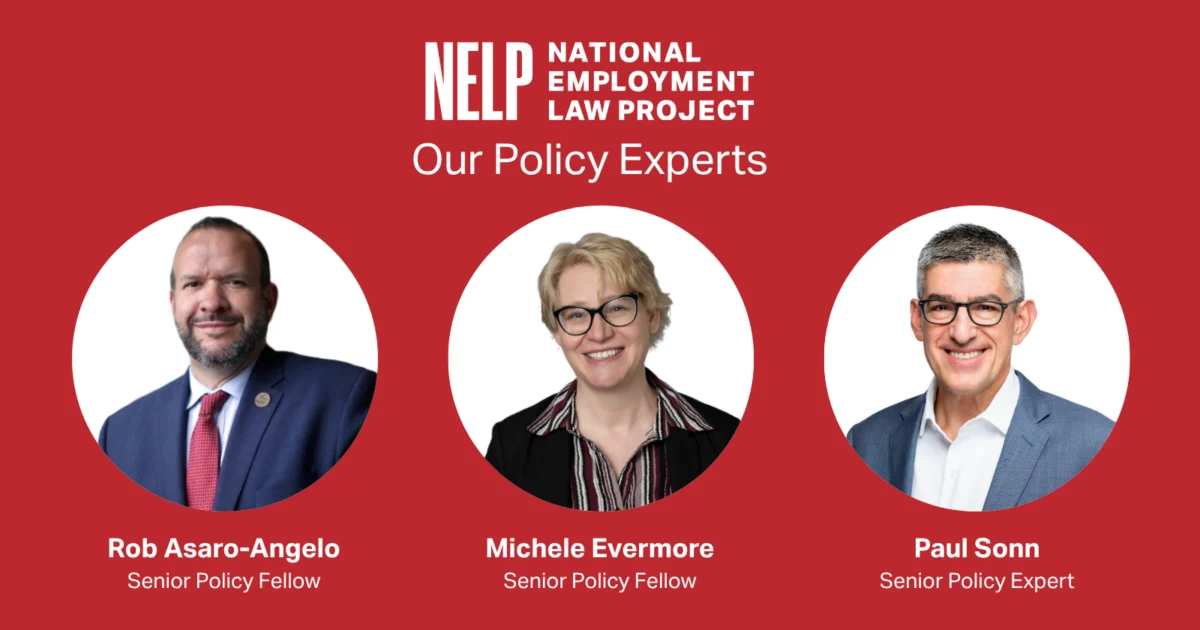
The recruitment of Rob Asaro-Angelo, Michele Evermore, and Paul Sonn represents more than just a personnel shuffle; it is a declaration of intent. Rebecca Dixon, President and CEO of NELP, described the trio as the "nucleus of a team" tasked with building a more equitable economy.
"We are thrilled to have such extraordinary leaders as Rob, Michele, and Paul taking on these significant new roles," said Dixon. "Among the nation’s most renowned worker advocates, each is an accomplished architect of both visionary policies and winning campaigns. Together, they will be the nucleus of a team that advances transformative policies for workers across the country."
The organization’s mission—to ensure all workers have expansive rights and thrive in quality jobs—is being tested by the rapid deployment of automation and the persistent challenges of wage theft. By bringing these experts into the fold, NELP aims to bridge the gap between high-level legislative strategy and the granular, state-level enforcement that actually impacts a worker’s paycheck.
Leadership Profiles: The Architects of Change
Rob Asaro-Angelo: Strengthening the Shield
As the new Senior Policy Fellow for Worker-First Protections, Rob Asaro-Angelo brings a unique perspective shaped by his tenure as the Commissioner of the New Jersey Department of Labor and Workforce Development (NJDOL). Having navigated the complexities of state-level labor enforcement from 2018 to 2026, Asaro-Angelo is tasked with strengthening state agencies’ capacity to combat wage theft and labor standards violations.
His track record in New Jersey is arguably one of the most progressive in the nation. Under his leadership, the state saw the implementation of a $15 minimum wage, the passage of the Temporary Workers’ Bill of Rights, and groundbreaking efforts in pay transparency. At NELP, his focus will be on operationalizing these protections, ensuring that laws on the books are actually felt on the factory floor and in the warehouse.
Michele Evermore: Modernizing the Safety Net
The transition to a digital, AI-driven economy requires a safety net that is as dynamic as the labor market itself. Michele Evermore, returning to NELP as the Senior Policy Fellow for Economic Security and Worker Transitions, is arguably the nation’s foremost expert on Unemployment Insurance (UI).
Evermore’s return to NELP is a "homecoming" of sorts. Her previous work was instrumental in expanding unemployment assistance during the COVID-19 pandemic. Her experience at the U.S. Department of Labor—where she served as Deputy Director for Policy in the Office of Unemployment Insurance Modernization—gives her a rare, insider view of how federal policy interacts with antiquated state systems. Her mission is to ensure that when workers face job displacement, they are not left behind by systems designed for a 20th-century economy.
Paul Sonn: The Champion of Wage Growth
Paul Sonn, a long-time stalwart of NELP, steps into the role of Senior Policy Expert for Wages and Affordability. Sonn’s history is inextricably linked to the success of the living wage movement in the United States. Having played a central role in the Fight for $15 and the design of the first city-level minimum wage laws, Sonn brings a deep understanding of how to build and win long-term policy campaigns.
In his new capacity, Sonn will tackle the "next generation" of wage policy: ensuring that pay keeps pace with the cost of living while addressing the emerging threats posed by AI and algorithmic management. His transition from directing the NELP Action Fund to this senior expert role signals a desire to double down on the legislative victories that have defined his career.
Chronology: A Legacy of Advocacy
To understand the weight of these appointments, one must look at the trajectory of the National Employment Law Project since its inception.
- 1969: The National Employment Law Project is founded, establishing a mission to protect the rights of low-wage workers.
- 2010–2020: NELP plays a foundational role in the "Fight for $15," helping to build the research and legal arguments that led to dozens of cities and states raising their minimum wages.
- 2020–2021: During the height of the pandemic, NELP leads advocacy efforts to expand UI benefits, providing a lifeline to millions of displaced workers.
- 2022–2025: NELP pivots toward addressing "just cause" protections and the implications of AI in the workplace, spearheaded by Paul Sonn and others.
- July 2026: NELP announces a reorganized senior leadership structure, signaling a strategic shift toward long-term policy innovation and state-level enforcement capacity.
Supporting Data: The Scope of the Challenge
The urgency behind these appointments is supported by current labor market data. While unemployment remains low by historical standards, the quality of jobs remains a major point of contention.
- Wage Theft: According to the Economic Policy Institute (a frequent partner of NELP), wage theft costs American workers billions of dollars annually—far exceeding the total cost of all other forms of property crime combined. Asaro-Angelo’s mandate is directly aimed at closing this gap.
- UI Coverage: During the pandemic, the cracks in the UI system were exposed, with millions of workers unable to access benefits due to outdated technology and complex bureaucratic requirements. Evermore’s work is intended to modernize these systems to handle future economic shocks.
- Inflationary Pressures: Despite wage growth, the rising cost of housing and healthcare has eroded purchasing power. Sonn’s focus on "affordability" policies reflects a move away from simple wage hikes toward a broader basket of economic protections.
Implications for the Future of Work
The appointment of these three leaders signals a transition in the labor advocacy movement from reactive to proactive. Rather than simply fighting for incremental raises, the focus is shifting toward structural change.
The AI Challenge
Perhaps the most significant implication of these hires is the focus on AI. With the rapid rise of algorithmic management—where software tracks productivity and makes firing decisions—workers are facing a new type of supervisor. NELP’s commitment to "guardrails for tech and AI" suggests that the organization is moving to the front lines of the debate over whether the digital economy will serve the worker or exploit them.
State-Level Dominance
By bringing in leaders like Asaro-Angelo, who have direct experience in state government, NELP is acknowledging that the future of labor policy will be fought in state capitals. With federal gridlock often stifling progress, the "labor laboratories" of states like New Jersey, California, and New York have become the primary testing grounds for progressive policy.
Conclusion: A Sustained Commitment
Since 1969, NELP has remained a pillar of the American labor movement. Its victories, which have impacted an estimated 100 million workers, are not just legislative bullet points—they represent tangible improvements in the lives of families across the country.
As the organization moves into the latter half of the 2020s, it is clear that the challenges of the past remain, while the challenges of the future are just beginning to manifest. By empowering leaders like Asaro-Angelo, Evermore, and Sonn, the National Employment Law Project is ensuring that it remains not just a witness to the changing labor market, but a primary force in shaping it.
As Rebecca Dixon noted, these appointments are about building "transformative policies." Whether through the enforcement of existing rights, the modernization of social insurance, or the pursuit of wage affordability, NELP is signaling that the era of passive advocacy is over. In its place, they are ushering in a period of rigorous, data-driven, and highly strategic activism designed to build an economy where, in their own words, "all workers have expansive rights and thrive in good jobs."
For more information on the organization’s ongoing campaigns and policy initiatives, visit www.nelp.org.
