



For decades, the backbone of manufacturing has been an invisible, unquantifiable asset: industrial intelligence. It is the intuition of the veteran floor operator who knows the machine "sounds off" before a bearing fails; it is the nuanced understanding of how a specific batch of raw material behaves under shifting humidity; and it is the collective wisdom of an engineering team that has solved the same bottleneck three times over.
Historically, this intelligence has been trapped in silos. It resides in the minds of aging experts, in dusty maintenance logs, or within the localized culture of a single plant. As the manufacturing sector faces unprecedented pressure to scale, innovate, and remain sustainable, the industry is reaching a turning point. The objective is no longer merely to digitize operations, but to transform fragmented institutional knowledge into a compounding engine for profitable growth.
Main Facts: Defining Industrial Intelligence
Industrial intelligence is the synthesis of a manufacturer’s accumulated know-how, operational practices, real-time production data, and a deep understanding of its unique business context.
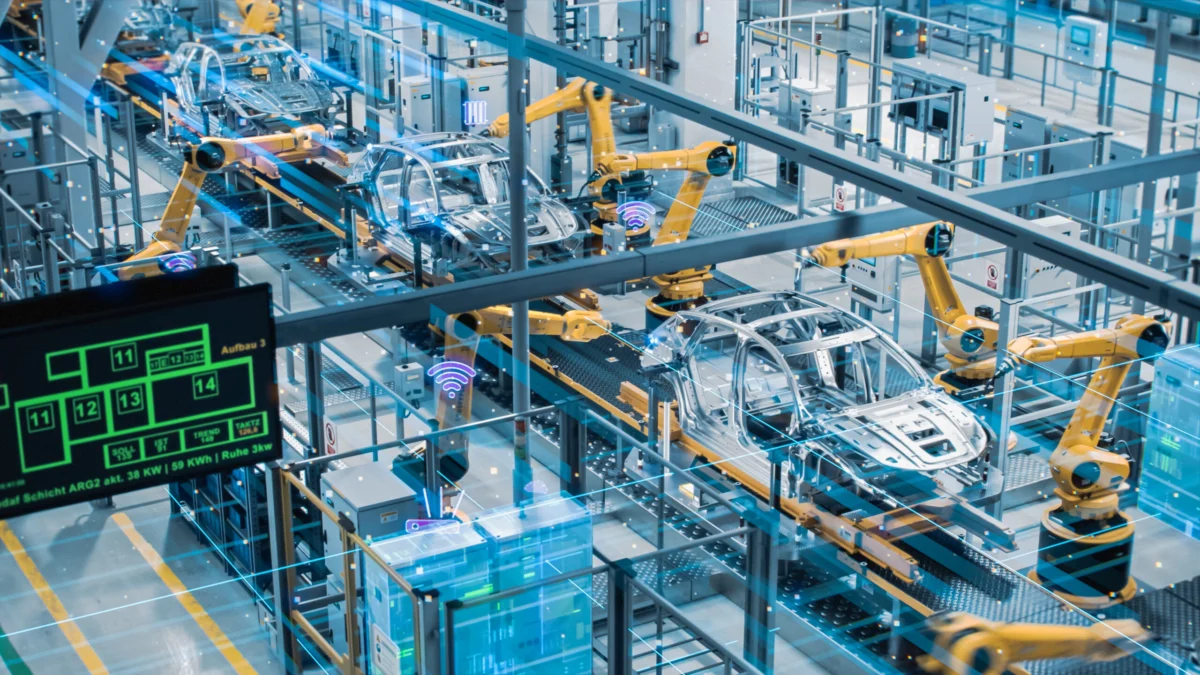
The core challenge for modern manufacturers is that individual expertise has limited reach. When knowledge is localized, it cannot scale. To remain competitive, leaders must bridge the gap between "what we know" and "how we execute." This requires moving beyond simple data collection to a model where intelligence is actively applied to the physical world. This is the realm of Physical AI—systems capable of perceiving environmental conditions, reasoning about them in the context of business constraints, and executing precise actions within the physical factory floor.
Chronology: The Evolution of Shop-Floor Wisdom
The journey toward integrated industrial intelligence has evolved through several distinct phases:
- The Era of Tacit Knowledge (Pre-2000s): Manufacturing relied almost exclusively on tribal knowledge. Operational success was tied to the presence of experienced personnel. If an expert retired, the plant effectively lost a portion of its "intelligence."
- The Digitization Wave (2000s–2015): Manufacturers began installing sensors and ERP systems. While this created an explosion of data, the information remained "cold." It documented what happened, but it rarely provided the context needed to explain why it happened or how to fix it in real-time.
- The Connected Intelligence Era (2015–2023): IoT and cloud computing began to break down data silos. Companies started aggregating data across multiple plants, allowing for the first real attempts at enterprise-wide benchmarking.
- The Physical AI Paradigm (2024–Present): We are currently in the era of active participation. AI is no longer just a dashboard for humans; it is an agent that can reason within physical constraints. Using digital twins, simulation, and real-time machine learning, systems can now predict issues and adjust equipment behavior before human intervention is required, or assist humans in solving complex, non-routine problems.
Supporting Data: Proof in Performance
The transition from static data to actionable intelligence is yielding measurable results. Consider the recent shift at Toyota Industries Corporation, which tackled a persistent challenge in its paint shop operations. By connecting previously fragmented data silos, the engineering and operations teams were finally able to see the full context of their production line.
The impact was immediate:
- Decision Velocity: The time required for analysis cycles plummeted from five days to less than four hours.
- Quality Gains: A pilot program focusing on paint defect reduction saw a 25% decrease in relevant defects.
The breakthrough was not in the sheer volume of data collected, but in the ability to provide that data with context. By helping teams understand the "why" behind defects, the organization enabled operators to intervene before the defects were "locked in" to the final product.
Similarly, Rockwell Automation has demonstrated the power of the "maintenance copilot." By combining machine manuals, historical manufacturing data, and the captured insights of veteran technicians, the company reduced the onboarding time for new workers troubleshooting complex machines from nine months to just three. This is not just a training efficiency; it is a business strategy that protects the company against the loss of institutional knowledge.
Official Perspectives: The Human-Machine Partnership
The narrative of industrial automation is often erroneously framed as a "human vs. machine" struggle. However, industry leaders are increasingly pushing back against this trope. The focus, they argue, must be on "augmented capability."
"The aim is not to make machines smarter at the expense of human roles," notes one industry analyst. "The goal is to see what people can build when knowledge can travel, intelligence can act, and ambition has more room to become reality."
By deploying Physical AI, manufacturers can offload repetitive, physically taxing, or information-intensive tasks to intelligent systems. This frees the human workforce to operate at a higher level—managing exceptions, innovating on processes, and focusing on creative problem-solving. In this model, machines become more capable, which in turn makes the humans operating them more capable.
Implications for the Future of Manufacturing
As we look toward the next decade, the implications of this shift are profound.
The Death of the "Black Box" Experiment
Traditionally, testing a process change on a production line was a high-stakes, "all-or-nothing" experiment. Today, simulation allows manufacturers to stress-test ideas in a digital environment. While physical validation remains a safety requirement, simulation provides a "sandbox" for learning, ensuring that the production floor is no longer the primary site of trial and error.
Operational Discipline as the Foundation of Trust
The shift toward AI-driven processes necessitates a new level of operational discipline. Trust in these systems cannot be blind; it must be earned through:
- Clear Governance: Defining exactly what systems are authorized to change and the boundaries within which they operate.
- Safety Interlocks: Maintaining the ability for human intervention to bring equipment to a "safe state" at any moment.
- Traceability: Keeping a robust record of every decision made by an agent, ensuring that the logic behind an action is always auditable.
Sustainable, Scalable Growth
Perhaps the most critical implication is the ability to grow without scaling complexity at the same rate. Historically, as a business grew, it became more cumbersome. Communication slowed, and errors became more difficult to track. Industrial intelligence reverses this trend. By turning experience into a scalable, digital capability, companies can expand their footprint, increase output, and improve quality without necessarily increasing the administrative burden.
Conclusion: The Business of Learning
The next frontier for the manufacturing industry is not the invention of a "smarter" robot, but the creation of a "smarter" business—one that can continuously learn from its own operations.
When intelligence is connected to the physical world, it stops being a passive asset and becomes a compounding one. Every machine cycle, every manual adjustment, and every troubleshooting session becomes a data point that informs the future. For manufacturers, this represents the ultimate competitive advantage: the ability to build an organization that gets better, faster, and more precise with every day of production.
The future of industry belongs to those who view their factory not just as a collection of assets, but as a living system capable of adapting, reasoning, and acting. By closing the loop between the mind of the expert and the motion of the machine, the industry is poised for a new era of growth—one where the complexity of the world is met by the clarity of intelligent action.
