


By Staff Reporter
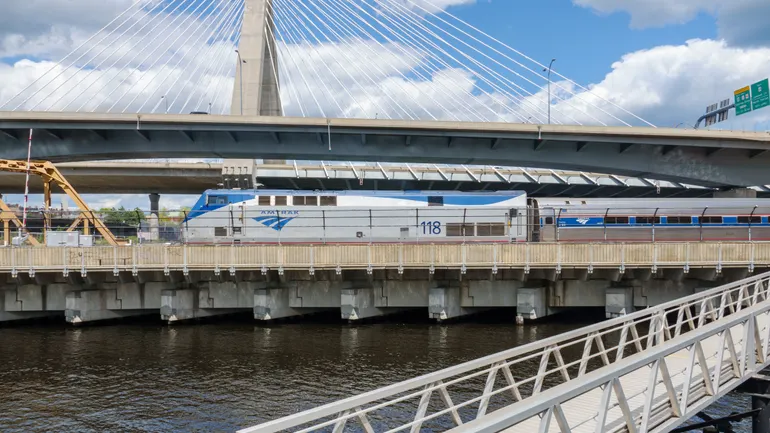
The Federal Railroad Administration (FRA) has officially awarded a $130 million grant to the Massachusetts Department of Transportation (MassDOT), marking a significant milestone in the Commonwealth’s multi-year effort to revitalize passenger rail service across the western and central regions of the state. The funding, part of a massive $2.3 billion nationwide investment under the Consolidated Rail Infrastructure and Safety Improvements (CRISI) program, is specifically earmarked for critical infrastructure upgrades at Springfield Union Station.
For residents of Western Massachusetts, this infusion of capital represents more than just track maintenance; it serves as a tangible commitment to reversing decades of transit isolation. By modernizing the mechanical and physical infrastructure surrounding Springfield’s central transit hub, state officials aim to create a more reliable, efficient, and interconnected rail network that bridges the geographic gap between the bustling urban core of Boston and the burgeoning economic corridors of the Pioneer Valley.
Main Facts: The Scope of the Investment
The $130 million federal grant is designed to tackle the "bottleneck" issues that have long hampered the fluidity of rail traffic in and out of Springfield. According to the FRA, the scope of the project focuses primarily on the comprehensive upgrade of interlockings and track configurations leading to the station’s platform tracks.
Interlockings—the sophisticated systems of signals and switches that allow trains to transition safely from one track to another—are the lifeblood of rail efficiency. Currently, aging infrastructure at the Springfield gateway limits the speed and frequency at which passenger trains can enter and exit the station, often leading to cascading delays that impact the entire regional network.
Key components of the project include:
- Track Modernization: Rebuilding the approaches to the Springfield Union Station platform to accommodate higher-speed rail traffic and increased passenger volume.
- Signal Upgrades: Replacing legacy signaling equipment with state-of-the-art technology to improve safety and operational capacity.
- Intermodal Integration: Springfield Union Station currently serves as a vital intermodal hub, housing intercity bus lines alongside passenger rail. The upgrades are designed to streamline the passenger experience, reducing dwell times and improving transfer efficiency between different modes of transit.
A Chronology of a Vision: From Political Stagnation to Bipartisan Momentum
The path to this $130 million investment was not paved overnight. It is the culmination of a decade-long political evolution that transcended party lines, proving that regional connectivity remains a rare point of consensus in Massachusetts politics.
The Foundation (2015–2018)
Under the administration of former Governor Charlie Baker, a Republican, the state began to pivot toward a more aggressive regional transit strategy. While the focus had traditionally remained on the MBTA’s aging Boston infrastructure, the Baker administration recognized that the economic vitality of the Commonwealth was being stifled by the lack of connectivity between Springfield, Worcester, and Boston. Preliminary studies into the "East-West Rail" concept began during this period, engaging stakeholders from Amtrak and CSX Transportation.
Building Coalitions (2019–2022)
The project gained significant momentum as local politicians in Western Massachusetts, particularly those in the Pioneer Valley, organized into a vocal advocacy bloc. They argued that the "T-centric" model of transportation investment was leaving millions of residents in the western part of the state behind. During this phase, CSX—which owns significant portions of the freight rail corridor—entered into complex negotiations with MassDOT to ensure that passenger expansion would not negatively impact freight logistics.
The Healey Administration and Implementation (2023–Present)
Upon taking office, Governor Maura Healey, a Democrat, signaled that expanding passenger rail would be a signature infrastructure priority. Her administration moved to formalize the project’s requirements and aggressively pursue federal funding via the Infrastructure Investment and Jobs Act. The securing of the $130 million grant represents the first major "win" of her tenure regarding long-distance rail, signaling that the project has moved from the conceptual planning phase into active construction and execution.
Supporting Data: The Nationwide Context of Rail Infrastructure
The $130 million allocated to Massachusetts is a vital slice of a much larger federal strategy. The FRA’s announcement on October 19, 2024, highlighted a $2.3 billion disbursement across 105 projects in 45 states and the District of Columbia. This is part of a broader federal push to catalyze a "Golden Age of Rail" in the United States.
Regional Infrastructure Ownership
The complexity of the Springfield project is underscored by the unique ownership structure of the rail corridors. While CSX Transportation remains a key player due to its ownership of the tracks used for transcontinental freight, MassDOT holds critical ownership of the route extending from Springfield north toward East Northfield. This "public-private partnership" model is essential for the project’s success, as it requires delicate coordination between state agencies and private logistics giants to ensure track time is shared equitably.
Economic Impact Projections
Studies commissioned by MassDOT suggest that a robust East-West rail connection could increase regional GDP by hundreds of millions of dollars over the next two decades. By reducing the reliance on the I-90 corridor—which remains one of the most congested arteries in the Northeast—the state anticipates a reduction in carbon emissions and a shift in the housing market, allowing residents to live in more affordable Western Massachusetts communities while maintaining access to high-paying jobs in the Greater Boston area.
Official Responses: A United Front
The announcement of the grant was met with unanimous praise from state leadership, emphasizing the collaborative nature of the effort.
Governor Maura Healey framed the investment as a catalyst for social and economic equity:
"This $130 million investment in Springfield will help us improve transportation, reduce congestion and connect more communities to jobs, housing and economic opportunity. It is not just about tracks and signals; it is about providing our residents with the dignity of reliable, modern transit that opens doors to their future."
Massachusetts Interim Transportation Secretary Phil Eng highlighted the technical and strategic significance of the funding:
"This grant is an important step toward building a more reliable, connected and efficient passenger rail network. By modernizing the gateway to Springfield, we are removing a significant friction point in our regional system. This project will serve as the backbone for future expansions, ensuring that Massachusetts remains a leader in modern, sustainable transit."
Local advocates and regional planning commissions have also lauded the move, noting that for the first time in a generation, the federal government is prioritizing the "forgotten" rail corridors that once defined the economic landscape of New England.
Implications: What This Means for the Future of Massachusetts
The immediate implication of this funding is a period of construction and infrastructure enhancement that will likely begin within the next 18 to 24 months. However, the long-term implications are far more profound.
1. The "East-West" Vision
This grant is widely viewed as the "down payment" on the full realization of the East-West Rail line. By fixing the Springfield hub, the state is effectively creating the central nervous system required to support higher-frequency service between Boston and Pittsfield. Without these upgrades, the network would remain limited by the outdated capacity of the Springfield junction.
2. Economic Decentralization
For decades, the economic power of Massachusetts has been heavily concentrated within the I-495 belt and the Boston metropolitan area. Enhanced rail connectivity offers a pathway to decentralization. Companies looking for lower overhead costs may find Western Massachusetts more attractive if their workforce can reliably commute via rail. Similarly, it provides residents with more lifestyle choices, mitigating the housing affordability crisis in the eastern part of the state.
3. Sustainability and Climate Goals
Massachusetts has set ambitious climate goals, including a significant reduction in transportation-related emissions. Shifting commuters from single-occupancy vehicles on the Massachusetts Turnpike to high-capacity, electrified or efficient diesel-electric rail is a critical component of the state’s "Net Zero" roadmap. Every passenger who chooses the train over a car contributes to a measurable decrease in the state’s carbon footprint.
4. A Template for Future Projects
Finally, the success of this application serves as a blueprint for how MassDOT can leverage federal infrastructure funds in the future. The project’s success in being selected by the FRA—competing against thousands of other proposals—demonstrates that well-documented, shovel-ready projects with bipartisan political backing are highly effective at capturing federal investment.
As the heavy machinery begins to arrive in Springfield in the coming months, the residents of the Commonwealth will be watching closely. The project stands as a testament to the fact that, despite political divisions and the complexities of public-private ownership, the physical infrastructure of a state can be transformed when a clear, unified vision meets the necessary financial resources. The $130 million grant is not merely an upgrade to an existing station; it is a signal that the future of Massachusetts transportation is moving, quite literally, down a new track.
