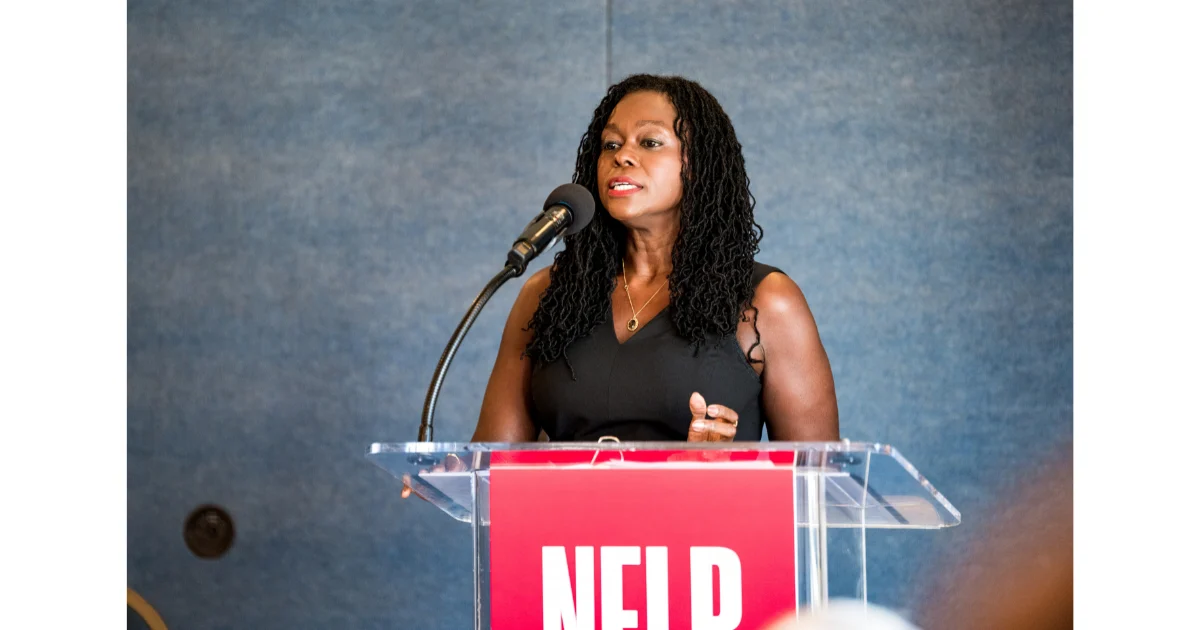





In a week defined by the frenetic pace of Washington, D.C.—a capital city currently navigating everything from the high-stakes annual conventions of the Congressional Black and Hispanic Caucuses to a bipartisan summit on the existential threats posed by artificial intelligence—the National Employment Law Project (NELP) carved out a critical space for reflection and mobilization. NELP recently convened a select assembly of senior labor policy leaders, activists, and researchers to address a singular, urgent question: What does worker justice look like in a rapidly transforming United States?
This event, the organization’s first major in-person policy summit since the onset of the COVID-19 pandemic, served as more than a networking opportunity. It was a strategic reset for a movement facing what leadership described as both "great promise and great peril." As the nature of employment shifts under the weight of automation, gig-economy proliferation, and economic volatility, the consensus among attendees was clear: the existing legal and institutional frameworks designed to protect workers are struggling to keep pace.
The Legacy of Struggle: A Foundation for Modern Reform
The summit opened with a series of stirring testimonials that grounded the day’s high-level policy discussions in the historical reality of the labor movement. Long-time NELP partners—including Alan Barber of the Roosevelt Institute, Jaribu Hill of the Mississippi Workers’ Center for Human Rights, Angela Hanks of The Century Foundation, MB Maxwell of Workshop, and Kevin Reilly of the Laborers’ International Union—offered reflections on NELP’s decades-long history of advocacy.
These accounts served as a bridge between past victories and current challenges. NELP President and CEO Rebecca Dixon offered a deeply personal reflection on this history, noting how the organization’s groundbreaking litigation on employment discrimination nearly fifty years ago fundamentally shaped her own trajectory as a young civil service worker in Mississippi.
"We are once again living through a period when the rules are being rewritten," Dixon told the assembled leaders. "We must collectively keep organizing, building, and fighting—we must refuse to accept the world we inherited is the best we can do."
Her sentiment was echoed by Raj Nayak, chair of the NELP Board of Directors. In his opening remarks, Nayak emphasized that the organization’s history is defined by its ability to pivot during moments of crisis. "We’re facing existential threats to our bedrock worker protections—some of which workers have relied upon for nearly a hundred years," Nayak noted. "Throughout its history, when economic crises and insecurity have threatened the stability of working families, NELP has always been the first to step up."
Chronology of a Shifting Landscape
The event’s structure was designed to move from the abstract to the actionable. The morning sessions were dedicated to diagnosing the current "state of the union" for labor, while the afternoon sessions were focused on the development of new, concrete policy interventions.
Morning: The Diagnostic Phase
The early portion of the event focused on the intersection of technology and labor. As artificial intelligence and automation continue to permeate the workplace, labor leaders discussed the "eroding floor" of worker rights. The conversation moved away from the binary debate of "AI vs. Humans" and toward the more pressing issue of "AI as a tool of labor management." Speakers argued that if these technologies are implemented without democratic oversight, they threaten to exacerbate existing inequalities in the workforce, particularly regarding contract work and algorithmic management.
Afternoon: The Policy Sprint
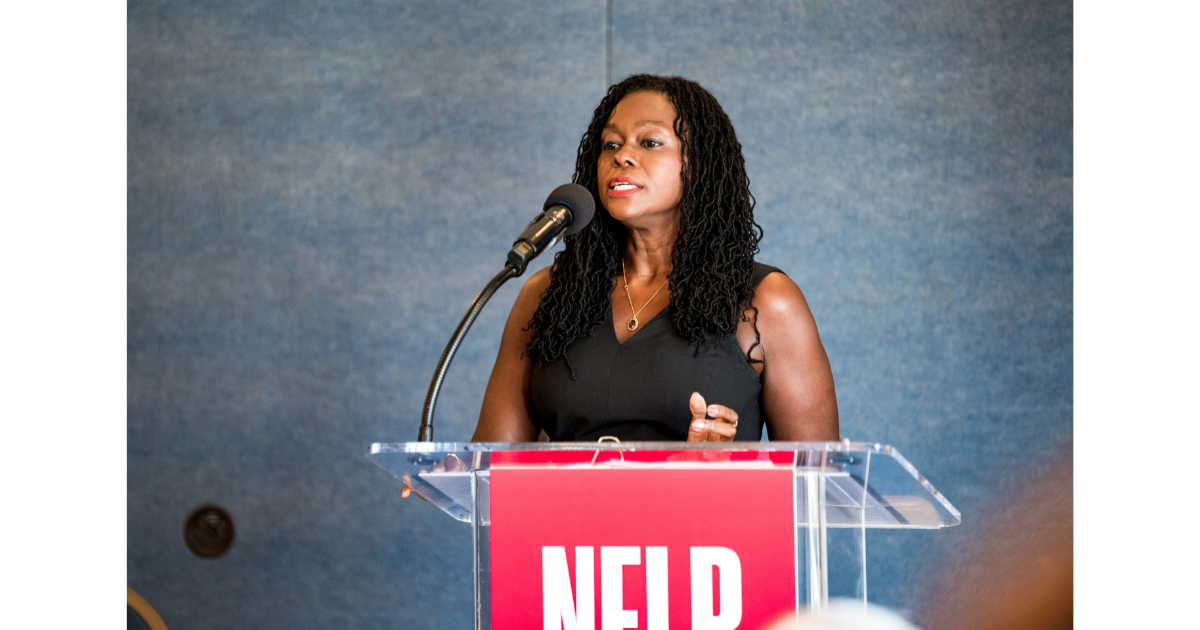
The latter half of the day featured a marquee panel discussion moderated by Teresa Acuña, NELP’s Visiting Fellow for Good Jobs Democracy. The panel, which included Michele Evermore, Rob Asaro-Angelo, and Paul Sonn, focused on three specific policy pillars: unemployment insurance (UI) reform, wage adequacy, and labor law enforcement. This segment was explicitly designed to transition the room from a state of apprehension toward a state of programmatic action.
Supporting Data: Why Current Systems are Failing
The panel discussions were punctuated by sharp critiques of the status quo, backed by data and recent research.
The Unemployment Insurance Crisis
Michele Evermore, a leading expert on social safety nets, pulled no punches when describing the current state of Unemployment Insurance in the United States. She characterized the existing system as "garbage," citing a failure to provide adequate coverage for the modern worker.
Evermore highlighted a series of systemic failures:
- Low Benefit Ratios: In most states, benefits fail to keep pace with inflation and are insufficient to cover basic living costs during transition periods.
- The "Fake Job" Epidemic: Evermore noted that up to one-third of current job postings are essentially "ghost jobs," which complicate reemployment metrics and create false hope for job seekers.
- Accessibility Barriers: The UI application process remains overly complex and hostile to the average user, particularly those without specialized legal knowledge.
She advocated for a complete overhaul that integrates union outreach into the UI process, suggesting that labor organizations can serve as the "boots on the ground" to help workers navigate these bureaucracies.
The Affordability and Wage Gap
Paul Sonn addressed the "affordability debate," which he argued has been captured by a focus on lowering prices rather than raising the baseline of what workers earn. "Working families are being squeezed between rising living costs and stagnant pay," Sonn explained.
He suggested that the labor movement is currently in a "post-Fight for $15" vacuum. While the Fight for $15 was a monumental success in shifting the national consciousness, Sonn argued that the next phase of the wage movement must move beyond a static, universal minimum wage. Instead, he proposed a multi-pronged approach that includes sector-based wage standards—policies that set pay floors for specific industries, thereby acknowledging the unique economic pressures of sectors like hospitality, manufacturing, or home health care.
Enforcement as Innovation
Rob Asaro-Angelo, drawing on his extensive experience as New Jersey’s Labor Commissioner, pivoted the conversation toward the often-overlooked area of enforcement. Even in an era of constrained budgets, Asaro-Angelo argued that states possess untapped power.
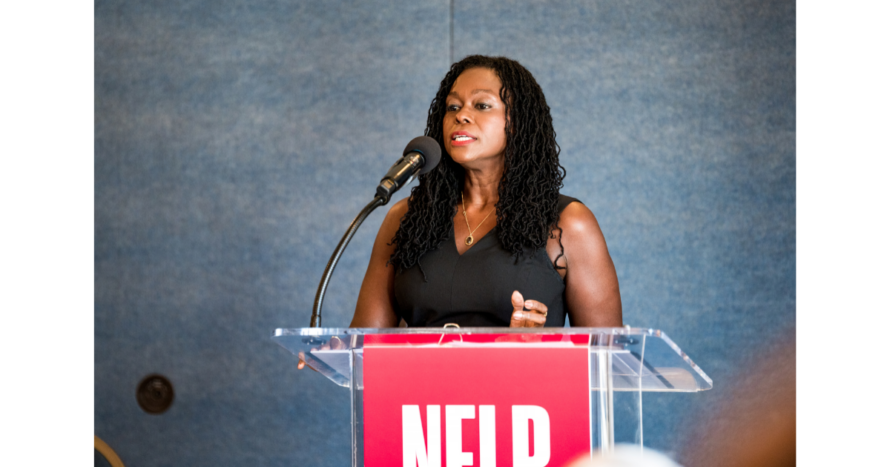
He cited a recent Rutgers University study which highlighted that statutory authority is only as strong as its enforcement mechanism. His proposed solutions included:
- Strategic Partnerships: Leveraging cross-agency cooperation to maximize the impact of labor inspections.
- User-Centric Systems: Modernizing the platforms through which workers file claims to reduce the "friction" that currently prevents many from reporting wage theft or safety violations.
- Procurement Power: Utilizing state and local public procurement contracts to mandate higher labor standards for any business doing work with the government.
Official Responses and Strategic Implications
The event served as a clarion call for "policy innovation." By bringing together representatives from labor unions, worker centers, and research institutes, NELP aimed to foster a collaborative ecosystem where policy ideas aren’t just generated but are also pressure-tested against the realities of different labor markets.
The implications of this summit are significant. First, there is a clear shift toward a decentralized model of labor advocacy. The recognition that national legislative victories are increasingly difficult to achieve in a polarized Congress has led many leaders to focus on the "laboratory of the states." By empowering local labor commissioners and supporting regional wage campaigns, the movement hopes to build a bottom-up momentum that will eventually force federal change.
Second, the summit solidified a new consensus on the role of technology. Rather than adopting a purely reactionary stance, the attendees expressed a desire to lead the narrative on AI and automation. The goal is to establish "digital rights" for workers—the right to know how they are being monitored, the right to contest algorithmic decisions, and the right to a share of the productivity gains generated by new technologies.
Conclusion: A Path Forward
The final takeaway from the NELP summit was one of tempered, yet determined, optimism. The challenges—economic insecurity, the rapid evolution of the gig economy, and the decay of social safety nets—are undeniably existential. However, the energy in the room suggested that the labor movement is no longer content to simply defend the status quo.
As the summit concluded, the message was clear: the rules are being rewritten, and for the first time in a long time, the labor movement is positioning itself to be the primary author of that new chapter. Whether through reforming the "garbage" UI system, implementing sector-specific wage standards, or leveraging the power of state-level enforcement, the path forward requires a level of sustained, interdisciplinary collaboration that the NELP event successfully ignited.
For the millions of American workers currently navigating an uncertain future, the policy solutions discussed in Washington may provide the necessary blueprint for a more equitable, dignified, and sustainable economy.
