




In the world of automotive performance, enthusiasts typically look to the donor car graveyard for their next engine swap. If you are building a track car, you seek out a high-revving block from a sports sedan; if you are building a drag monster, you grab a big-block V8. However, there is a burgeoning subculture of builders who look toward the horizon rather than the highway. By sourcing high-torque, industrial-grade diesel powerplants from marine and construction sectors, these builders are unlocking potential that standard automotive platforms often leave on the table.
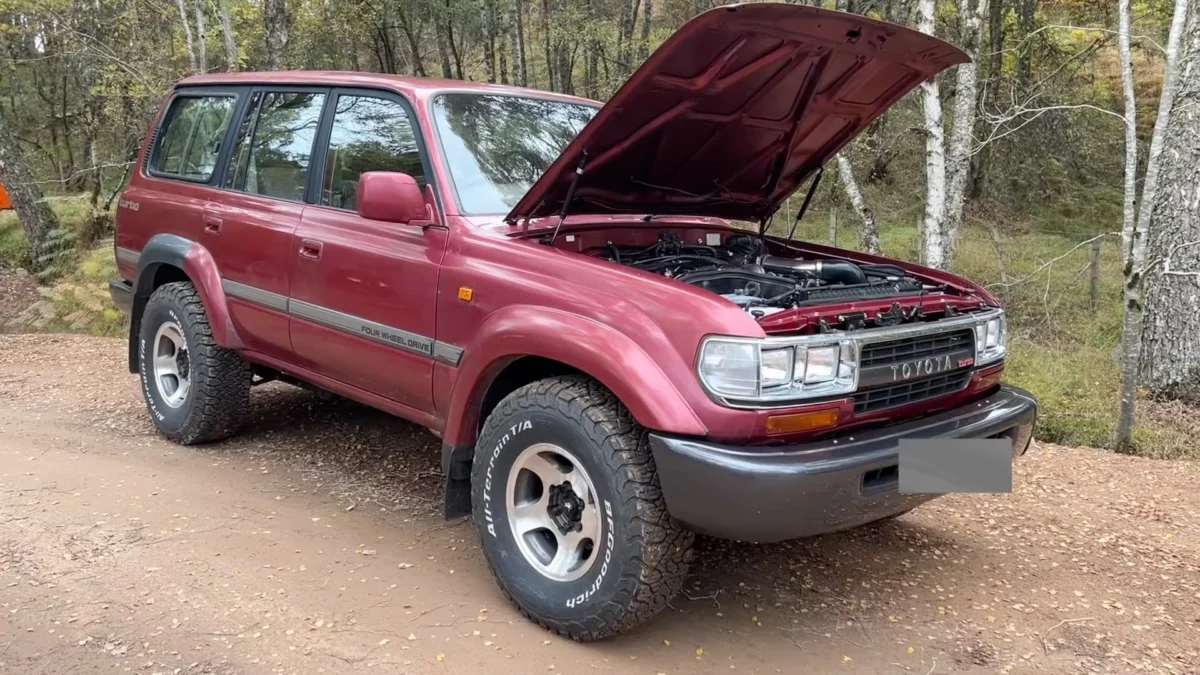
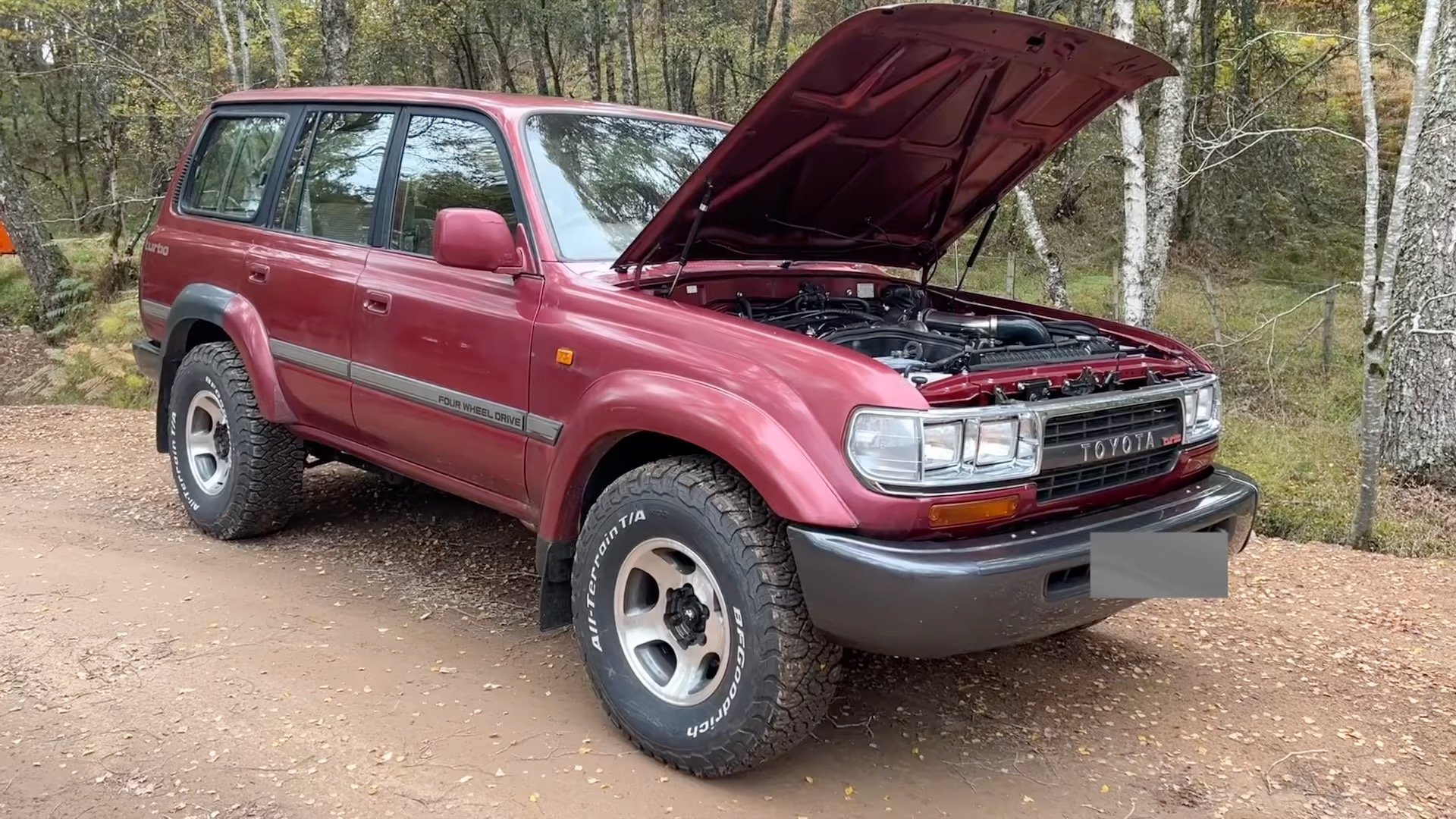
Nowhere is this trend more fascinating than in the recent project by the Rare Vehicles in Action YouTube channel, which has successfully transplanted a Yanmar marine diesel into the legendary 80-Series Toyota Land Cruiser. The result is a vehicle that retains its legendary off-road DNA while gaining a level of performance that fundamentally shifts its character.
The Core Conflict: Land Cruiser Capability vs. Performance Limitations
The 80-Series Toyota Land Cruiser is widely regarded as one of the most robust, capable, and enduring SUVs ever produced. Its reputation for longevity is cemented in the annals of overlanding history. Yet, even the most ardent Land Cruiser devotee will admit to a singular, persistent criticism: the factory-spec engines, particularly the non-U.S. turbodiesel variants, are agonizingly slow.
The 80-Series was built for reliability in the harshest terrains on Earth, not for winning stoplight races. For those who daily drive these machines or use them for long-distance overlanding, the lack of power can be a genuine hindrance, especially when climbing mountain passes or merging onto modern highways. When the Rare Vehicles in Action team set out to revitalize this specific 80-Series, they bypassed the typical automotive turbo-diesel upgrades—like modified injectors or larger intercoolers—and instead looked toward the Japanese heavy-industry giant, Yanmar.
Chronology of the Build: From Marine Salt to Mountain Trails
The engine in question is the Yanmar 6LP, a powerplant typically found deep in the hull of high-end pleasure craft and commercial workboats. The project was not a "drop-in" affair; it required a deep mechanical understanding of how marine engineering translates to automotive packaging.
Phase 1: The Adaptation (Months 1–3)
The project began by procuring a Yanmar 6LP, which is a marinized derivative of the Toyota 1HD-FT turbodiesel engine—a 4.2-liter inline-six that served as the gold standard for the Land Cruiser in international markets. Because they share a lineage, the physical footprint of the engine was ideal for the 80-Series engine bay. However, the conversion required immediate surgical intervention. The marine-specific seawater cooling pump, designed to draw in lake or ocean water, had to be completely removed. In its place, the builder plumbed a traditional Toyota closed-loop cooling system.
Phase 2: Clearing the Hurdles (Months 4–6)
As the engine began to nestle into the frame, clearance became the primary obstacle. The Yanmar’s oil sump and pickup were designed for a boat’s deep, unobstructed hull, not the complex front-axle geometry of a Land Cruiser. These were replaced with Toyota-spec components. Furthermore, the marine injector pump lacked the necessary sensor provisions to drive an automotive tachometer, forcing the builder to integrate a Toyota-specific pump setup to ensure the instrument cluster remained functional.
Phase 3: Drivetrain and Fine-Tuning (Months 7–9)
To handle the newfound power, the team opted for the Toyota H152 gearbox. This is a higher-ratio variant of the five-speed manual transmission found in the standard Land Cruiser. The synergy between the 6LP engine and the H152 transmission is what truly defines the build’s success, allowing for a relaxed, low-RPM cruising experience that was previously impossible.
Supporting Data: By the Numbers
The performance metrics of this swap are striking. The stock 12-valve 1HD-FT engine, while reliable, was never a powerhouse. By utilizing the 24-valve Yanmar 6LP, the builder has effectively doubled the output of the vehicle.
- Horsepower: The stock 12-valve engine typically produced roughly 160–170 horsepower. The Yanmar 6LP, even in a de-tuned or conservative configuration, pushes approximately 320 horsepower.
- Acceleration: The zero-to-60 mph sprint is the most telling metric. A stock 80-Series Land Cruiser in diesel trim often takes a glacial 16 seconds to reach highway speeds. This Yanmar-powered beast cuts that time in half, clocking in at 8.8 seconds.
- Efficiency and Cruising: The combination of the 6LP and the H152 gearbox allows the Land Cruiser to hold 60 mph at a mere 1,600 RPM. This drastically reduces engine fatigue and noise, making the vehicle far more usable for long-distance travel.
- Restrictive Bottlenecks: The builder notes that these figures are achieved despite using the restrictive stock air intake. With a custom high-flow intake, it is hypothesized that the engine could produce even higher torque figures, though the current output is already pushing the limits of the stock driveline.
Engineering Implications: Why Marine Engines?
The use of marine engines in automotive applications is not entirely unprecedented—Lamborghini, for instance, once produced V12s specifically for offshore powerboats—but it remains a niche practice. The primary advantage of a marine diesel is its duty cycle. A marine engine is designed to run at 80% to 90% of its maximum capacity for hours, or even days, on end.
In an automotive environment, where the engine spends most of its time at 10% to 20% load, a marine engine is effectively "overbuilt." The internal components, cooling jackets, and lubrication systems are engineered to withstand stress levels that an SUV will almost never encounter on a public road. This provides an immense peace of mind for the owner of a vehicle with 200,000 miles on the chassis.
Beyond the Engine: A Total Restoration
The project did not stop at the firewall. To ensure the vehicle could keep up with the increased power, the team performed a comprehensive mechanical restoration. The front axle was completely rebuilt to handle the increased torque load, and the electrical system—a common failure point in aging Land Cruisers—was meticulously traced and repaired to handle modern electronics.
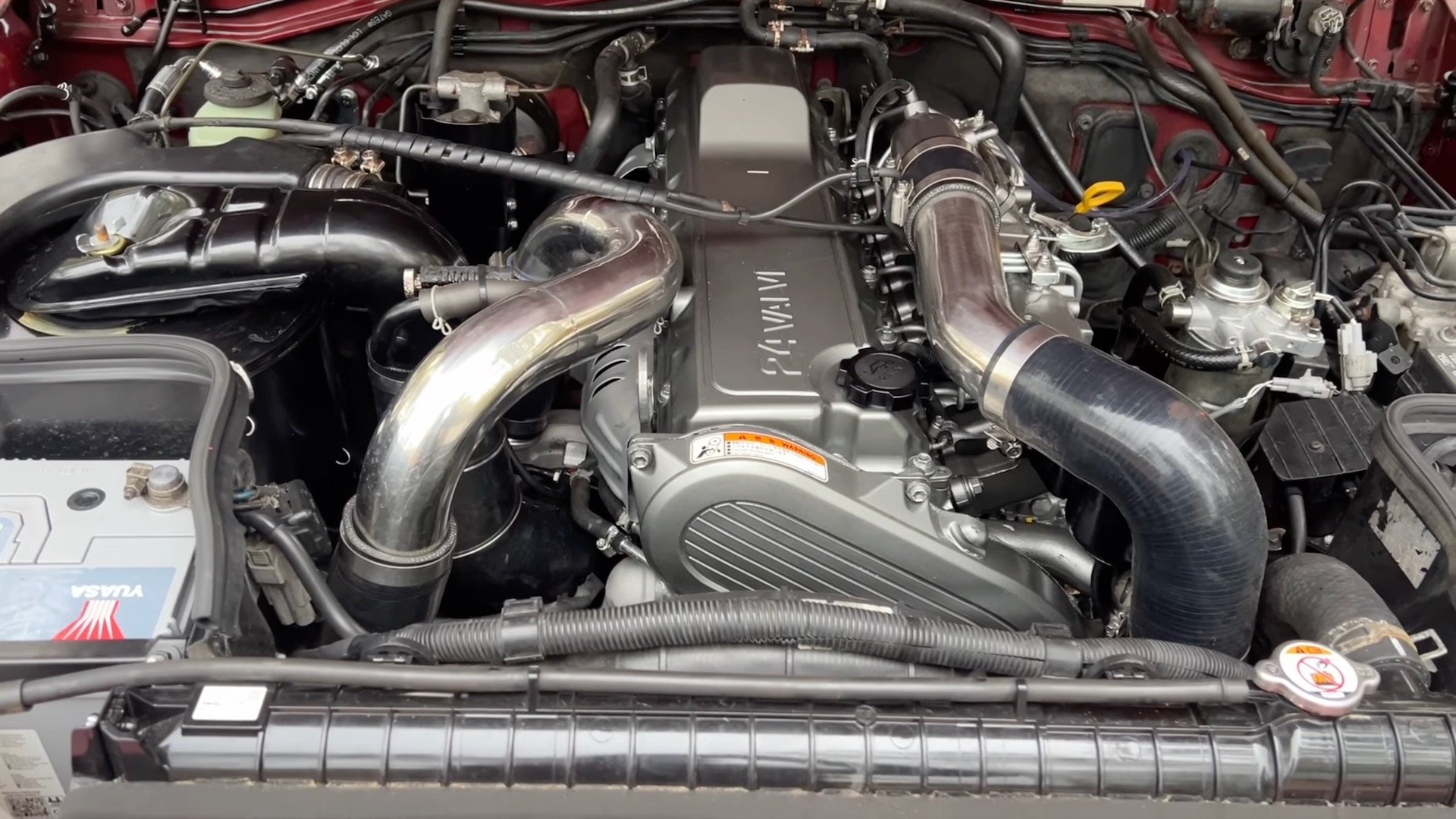
The inclusion of a custom exhaust system was not just for sound; it was necessary to ensure the engine could breathe properly. By addressing these secondary systems, the builder transformed a high-mileage workhorse into what is essentially a "restomod" that bridges the gap between 1990s reliability and modern performance standards.
The Future of "Franken-Trucks"
This build serves as a case study for the future of the automotive enthusiast scene. As parts for classic vehicles become harder to find and the desire for more power clashes with the reality of aging engine technology, the "industrial swap" is becoming an increasingly attractive solution.
While the 80-Series Land Cruiser remains a piece of automotive history, projects like this prove that the platform is not static. By integrating a Yanmar marine engine, the builder has not only saved a vehicle from potential retirement but has ensured it remains relevant for another 200,000 miles. It is a testament to the idea that if you have the right tools, the right ingenuity, and a willingness to look outside the automotive catalog, you can turn even the slowest, most sluggish truck into a machine that is as fast as it is capable.
Whether this trend will influence OEM manufacturers remains to be seen, but for the home-garage builder, the message is clear: the most exciting engine for your next project might just be sitting in a boatyard.
