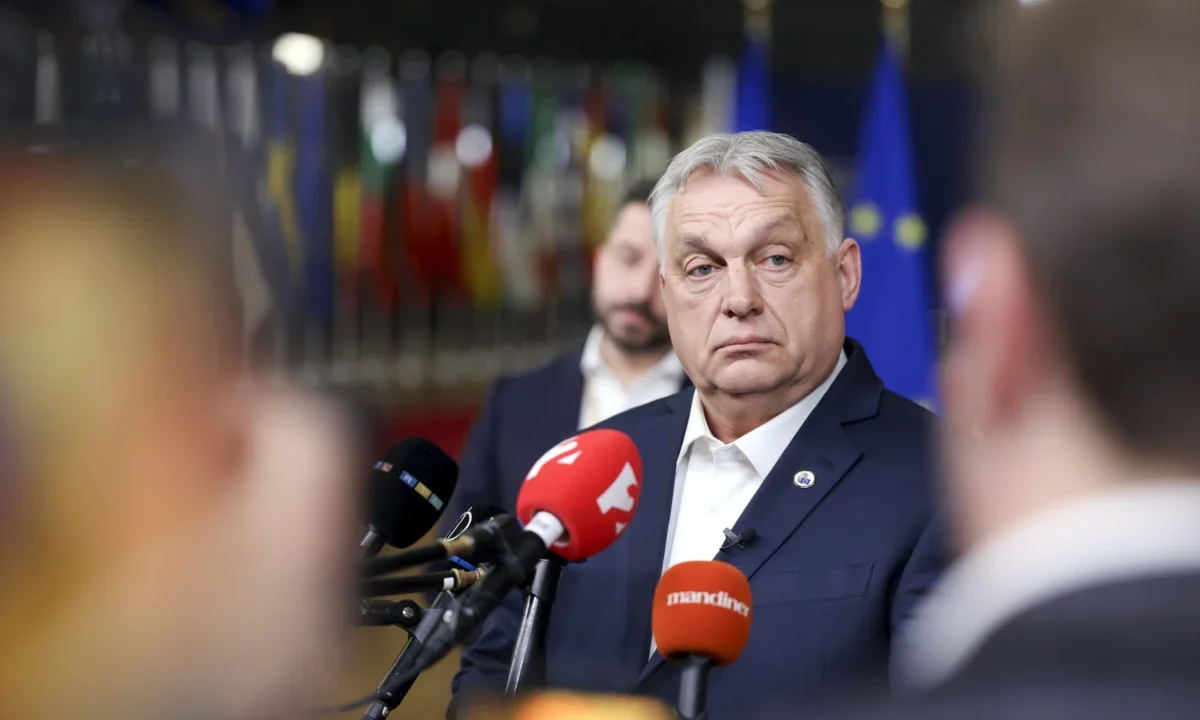




As Hungary prepares for the general election on 12 April 2026, the nation stands on the precipice of a potential seismic shift in its political trajectory. For the first time in 16 years, Prime Minister Viktor Orbán’s Fidesz party faces an existential threat to its long-standing hegemony. The impending ballot is not merely a contest of personalities; it is a profound referendum on Hungary’s geopolitical orientation, its relationship with the European Union, and its strategic approach to the global energy transition.
The Clean Energy Wire (CLEW), in collaboration with Journalismfund Europe, recently convened a media briefing to dissect the implications of this election. With the political landscape narrowing into a two-horse race between the incumbent Fidesz and Péter Magyar’s conservative Tisza movement, the outcome will dictate whether Hungary continues its current path of energy-sector isolationism or pivots toward a more integrated, climate-conscious future.
Main Facts: A Duopoly in the Making
The 2026 election cycle has been defined by a striking consolidation of political influence. Recent polling suggests that Hungary is drifting toward a de facto two-party system. Fidesz, the nationalist-conservative party that has dominated the Hungarian parliament since 2010, remains the incumbent powerhouse. However, the meteoric rise of Péter Magyar and his Tisza movement has fundamentally disrupted the status quo.
According to current projections, the electoral threshold—the minimum percentage of votes required to secure parliamentary representation—is acting as a filter that may exclude all smaller opposition parties. This effectively leaves the Hungarian electorate with two distinct visions for the future:
- The Fidesz Vision: A policy framework centered on state-led industrialization, a heavy reliance on nuclear energy (specifically the Paks II expansion), and a pragmatic, often adversarial, approach to EU climate mandates.
- The Tisza Vision: A movement articulating a need for transparency, reform, and a re-evaluation of Hungary’s role in the European green transition, while navigating the complexities of conservative domestic values.
The stakes are immense. Whoever takes the helm will inherit a nation that has leveraged its position to block various EU-wide climate initiatives, citing the need to protect "national sovereignty" and the affordability of energy for Hungarian households.
Chronology: The Road to the 12 April Polls
To understand the current volatility, one must look back at the trajectory of the Orbán administration and the emergence of the current opposition.
The Orbán Era (2010–2026)
Following his landslide victory in 2010, Viktor Orbán consolidated power, rewriting the constitution and centralizing control over media and public institutions. Throughout this period, Hungary became known for its "Eastern Opening" policy, deepening economic ties with Russia and China. This has been most visible in the energy sector, where the government secured Russian-backed loans for the Paks II nuclear plant, arguing that nuclear power is the only path to energy independence.
The Rise of Tisza (2024–2025)
Péter Magyar’s movement did not emerge from the traditional opposition spectrum but rather from within the cracks of the Fidesz system. His rapid ascent caught political analysts off-guard, fueled by a narrative of anti-corruption and a promise to restore Hungary’s standing in Europe. By mid-2025, it became clear that Magyar had successfully captured the disillusioned centrist and conservative vote, leaving traditional liberal and green opposition parties struggling to retain relevance.
The Election Run-up (Early 2026)
As the election date approached, the rhetoric intensified. The government framed the election as a battle against "Brussels bureaucrats" and "foreign interests," while the opposition focused on the stagnation of the Hungarian economy and the risks associated with the country’s high-cost, high-carbon industrial strategy.
Supporting Data: The Energy Dilemma
Hungary’s energy profile is a study in contradiction. It is a nation attempting to become a global hub for electric vehicle (EV) battery production while simultaneously maintaining a complex, often fraught, relationship with fossil fuel suppliers and traditional nuclear energy.
1. The EV Battery Hub Ambition
Hungary has positioned itself as a critical link in the European battery supply chain, attracting massive investment from Chinese manufacturers like CATL. While this provides a short-term boost to GDP, it creates a massive demand for electricity. Critics argue that the current grid infrastructure is unprepared for this surge in demand, and the reliance on imported energy—or high-carbon domestic production—threatens to negate the environmental benefits of the EVs being produced.
2. The Nuclear Conundrum
The Paks II nuclear power plant project remains the centerpiece of Hungary’s energy policy. Proponents argue it provides "baseload" stability. Opponents, including many environmental scientists, point to the escalating costs, the dependency on Russian nuclear technology, and the long-term waste management issues. As the project faces delays, the question of whether to double down or pivot to renewables is central to the upcoming legislative agenda.
3. EU Climate Blockades
Hungary has frequently utilized its veto power within the European Council to slow down or weaken EU-wide climate directives, particularly those that impact the automotive sector or demand rapid decarbonization of heavy industry. This has created a "sovereignty-versus-integration" tension that is expected to define the first 100 days of the next government.
Official Responses and Political Platforms
In the lead-up to the vote, both major camps have articulated distinct stances on the energy transition.
Fidesz: The "Energy Sovereignty" Platform
Fidesz representatives emphasize that Hungary’s priority is the protection of the "Utility Price Reduction" scheme (rezsicsökkentés). They argue that the transition to green energy must not come at the expense of industrial competitiveness or household financial stability. Their platform maintains that nuclear power is the only realistic, non-ideological way to ensure energy security in a volatile global market.
Tisza: The "European Modernization" Platform
Péter Magyar’s movement has focused on the inefficiencies of state-run energy companies and the lack of transparency in large-scale infrastructure projects. Their platform suggests a shift toward a more decentralized energy grid, encouraging solar and wind energy—sectors that have been heavily restricted under the current government. They advocate for a more constructive relationship with the EU, viewing the green transition as an economic opportunity rather than a political burden.
Implications: A Nation at the Crossroads
The outcome of the 12 April election will have far-reaching consequences for the European Union.
Implications for EU Climate Policy
If Fidesz retains power, Brussels can expect a continuation of the current deadlock. The "Orbán veto" will likely remain a persistent feature of EU climate negotiations. Conversely, a victory for the Tisza movement—or a coalition led by them—could signal a dramatic rapprochement with the European Commission. This would likely accelerate Hungary’s alignment with the European Green Deal, potentially unlocking frozen EU funds that have been tied to rule-of-law concerns.
Implications for Regional Security
Energy security is synonymous with national security in Central Europe. Should the new government move to reduce dependence on Russian energy imports, it will trigger a significant geopolitical realignment. This would require substantial investment in interconnectors with neighbors like Slovakia, Romania, and Croatia—a process that would redefine the regional energy map.
Implications for the Hungarian Economy
The Hungarian economy is currently at a turning point. The massive bet on EV battery manufacturing requires a stable, affordable, and increasingly green energy supply. If the next government fails to manage this transition, the country risks becoming a "rust belt" of the new energy economy, burdened by expensive nuclear projects and an outdated grid that cannot support high-tech manufacturing.
Conclusion: The Final Countdown
As the final days of the campaign tick away, the Hungarian electorate is faced with a stark choice. The 12 April election is not just about who occupies the Prime Minister’s office; it is about defining the core identity of the Hungarian state in the 21st century.
Will Hungary choose the path of "Sovereignist Pragmatism," maintaining its current alliances and energy infrastructure, or will it embrace a path of "European Integration," seeking to modernize its energy sector and restore its influence in Brussels?
For journalists, policymakers, and energy analysts, the results will serve as a bellwether for the broader rise of nationalist-populist movements in Europe and their ability to grapple with the existential challenges of the climate crisis. As the polls open on 12 April, the world will be watching to see if Hungary chooses to remain a disruptor or decides to rejoin the European consensus on the path to a net-zero future.
The stakes could not be higher. Whether the result is a continuation of the status quo or a dramatic change in guard, the implications for the European energy landscape will be felt for decades to come. As the nation goes to the polls, the primary question remains: can Hungary reconcile its national traditions with the global necessity of the energy transition? The answer will be written in the ballot boxes of Budapest and beyond on April 12.
