




By Editorial Staff
In an era where artificial intelligence is fundamentally rewriting the playbook for legacy financial services, a Sydney-based startup is positioning itself at the intersection of empathy and efficiency. OpenDebt, an AI-native fintech platform specializing in debt recovery, has announced the successful closure of a $2 million pre-seed funding round. The investment, co-led by venture capital heavyweights Blackbird and Antler, marks a significant milestone for the 12-month-old company as it sets its sights on the massive, high-stakes US market.
For a sector historically defined by cold calls, rigid scripts, and often adversarial interactions, OpenDebt’s approach—which prioritizes compliance, consumer psychology, and intelligent automation—represents a potential paradigm shift.
The Core Mission: Transforming the Recovery Experience
At its heart, OpenDebt aims to solve a fundamental problem in the global financial ecosystem: the inefficiency and friction inherent in debt collection. Traditional debt recovery models often suffer from high operational overheads, regulatory scrutiny, and a failure to effectively engage with borrowers, many of whom are in vulnerable financial positions.
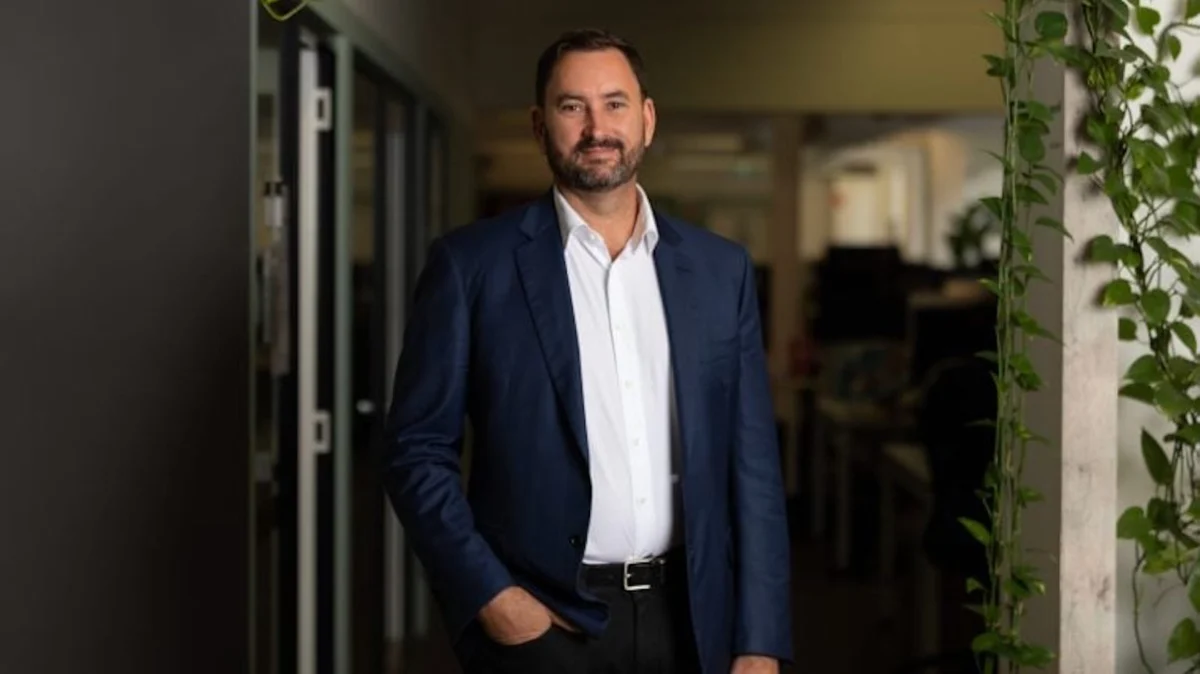
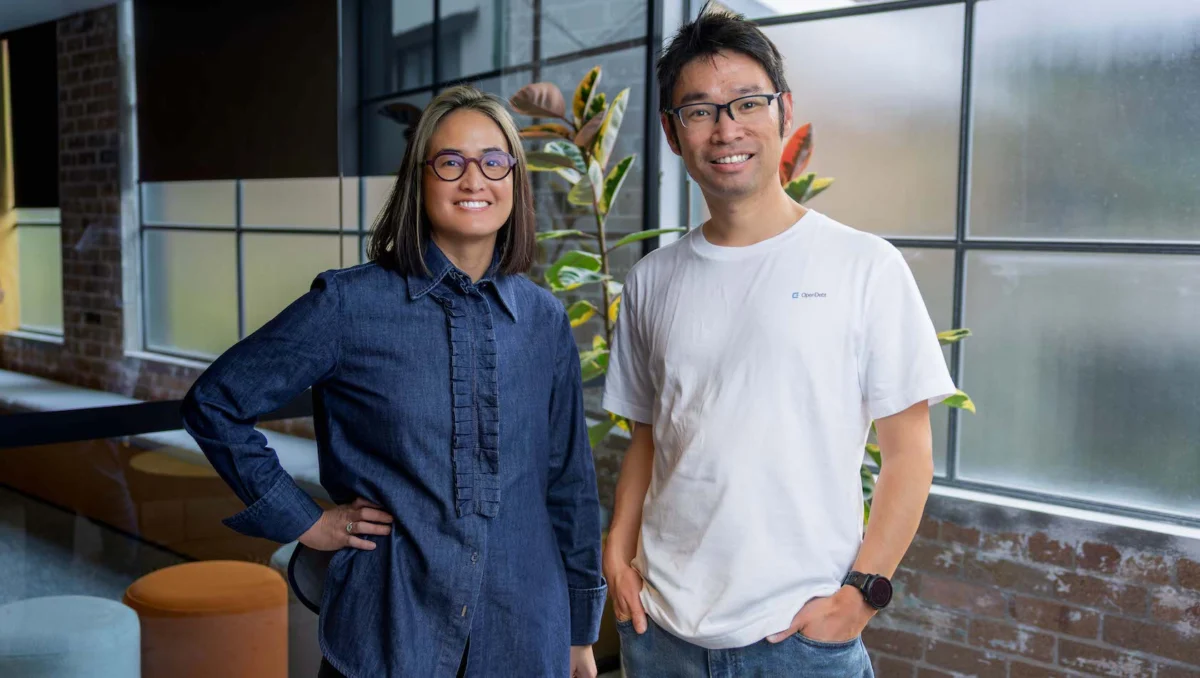
Founded just one year ago by Norman Yan, a veteran with 15 years of banking experience—including a stint as a data and AI executive at Westpac—and co-founder Jonas Tischer, OpenDebt utilizes sophisticated AI agents to handle multichannel debt recovery conversations. Unlike legacy systems that rely on linear, pre-written templates, OpenDebt’s engine is designed to adapt to the individual’s context, tone, and financial reality.
The goal is to transition debt recovery from a "collection" mindset to a "solution" mindset. By leveraging large language models (LLMs) and predictive analytics, the platform aims to provide a more human-centric, compliant, and supportive path for borrowers to resolve their outstanding obligations.
Chronology of a Rapid Ascent
The journey of OpenDebt from an embryonic idea to a funded startup with international ambitions has been swift, reflecting both the urgency of the problem they are solving and the caliber of the founding team.
- 12 Months Ago: Norman Yan and Jonas Tischer formally establish OpenDebt. Drawing on Yan’s deep domain expertise in banking infrastructure and data-driven decision-making, the duo begins building a proprietary AI framework capable of navigating the complex regulatory environment of consumer debt.
- Early Development: The company focuses on refining its AI-native architecture, ensuring that it meets the stringent data privacy and compliance standards required for financial services.
- The Funding Catalyst: Following a period of successful pilot testing and product-market validation, OpenDebt captures the attention of tier-one venture firms.
- September 2026: The company secures $2 million in pre-seed funding. The round is co-led by Blackbird and Antler, two of the most influential venture capital firms in the Asia-Pacific region.
- Present Day: With the capital secured, OpenDebt is moving into an aggressive scaling phase, focusing on growing its engineering team and initiating strategic discussions for US market entry.
Supporting Data: The Magnitude of the US Opportunity
The decision to target the United States is not a matter of mere ambition; it is a response to a staggering market reality. According to recent financial data, the US household debt landscape is currently under unprecedented pressure.
Total household debt in the United States currently features a delinquency volume exceeding $1 trillion. This figure, encompassing credit card debt, auto loans, and personal credit lines, represents a systemic challenge for lenders. The sheer volume of delinquent accounts creates a "bottleneck" effect, where traditional collection agencies are overwhelmed, leading to degraded customer service and increased regulatory risk.
OpenDebt enters this space with a value proposition that is highly attractive to lenders:
- Scale: AI agents can handle thousands of concurrent conversations, a feat impossible for human-led call centers.
- Consistency: The platform ensures 100% compliance with consumer protection laws by embedding guardrails directly into the AI’s decision-making logic.
- Cost Efficiency: By automating the initial stages of communication and negotiation, lenders can drastically reduce the cost-to-collect, allowing them to focus human resources on only the most complex, high-touch cases.
Institutional Backing and Strategic Vision
The involvement of Blackbird and Antler serves as a strong signal of confidence in both the technology and the leadership team.
Blackbird, known for backing "generational" companies in the Australian ecosystem, has identified OpenDebt as a potential leader in the "Fintech 2.0" wave. Samantha Wong, a partner at Blackbird, has been closely involved with the team, highlighting the importance of blending technical prowess with deep regulatory understanding.

Antler, which acts as an early-stage incubator and investor, provided the initial foundation for the founders to stress-test their thesis. For Antler, the partnership with OpenDebt is a testament to their strategy of identifying experienced industry insiders—like Norman Yan—who are uniquely positioned to disrupt their own former sectors.
In a joint statement, the investors noted that the "AI-native" approach of OpenDebt is what separates it from earlier generations of automated collection software. While previous tools were essentially glorified mail-merge systems, OpenDebt’s platform is context-aware, capable of understanding the nuances of a borrower’s explanation and suggesting viable, personalized repayment pathways.
Implications for the Financial Industry
The success of OpenDebt carries broader implications for the global financial services industry. As AI continues to permeate the sector, the way in which institutions manage risk and customer relationships is undergoing a fundamental shift.
1. The Death of the "Cold Call"
For decades, the debt collection industry has relied on the telephone as the primary, often intrusive, tool of choice. OpenDebt’s success suggests a shift toward asynchronous, digital-first communication. By meeting customers where they are—via SMS, email, or secure web portals—and allowing them to engage on their own terms, firms can significantly increase recovery rates.
2. Regulatory Compliance as a Competitive Advantage
In the past, technology in debt collection was often seen as a way to "cut corners." OpenDebt is flipping this narrative. By using AI to audit every interaction in real-time, the platform provides a level of transparency that is difficult to achieve with a human-staffed call center. This "compliance-by-design" approach could become the new standard for all consumer-facing fintech products.
3. Empathy-Driven Recovery
Perhaps the most significant implication is the focus on the consumer. The traditional model treats the borrower as an adversary. OpenDebt’s model assumes the borrower is a customer who has fallen into difficulty and requires a mechanism to return to financial stability. By providing tools that are easier to navigate and less confrontational, OpenDebt is likely to see higher engagement and, ultimately, better financial outcomes for both the lender and the borrower.
Looking Ahead: The Roadmap for Expansion
With $2 million in the bank, the immediate priority for the OpenDebt team is execution. Scaling operations requires more than just hiring software engineers; it requires building a robust infrastructure that can withstand the demands of the US market.
The US regulatory environment is notoriously fragmented, with different rules applying at the federal and state levels. Navigating this requires a sophisticated understanding of legal frameworks, which is why the company’s focus on "compliance-first" engineering is so critical.
As they explore US partnership opportunities, the company is expected to focus on mid-tier financial institutions and credit unions—entities that are large enough to feel the weight of the $1 trillion delinquency crisis but often lack the internal resources to build their own proprietary AI solutions.
Norman Yan’s background as a 15-year banking veteran will be pivotal here. Having spent years inside the machine, he understands the pain points of the institutions he is now pitching to. He knows what a Chief Risk Officer worries about, what a Compliance Officer mandates, and what a CFO needs to see in terms of ROI.
Conclusion
The story of OpenDebt is a microcosm of the current state of the global fintech market. It is a story about the transition from legacy, manual processes to high-velocity, intelligent automation. However, it is also a story about humanizing finance. By replacing the stigma of debt collection with the precision of AI-driven resolution, OpenDebt is not just building a product—it is building a new, more sustainable way for the modern economy to handle the inevitable realities of credit and default.
As the team prepares to navigate the complexities of the US market, the industry will be watching closely. If OpenDebt can prove that its AI-native approach can effectively bridge the gap between lender requirements and borrower realities, it may well become the standard-bearer for the next generation of recovery technology. The $1 trillion delinquency figure may be daunting, but for a team armed with deep experience and cutting-edge AI, it represents the ultimate opportunity for impact.
