





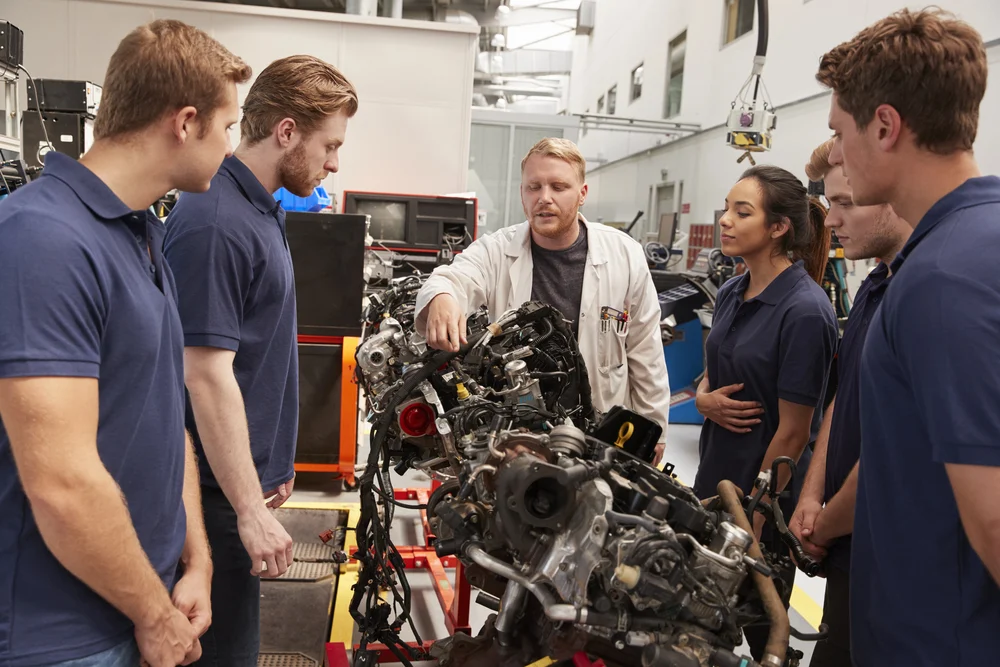
In the high-stakes world of automotive repair, where vehicle complexity is advancing at a pace unseen in the history of the internal combustion engine, the mantra "keep learning" has become a cliché. However, shop owner and industry consultant Matthew Wagg warns that without a rigorous, data-driven framework, the pursuit of education is often nothing more than a "costly exercise" that bleeds capital without delivering a return on investment.
Speaking at the Midwest Auto Care Alliance Hi-Tech Training and Vision Expo in Kansas City, Wagg delivered a sobering assessment of current industry habits. He argues that many shop owners treat training as a "check-the-box" activity, sending technicians to random seminars and webinars without a cohesive strategy. The result, he suggests, is a fragmented workforce that possesses abstract knowledge but lacks the practical application necessary to improve efficiency in the bays.
"Training without a strategy is just noise," Wagg stated plainly to an audience of industry peers. For repair shops aiming to remain competitive in an era of ADAS (Advanced Driver Assistance Systems), electrification, and software-defined vehicles, the time for passive learning has passed.
The Core Philosophy: Intentionality and Measurability
At the heart of Wagg’s methodology is a simple, albeit demanding, premise: learning must be intentional and measurable. He argues that shop owners often mistake "activity" for "productivity." Sending a technician to a high-level diagnostics class is meaningless if the shop’s workflow doesn’t support the implementation of those new skills.
Setting the Standard
The first pillar of Wagg’s approach is the establishment of non-negotiable minimum expectations. In his own facility, he mandates a minimum of 10 hours of training per quarter for every technician. This curriculum is not arbitrary; it is a blend of online modules, intensive in-person workshops, and manufacturer-specific certifications tailored to the shop’s specific vehicle mix.
"We set a minimum standard, and it is non-negotiable," Wagg emphasized. This clarity removes the ambiguity that often plagues technician development. When training is treated as a core component of the job description—rather than an optional perk—the culture of the shop shifts toward a "growth-first" mentality.
The Chronology of Implementation: From Selection to Execution
Wagg outlines a specific lifecycle for training that transforms education from a sunken cost into a strategic asset.
1. Curating the Curriculum
Not all training is created equal. Wagg warns that the market is saturated with low-quality information. "There’s a lot of bad training out there," he noted. "Just because it’s training doesn’t mean it’s good." Shop owners must act as gatekeepers, vetting educational content to ensure it aligns with the shop’s business model. If a shop specializes in European luxury vehicles, sending a technician to a heavy-duty diesel seminar provides little immediate value.
2. The Pre-Training Briefing
Before a technician attends a course, the shop owner or service manager should have a conversation about expectations. Wagg suggests asking, "What are we going to do differently when you come back?" By framing the training as a solution to a specific shop problem, the technician approaches the material with a heightened sense of purpose.
3. The Post-Training Debrief
The most critical stage, according to Wagg, is the immediate follow-up. Upon returning to the shop, the technician should present a summary of what was learned and, more importantly, how it will be integrated into the shop’s standard operating procedures (SOPs). This creates accountability.
4. Continuous Coaching
Training is not a singular event; it is a cycle. Once the new skill is introduced, it must be reinforced through day-to-day coaching. Shop leaders must monitor the technician as they apply these new techniques, providing support and corrective feedback. "You don’t just send them to training and hope," Wagg said. "You support the process until the skill is ingrained."
Bridging the Gap: Linking Education to Advancement
Perhaps the most controversial, yet necessary, aspect of Wagg’s philosophy is the connection between education and compensation. In many shops, training exists in a silo, disconnected from the realities of payroll and career progression. Wagg argues that this detachment is a primary driver of turnover.
"Learning has to mean something," Wagg asserted. He advocates for a transparent career path where training levels are directly linked to:
- Compensation Tiers: Base pay increases tied to mastery of specific systems.
- Certification Milestones: Achievement of industry-recognized credentials (such as ASE master status or OEM-specific training).
- Increased Responsibility: Granting senior technicians the authority to lead diagnostics or mentor junior staff based on their documented educational achievements.
By tying learning to advancement, the shop owner creates an incentive structure where the technician is not just "doing their job," but actively building a career.
Implications: The High Cost of Stagnation
The automotive repair industry is currently experiencing a technological paradigm shift. The integration of proprietary software, complex sensor arrays, and high-voltage systems means that the "generalist" mechanic of twenty years ago is becoming obsolete.
Reactive vs. Proactive Planning
Wagg warns that shops failing to adopt a structured learning plan are inherently reactive. They wait until a vehicle comes into the bay that they cannot fix, leading to a scramble for information, extended cycle times, and customer dissatisfaction.
"Waiting until you’re stuck is too late," he warned. Proactive training acts as an insurance policy against obsolescence. By forecasting the trends in vehicle technology, shops can ensure their staff is skilled in a specific area—such as EV battery health or radar calibration—long before the market demands it.
The Retention Paradox
Many shop owners express a fear that investing in staff will lead to their eventual departure. They fear paying for training only for that employee to take their newfound skills to a competitor. Wagg dismisses this as a short-sighted mindset.
"If you don’t train them and they stay, that’s a bigger problem," he countered. An undertrained, stagnant workforce is a liability that ultimately kills a shop’s reputation and profitability. By fostering a culture of constant development, owners not only improve their current output but also build a "magnet" environment that attracts high-caliber talent who want to work for a company that invests in their future.
Industry Response and Future Outlook
The feedback from the Midwest Auto Care Alliance expo suggests that Wagg’s message is resonating with a generation of shop owners grappling with the "technician shortage." The industry is moving away from the "trial by fire" school of learning and toward the professionalized model Wagg advocates.
Industry analysts suggest that the shops that will survive the next decade are those that treat their staff as "knowledge workers." The physical act of turning a wrench is now secondary to the intellectual capacity required to diagnose a complex vehicle network.
Summary of Strategic Recommendations
For those looking to overhaul their training strategy, Wagg’s model offers a blueprint:
- Quantify: Establish a minimum hours-per-quarter requirement.
- Qualify: Vet every course for relevance to the shop’s specific technical needs.
- Correlate: Directly link completed training to salary, promotions, and shop authority.
- Observe: Implement a "coach-the-coach" program where managers monitor the practical application of new skills.
- Cultivate: View the development of staff as an investment in the business’s longevity, not a risk of turnover.
As technology continues to outpace tradition, the repair shops that succeed will be those that have mastered the art of continuous, structured, and intentional education. As Matthew Wagg aptly put it, the only way to avoid being left behind is to ensure that every hour spent in a classroom pays dividends on the shop floor. In the modern automotive landscape, knowledge is not just power; it is the fundamental currency of the business.
