





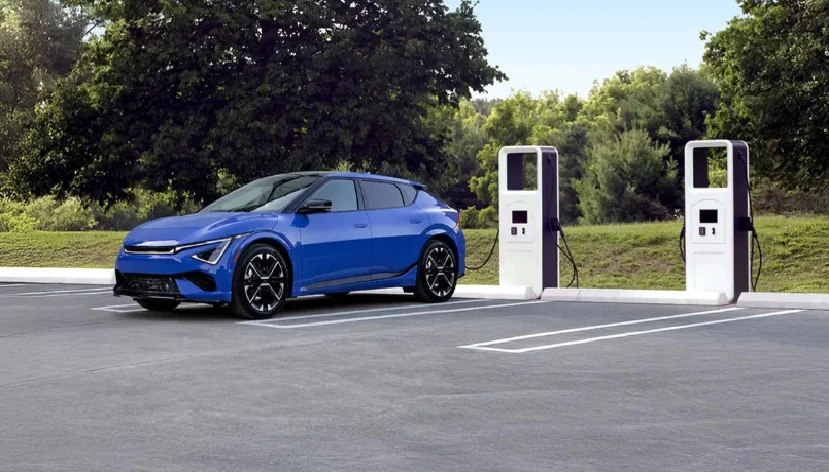
In a move that promises to reshape the economics of electric vehicle (EV) ownership in Canada, Kia Canada has announced a strategic expansion of its partnership with Variablegrid Adaptive Power. The collaboration introduces "Variablegrid Plus," an innovative program that effectively pays Kia drivers to charge their vehicles at home. By leveraging smart energy management technology, the program turns standard charging habits into a source of recurring passive income, marking a significant milestone in the integration of automotive and energy sectors.
The Core Mechanics: How "Variablegrid Plus" Works
At its heart, the Variablegrid Plus program is designed to be frictionless for the end user. Unlike previous demand-response programs that required drivers to manually shift their charging schedules to off-peak hours, Variablegrid Plus automates the process. The system converts a vehicle’s home charging activity into verifiable compliance credits, which are then monetized and returned to the driver in the form of direct payments.
Under the current structure, eligible Kia EV drivers earn 10 cents per kilowatt-hour (kWh) for every unit of energy used to charge their vehicles at home. The beauty of this model lies in its simplicity: there are no complex software interfaces for the driver to master, and there is no requirement to restrict charging to middle-of-the-night hours. The technology operates in the background, managing the electrical load based on real-time grid availability and demand.
Chronology: Building a Foundation for Energy Innovation
The path to this nationwide rollout began well before the 2025 launch. The partnership between Kia Canada and Variablegrid was established to solve a growing infrastructure pain point: the high cost of home electrical upgrades.
- 2023–2024 (The Pilot Phase): Kia Canada and Variablegrid began working together to deploy adaptive load management technology. This allowed homeowners—particularly those in older homes—to install Level 2 chargers without the need for expensive panel upgrades, which often cost thousands of dollars.
- Early 2025: The official partnership solidified as Kia integrated Variablegrid’s technology into its broader strategy for its new EV lineup, specifically the EV3, EV4, and EV5.
- Late 2025 (The Launch): Kia Canada became the first automotive manufacturer to offer the Variablegrid Plus program through its national dealer network. This transition from a hardware-only solution to a financial incentive platform marks the current phase of the project.
Supporting Data: The Economics of Home Charging
To understand the impact of Variablegrid Plus, one must look at the math behind the average Canadian commute. According to data provided by Variablegrid, a driver covering 20,000 kilometers annually—a standard benchmark for the average Canadian commuter—in a Kia EV5 could expect to earn approximately $392 per year.
While $392 may seem modest at first glance, it represents a significant shift in how consumers view "fueling" costs. When paired with the company’s Energy Management controller, customers can further reduce their initial capital expenditure through an upfront savings incentive of up to $350.
The Efficiency Multiplier
Beyond the direct payout, the system is designed to optimize household energy consumption. By managing charging cycles based on time-of-use rates and local grid capacity, the system prevents the "spike" in electricity demand that typically triggers higher utility charges. Effectively, the program pays drivers for the energy they consume while simultaneously lowering their overall monthly utility bill through smarter, more efficient energy distribution.
Official Responses and Strategic Vision
The rollout of Variablegrid Plus is not merely a marketing campaign; it is a core component of Kia’s "Plan S" strategy to become a global leader in electrification.
The Perspective from Variablegrid
Dee Murphy, Chief Operating Officer of Variablegrid, emphasized the holistic nature of the platform during the launch event. "Variablegrid Plus brings the benefits of multiple energy programs together in one simple experience for EV drivers," Murphy stated. "Sign up, and the charger does the work for you. The more you drive, the more you earn. It’s like being paid to fill up."
Murphy’s comments underscore a shift in the EV industry: the transition from viewing an EV as a static product to viewing it as a mobile, energy-consuming asset that can interface with the power grid.
The Perspective from Kia Canada
For Kia, the program is a direct answer to the most common barrier to EV adoption: affordability. Elias El-Achhab, vice-president and chief operating officer at Kia Canada, highlighted the alignment between their vehicle lineup and this new incentive.
"Kia Canada is the first manufacturer partnered with Variablegrid to extend a direct financial incentive to electric vehicle owners that puts money right back into customers’ pockets," El-Achhab noted. "Having introduced three affordable models with the EV3, EV4, and EV5, plus this evolving partnership with Variablegrid, it is a testament to our continuous development of solutions to make Kia EVs more attainable for Canadians than before."
Implications: A New Era for the Canadian Power Grid
The introduction of Variablegrid Plus carries significant implications for both the automotive industry and Canada’s broader energy infrastructure.
1. The "Vehicle-to-Grid" Prelude
While this program is currently focused on optimizing charging, it serves as a critical bridge toward future Vehicle-to-Grid (V2G) capabilities. By installing the hardware required for adaptive load management today, Kia is effectively "future-proofing" the homes of its customers, ensuring they are prepared for a time when their vehicles might feed energy back into the grid during peak demand.
2. Democratizing EV Ownership
One of the most notable features of the program is its availability to residents in multi-unit residential buildings (MURBs), such as condominiums and apartments. Historically, EV charging in these settings has been difficult due to limited electrical capacity. Variablegrid’s adaptive technology overcomes these limitations, ensuring that the financial and convenience benefits of the program are not restricted to homeowners with detached garages.
3. Strengthening the Dealer Network
By making the Variablegrid Plus program available through the Kia dealer network, the company is transforming its dealerships into energy hubs. Sales staff are no longer just selling a vehicle; they are offering a comprehensive energy solution. This adds a layer of value-added service that differentiates Kia in a crowded, highly competitive EV market.
4. Grid Stability and Demand Response
From the perspective of utility companies, programs like Variablegrid Plus are a dream scenario. By spreading out the load of EV charging across the day, the system reduces the risk of local grid stress. This "demand response" capability is becoming increasingly important as the total number of EVs on the road continues to climb, threatening to overwhelm aging local distribution infrastructure.
Conclusion: Setting a New Industry Standard
The partnership between Kia Canada and Variablegrid is a prime example of cross-industry collaboration. By integrating software-driven financial incentives directly into the consumer experience, the companies have created a compelling case for EV ownership that goes beyond the environmental argument.
As more Canadians look to transition away from internal combustion engines, the "total cost of ownership" remains the primary hurdle for many. Through the Variablegrid Plus program, Kia has successfully flipped the script. Instead of viewing electricity as a constant, unavoidable cost of commuting, Kia drivers can now view their home charging station as a micro-utility that generates a small, steady return.
With the EV3, EV4, and EV5 models already gaining traction in the Canadian market, this program provides the final piece of the puzzle: a tangible, recurring economic benefit that aligns with the long-term goals of a greener, more electrified Canada. As the program scales, it is likely that other manufacturers will be forced to follow suit, potentially setting a new standard for how the automotive industry supports its customers in an energy-conscious future.
