




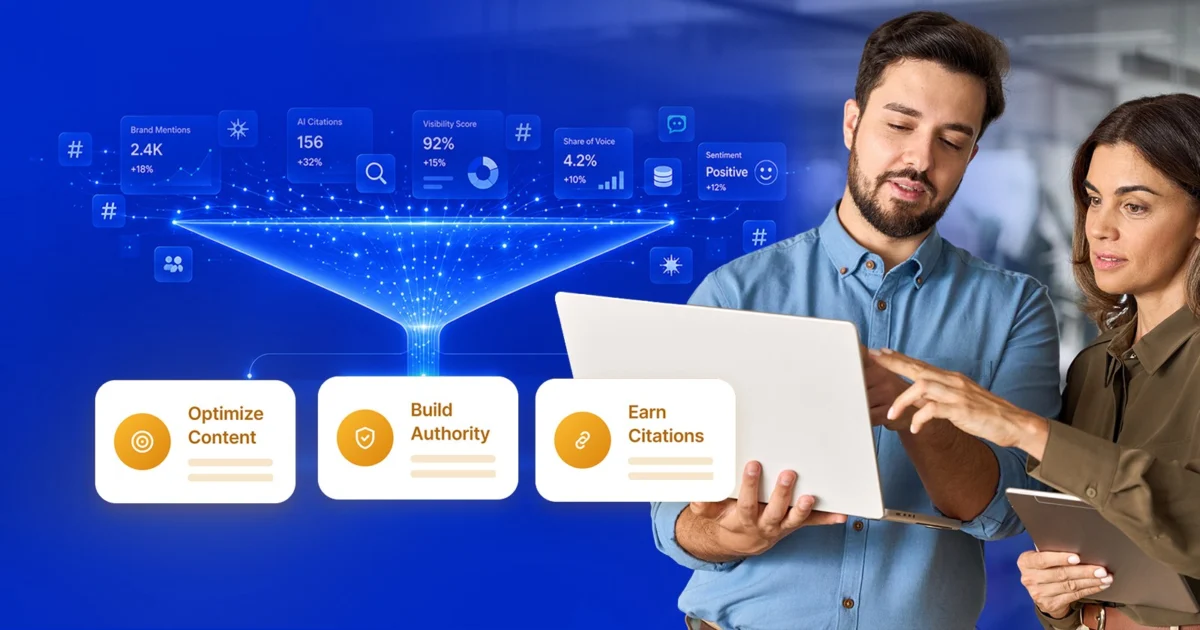
For the past two years, the digital marketing industry has been obsessed with a single, foundational question: "Is my brand appearing in AI search results?" Following the rapid integration of Large Language Models (LLMs) into search engines like Google and dedicated platforms like ChatGPT, marketing departments scrambled to secure the visibility tech stack. Today, the initial phase of this transition—the "Measurement Stage"—is effectively complete. Most enterprise teams now possess sophisticated dashboards tracking their Share of Voice (SOV) within Google’s AI Overviews and ChatGPT’s conversational responses.
Yet, a new, more difficult reality has emerged. Having achieved the ability to measure AI visibility, marketers are now hitting a wall of implementation. The data is clear, but the path to improvement is murky. In a landscape where search behavior trends show that inquiries about tracking AI visibility far outpace inquiries about improving it, the industry faces a critical inflection point.
The Measurement Paradox: From Data Collection to Strategic Execution
The current state of AI search marketing is characterized by a "measurement paradox." Teams are flooded with metrics that reveal which AI models cite their brand and how often, yet few have a codified process for influencing those citations. This gap—between observing performance and actively shaping it—is where the future of SEO and brand authority will be decided.
The reliance on traditional SEO tactics for AI optimization is often insufficient. Unlike standard organic search, where ranking is largely influenced by link profiles and keyword density, AI search relies on retrieval-augmented generation (RAG) and the model’s internal knowledge base. To bridge the gap between tracking and winning, marketers must shift their focus from "gaming the algorithm" to "becoming an authoritative source."
Chronology of the AI Search Shift
- The Discovery Phase (2023): Brands first realized that AI tools were synthesizing information from their websites. Early efforts focused on blocking or allowing crawlers.
- The Metric Proliferation Phase (2024–2025): SEO platforms and third-party tools introduced "AI Visibility" metrics, allowing teams to quantify how often their brand was cited as a primary source.
- The Implementation Gap (2026–Present): The current period, where the novelty of measurement has worn off, replaced by the urgent need for tactical optimization strategies.
The Anatomy of an AI Citation
To understand how to win more citations, one must first understand how an AI model "thinks." When a user prompts a model with a query, the system performs a multi-stage process: retrieving relevant content from its training data and indexed web sources, synthesizing that information, and then generating a response that cites the most credible and contextually relevant sources.
Key Factors Driving AI Visibility
- Topical Authority: AI models prioritize sources that demonstrate deep, multi-faceted coverage of a subject. If your site provides thin content on a topic, the model will likely pass you over in favor of a competitor who provides a comprehensive, expert-led breakdown.
- Structural Clarity: LLMs are excellent at parsing structured data. Using schema markup, clear HTML headings, and concise, summary-style paragraphs helps the AI extract your content as a potential answer.
- The "Expertise-Trust" Loop: Much like Google’s E-E-A-T (Experience, Expertise, Authoritativeness, and Trustworthiness) standards, AI models are tuned to favor reputable domains that have a long-standing history of factual accuracy in specific niches.
Supporting Data: The ROI of Proactive Optimization
While specific algorithmic weights remain proprietary to companies like OpenAI and Google, early observational data from industry leaders suggests a strong correlation between "high-intent structured content" and citation frequency.
Marketing teams that have shifted their content strategy to address specific, long-tail, high-complexity questions—the kind often posed to AI assistants—have seen a marked increase in citations compared to those focusing on high-volume, generic keywords. The data indicates that AI models are not merely looking for keywords; they are looking for "definitive answers." By structuring content as a direct answer to a potential query—followed by supporting evidence—brands are significantly more likely to be selected as the primary source in a citation.
Official Perspectives and Expert Guidance
Industry experts, including Constance Tan, Product Marketer at Ahrefs, emphasize that the shift requires a fundamental change in mindset. According to Tan, the goal of an AI-first content strategy is to become a "reference point."
"The era of chasing vanity metrics is ending," Tan notes. "If you are only looking at your Share of Voice, you are looking at a rearview mirror. The next step is to understand the intent behind the queries that trigger these AI responses and then aligning your content architecture to be the most logical, concise, and trustworthy answer the AI can find."
Tan and other industry leaders argue that the "Now What?" phase of AI marketing is about process integration. This involves:
- Auditing content for "Answerability": Reviewing high-performing pages to see if they contain clear, concise summary blocks that an AI can easily parse.
- Refining Internal Linking: Ensuring that the site’s hierarchy reinforces the topical authority of the pages most likely to be cited.
- Monitoring Competitor Citations: Analyzing why a competitor was cited over your brand and iterating on that content to provide more value, better data, or a more nuanced perspective.
Implications for the Future of Search
The shift toward AI-assisted search is the most significant change in the industry since the inception of the search engine. As we move forward, the implications for brands are clear:
1. The Decline of "Click-Through" Dependency
Historically, the success of a page was measured by its click-through rate (CTR). In an AI-first world, a brand may gain immense value from being cited as an authoritative source even if the user never clicks the link. This "Zero-Click Authority" will become a new, vital metric for brand health.
2. The Rise of "Answer Engineering"
SEO will evolve into "Answer Engineering." Brands will need to optimize not just for search result pages (SERPs), but for the conversational summaries generated by AI. This requires a tighter collaboration between content creators, subject matter experts, and technical SEO teams.
3. The Consolidation of Authority
AI models tend to favor established, trusted sources. This suggests a potential "rich-get-richer" scenario where established domains with deep content libraries gain an even larger share of visibility, making it increasingly difficult for new or less-authoritative sites to break through without a highly targeted, expert-led content strategy.
Conclusion: Taking Action
The "Measurement Stage" provided the roadmap, but it did not provide the destination. To survive and thrive in this new landscape, marketing teams must stop treating AI visibility as a passive dashboard metric and start treating it as a dynamic battlefield.
As highlighted in the upcoming webinar, AI Cites Your Brand. Now What?, the path forward is through action. By identifying the specific gaps in your current coverage, optimizing for structural clarity, and prioritizing topical authority, your brand can move from being an invisible participant to a primary source of information for the next generation of search users.
The process begins by auditing the data you have already collected. Ask yourself: Why is the AI choosing these specific sources? What do they provide that we do not? By answering these questions, you transition from simply monitoring your performance to actively engineering your brand’s presence in the future of the internet. The data is available—the only question left is how you will choose to use it.
