




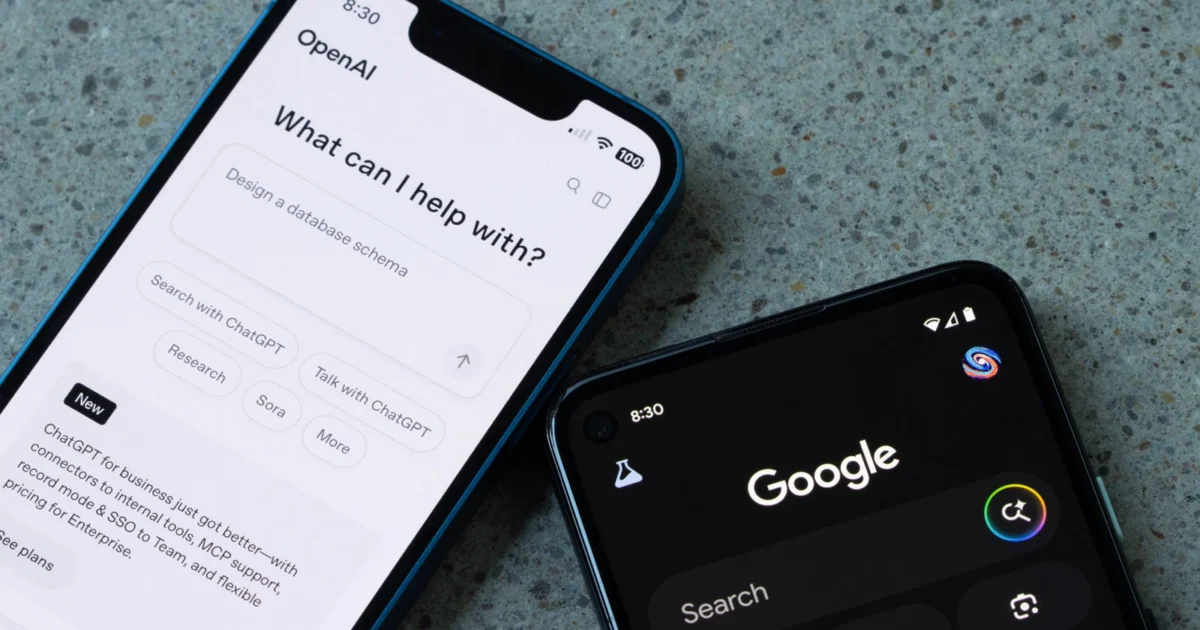
The digital landscape is currently defined by a profound paradox. While headlines frequently proclaim that artificial intelligence will lead to the "death of search," the data paints a more nuanced, albeit turbulent, picture. We are witnessing a fundamental shift in how humans interact with information—a transition that suggests AI is not necessarily replacing the search engine, but rather layering itself on top of the traditional experience, often to the detriment of downstream publishers.
Main Facts: The Illusion of Stability
For marketing professionals and site owners, the most confusing metric in the current ecosystem is the "audience overlap." Data from Similarweb consistently shows that approximately 95% of ChatGPT users remain active Google users. This figure has remained remarkably stable from September 2025 through May 2026, even as the total volume of visits to generative AI platforms has surged by 70% year-over-year.
To the casual observer, this suggests that the threat to Google is minimal. However, this interpretation conflates audience reach with query volume. A user who performs a single Google search to check a store’s hours or access a login portal is counted as a "Google user" for that month, regardless of whether they have shifted the bulk of their complex research to a chatbot. Consequently, Google maintains its massive audience footprint while the nature and frequency of the queries those individuals perform undergo a quiet, structural transformation.
Chronology of the Shift
The narrative of AI’s impact on search has evolved rapidly over the last 24 months:
- Late 2024 – Early 2025: OpenAI expands access to ChatGPT Search. Researchers begin to notice a divergence between "total users" and "total queries."
- February 2026: Pew Research reports that 49% of U.S. adults have used a chatbot, with 42% specifically using one for information retrieval.
- Spring 2026: Google’s I/O conference features Sundar Pichai announcing over 2.5 billion monthly active users for AI Overviews, with "AI Mode" crossing the 1-billion-user milestone.
- Summer 2026: A wave of academic research, including the Bocconi University study and the Wang et al. experiment on arXiv, begins to quantify the "search gap"—the phenomenon where users continue to visit Google but click on significantly fewer outbound links.
Supporting Data: The Erosion of Referrals
While Google’s audience remains steady, the "query-per-household" metric tells a different story. A pivotal study from Bocconi University, utilizing Comscore’s U.S. desktop clickstream data, found a 9.4% drop in traditional search queries among households that gained access to ChatGPT Search. Critically, this gap widened the longer the household had access to the tool.
The impact is not distributed evenly across the web. The Bocconi researchers observed a sharp decline in referrals to informational categories:
- Academic sites: -32.8%
- Reference sites: -26.5%
- Developer sites: -15.1%
- News sites: -13.4%
Conversely, marketplace and entertainment sites saw negligible changes in referral traffic. This suggests that AI is most effective at replacing "knowledge-seeking" behavior—tasks where a user once clicked a link to read an article, but now simply consumes an AI-generated summary.
A secondary experiment conducted by Stephanie T. Wang and her team at Northeastern University and other institutions further confirms this. By forcing a cohort of users into "AI Mode" for one week, they observed an 18.8 percentage point decrease in click-through rates to external websites. Perhaps most concerning for the long-term health of the open web was the finding that participants reported a lower sense of trust and satisfaction with the results when they were unable to navigate directly to source websites.
Official Responses and the "Search-More" Theory
Google’s official stance remains one of optimistic synergy. During the 2026 I/O event, leadership emphasized that AI-powered features actually drive higher engagement. "When people use our AI-powered features in Search, they use Search more," Sundar Pichai stated.
However, the industry faces a significant transparency issue. Google has yet to release granular, user-level data to verify these claims. The company’s reports of "record query volumes" do not distinguish between traditional "10-blue-link" queries and queries routed through AI Mode, where the interface may be suppressing the traditional results page entirely.
Analysts suggest that Google is essentially "cannibalizing" its own traffic. By providing the answer within the AI interface, Google keeps the user on its platform for longer (increasing session duration), but it effectively starves the rest of the ecosystem of the clicks required to sustain independent digital publishing.
Implications for the Digital Ecosystem
For search practitioners and businesses, the current environment presents a "hidden gap." A website might report stable impressions in Google Search Console, masking the fact that those impressions are resulting in fewer actual visits to the site.
1. The Death of the "Informational" Click
The data indicates that if your business relies on providing informational, reference, or news content, your referral traffic is at the highest risk of long-term decline. As AI becomes more proficient at synthesis, the "need" to click through to an external site decreases.
2. The Rise of Branded Search
Similarweb has noted that "branded search lift" is becoming the primary metric for tracking AI impact. If a user learns about a product via a chatbot, they may later perform a branded search on Google to navigate to that site. This conversion is often misattributed to organic search in standard analytics, masking the true "assist" provided by AI.
3. The Trust Deficit
The Wang study highlighted a critical, often overlooked implication: users are beginning to feel the limitations of an "AI-only" experience. When respondents were asked about their satisfaction, many noted difficulty in reaching specific, intended websites and expressed frustration with the "it told me about the website instead of taking me there" dynamic. This suggests that there may be a future market correction where users seek out direct, high-quality sources, forcing platforms to strike a better balance between utility and referral.
4. The Future of Monetization
Google’s expansion of AI-driven ads, including the "Direct Offers" pilot, signals a transition from a traffic-based economy to an agentic commerce economy. The goal is to move the user from "searching for a solution" to "purchasing through an interface." For advertisers, this means learning to optimize for AI-generated responses rather than traditional keyword rankings.
Looking Ahead: The Need for Better Metrics
As we approach the final quarter of 2026, the industry stands at a crossroads. The existing datasets—whether they come from Similarweb’s audience analysis, Bocconi’s household queries, or Wang’s forced-exposure experiments—are all pieces of a larger, incomplete puzzle.
The fundamental challenge for the next year will be the development of new measurement frameworks. We can no longer rely on vanity metrics like "total visits" or "monthly active users." Instead, the focus must shift toward task-level attribution: How many informational tasks are being fulfilled by AI without a click? How does the "AI-first" experience influence user trust over a period of months rather than days?
Until Google provides a transparent baseline for its AI usage data, the industry will continue to operate in a state of high-stakes guesswork. While AI has not "replaced" Google in the way many feared, it has fundamentally changed the value of a search result. For publishers, the era of passive traffic is ending; the era of proving unique, irreplaceable value—that which an AI cannot synthesize—has begun.
