






The modern automobile is, for all intents and purposes, a data center on wheels. What was once a collection of mechanical linkages, vacuum lines, and analog switches has evolved into a sophisticated network of interconnected microprocessors, sensors, and complex lines of code. While this digital revolution has ushered in an era of unprecedented safety features, infotainment capabilities, and fuel efficiency, it has also introduced a new, chilling reality: the software-induced catastrophic failure.
Nowhere is this modern paradigm shift more evident—or more alarming—than in the recent recall issued by Volkswagen. The company’s flagship compact SUV, the Volkswagen Tiguan, which underwent a comprehensive redesign for the 2026 model year, is now the subject of a significant safety recall. The culprit is not a faulty brake line or a misaligned steering rack, but a volatile Body Control Module (BCM) software architecture that is susceptible to unexpected, mid-drive resets.
The Core Issue: When the "Body" Loses Its Brain
To the average consumer, the term "Body Control Module" sounds like a peripheral system, perhaps responsible for interior lighting or power window switches. However, in modern vehicle architecture, the BCM acts as a central nervous system for the vehicle’s non-powertrain electronics. In the case of the 2026 Tiguan, the scope of this module’s influence is far more dangerous than previously assumed.
According to filings with the National Highway Traffic Safety Administration (NHTSA), Volkswagen has identified a critical flaw in the BCM software that can trigger an unprompted system reset. When this reset occurs, the vehicle does not simply display an error message on the dashboard; it essentially "blinks" out of existence while in motion.
The list of systems impacted by this digital hiccup is severe. A BCM reset results in the immediate loss of all motive power, meaning the engine cuts out entirely. Furthermore, the vehicle loses exterior lighting, the rearview camera feed, and a variety of "certain controls," leaving the driver in a state of sudden, unpowered, and unlit operation. The danger of losing propulsion and exterior illumination simultaneously while navigating traffic—especially at night or in inclement weather—cannot be overstated.
A Chronology of Discovery
The discovery of this defect underscores the high-stakes nature of modern automotive testing. The issue was not initially reported by a consumer stranded on a highway, but rather uncovered during internal testing protocols at Volkswagen.
- Initial Detection: Volkswagen engineers observed an unexpected BCM reset during a routine test cycle in a prototype vehicle. The incident triggered a deep-dive investigation into the module’s software stability.
- Expansion of Inquiry: Following the discovery, VW investigators reviewed data from international markets. They identified a "small number" of similar reset events occurring in foreign-market vehicles, confirming that the issue was not an isolated software glitch unique to one specific unit.
- The U.S. Situation: While Volkswagen of America has stated they are currently unaware of any such incidents occurring in the United States, the company acknowledged that they cannot rule out the possibility. The lack of a specific Diagnostic Trouble Code (DTC) makes tracking these incidents difficult; if the system resets entirely, it often fails to leave behind the "digital breadcrumbs" necessary for a technician to identify the cause during a standard service visit.
- The Recall Trigger: Recognizing the severity of the potential hazard, Volkswagen initiated a formal recall campaign (NHTSA ID: 26V587) covering approximately 50,000 units of the 2026 Tiguan. The affected vehicles were manufactured between March 2025 and August 2025.
Supporting Data and Technical Context
The 2026 Tiguan represents a significant investment for Volkswagen, intended to compete in one of the most crowded and demanding segments of the automotive market. The vehicle’s architecture utilizes a highly integrated electrical system. In the past, if a "body" system failed, the ignition and fuel systems remained entirely separate, allowing the vehicle to at least coast to a stop or maintain power steering.
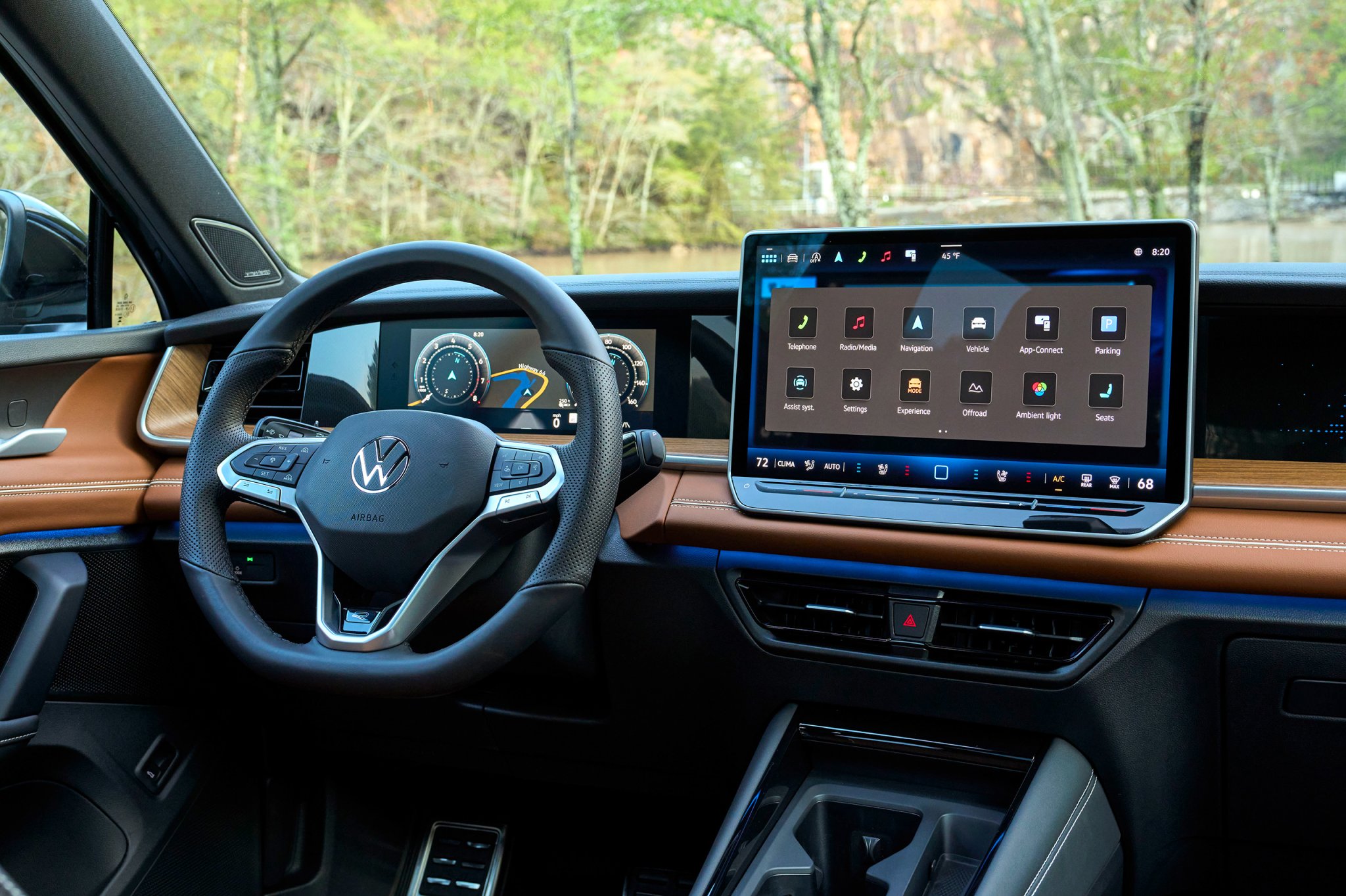
In the current Tiguan, the integration is so deep that the BCM effectively bridges the gap between the vehicle’s user-facing electronics and the engine management systems. The vulnerability lies in the software’s handling of memory management and task prioritization. When the BCM encounters a specific, yet-to-be-disclosed sequence of events, it prioritizes a reboot over maintaining essential operational status.
Unlike a smartphone, which can simply restart while you wait for your apps to reload, a vehicle’s BCM has no "safe mode" that can maintain critical functions while the primary software reloads. The "blackout" period, however brief, turns a two-ton SUV into an unpowered obstacle on public roads.
Official Responses and Remediation
Volkswagen of America has been clear about the remedy, though the process highlights the limitations of modern vehicle maintenance. Due to the critical nature of the BCM and its direct link to the engine’s ignition, this is not a problem that can be solved via an Over-the-Air (OTA) update.
"Because the Body Control Module governs such critical aspects of vehicle operation, including propulsion, this update must be performed under the supervision of a certified technician to ensure integrity," a Volkswagen representative stated.
Owners of affected vehicles are being instructed to visit their local Volkswagen dealership. Technicians will perform a software update on the BCM to patch the vulnerability. Volkswagen has indicated that the update will improve the module’s resilience against unexpected resets. Owners are being notified via mail, and the service will be provided free of charge.
The Broader Implications: A Lesson in Complexity
This incident serves as a sobering reminder of the "software-defined vehicle" era. For decades, the automotive industry operated under the principle of mechanical redundancy. If an ignition switch failed, you replaced a spring-loaded metal component. If a fuel pump died, you replaced a mechanical part.
Today, we are witnessing the migration of these physical failures into the digital realm. The comparison to the infamous General Motors ignition switch recall of the mid-2010s is apt, but with a modern twist. In the GM case, a physical weight on a key ring could turn off the engine. In the 2026 Tiguan case, a line of rogue code can achieve the same result.

The core issue is not necessarily that Volkswagen’s software is "bad," but that it is incredibly complex. When you connect infotainment, safety sensors, lighting, and ignition timing into a single software ecosystem, you increase the "attack surface" for bugs. Every new feature adds a layer of code that must interact with everything else.
This recall also highlights the "silent failure" problem. Because the BCM doesn’t always leave a DTC when it resets, many owners might experience a momentary "flicker" of their dashboard or lights and dismiss it as a strange, one-time occurrence. This creates a dangerous period of uncertainty where owners may be driving potentially unsafe vehicles without knowing it.
Moving Forward: The Future of Vehicle Reliability
As we look toward the future, this incident will likely spark a renewed debate regarding the "keep it simple" philosophy in automotive engineering. While consumers demand the latest in connectivity, automated driving aids, and seamless digital integration, there is a clear trade-off in reliability.
For Volkswagen, the 2026 Tiguan recall is a reputational challenge. The Tiguan is a volume seller, and confidence in the platform is essential. How the company handles this—through efficient communication, transparent service, and a robust software patch—will be the true test of their commitment to their customer base.
For the wider automotive industry, the Tiguan recall is a warning. It is a clarion call for more rigorous software validation, better "fail-safe" architectures that keep the engine running even if the cabin electronics crash, and a more transparent way of diagnosing software faults.
As cars become more like computers, the automotive industry must adopt the rigorous standards of the aerospace and medical device industries. When a software bug can stop a car dead in its tracks, "move fast and break things" is no longer an acceptable mantra. The road ahead requires a shift toward "move carefully, test extensively, and prioritize safety above all else."
If you are an owner of a 2026 Volkswagen Tiguan, you are strongly encouraged to contact your local dealership or visit the NHTSA website with your VIN to see if your specific vehicle is included in the recall campaign. Do not wait for a failure to occur; prioritize the software update to ensure the continued safety of your vehicle.
