



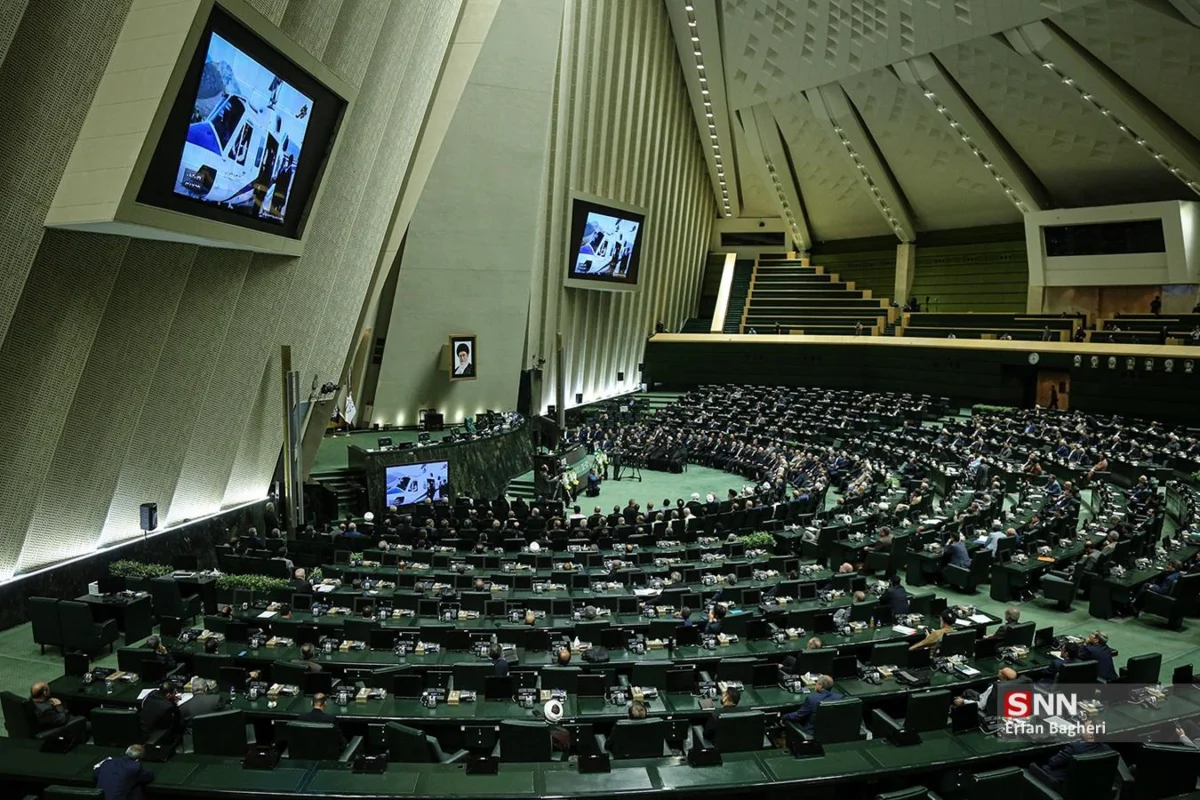
In a move that has drawn sharp condemnation from the international human rights community, the Iranian parliament is currently debating a piece of legislation titled the "Countering Foreign Infiltration" bill. If passed, the law would impose staggering penalties—including up to 30 years in prison—on Iranian citizens who engage in unauthorized communication with foreign entities. The UN Independent International Fact-Finding Mission on Iran has issued an urgent plea for the withdrawal of the proposal, warning that it represents a "dangerous escalation" in the state’s effort to sever the country’s remaining ties with the outside world.
The Scope of the Proposed Legislation
The "Countering Foreign Infiltration" bill is broad in scope and vague in its definitions, a combination that legal experts fear will be weaponized against journalists, activists, researchers, and ordinary citizens alike. Under the current draft, any contact with "foreign entities"—a term left open to wide interpretation by security apparatuses—would require prior, state-sanctioned approval.
The bill mandates that Iranians disclose all activities involving international organizations, media outlets, or NGOs. Furthermore, it creates a digital surveillance architecture: citizens must secure approval through an online system managed directly by the Islamic Revolutionary Guard Corps (IRGC) and the Ministry of Intelligence. Essentially, this system would position the most powerful security organs in the country as the mandatory gatekeepers for any interaction between an Iranian civilian and the global community.
Failure to obtain such authorization would, under the proposed statute, constitute a criminal offense. Given the 30-year sentencing guidelines, the bill serves as a profound deterrent against any form of cross-border communication, effectively transforming the act of speaking to an international journalist or human rights investigator into a high-stakes crime.
Chronology of Escalation: From Protest to Isolation
To understand the gravity of this bill, it must be viewed within the context of Iran’s trajectory over the past several years. The state has been systematically tightening the digital and physical borders of the country, moving from sporadic suppression to a policy of total information control.
- September 2022: Following the tragic death of Mahsa Amini in morality police custody, widespread nationwide protests erupted. The government responded with a massive, prolonged internet shutdown—the longest in the nation’s history—designed to prevent protesters from organizing and to stop evidence of state violence from reaching the global public.
- March 2024: The UN Fact-Finding Mission formally concluded that the death of Mahsa Amini was unlawful, a finding that further strained the relationship between Tehran and the international human rights monitoring community.
- Early 2026: The conflict between Iran, the United States, and Israel intensified, leading to a series of airstrikes. These hostilities created a state of emergency, which the government has used to justify further clamping down on domestic dissent and information flow.
- March 2026: Human Rights Watch issued a desperate appeal for the Iranian regime to lift communication restrictions, noting that civilians were left in the dark regarding safety protocols and humanitarian aid during the height of the military exchanges.
- April 2026: The European Union announced a significant extension of sanctions against Iranian officials, citing ongoing human rights violations and the persistent suppression of fundamental freedoms.
- July 2026: UN experts denounced the continued cycle of hostilities between the US and Iran, warning that the regional conflict was being used as a pretext for domestic repression.
- September 2026: The UN Fact-Finding Mission issues its formal denunciation of the "Countering Foreign Infiltration" bill, marking the latest chapter in this ongoing struggle.
Supporting Data: A Landscape of Repression
The proposed bill does not emerge in a vacuum. It is the latest evolution in a state that has already made it nearly impossible for a free press to function. According to the Reporters Without Borders (RSF) World Press Freedom Index, Iran currently ranks 177th out of 180 countries. This abysmal ranking is a testament to the regime’s consistent efforts to intimidate, arrest, and silence journalists.
The reliance on these types of restrictive measures is evidence of a state that perceives global connectivity as an existential threat. By criminalizing the mere act of contact with foreign entities, the government is signaling a shift toward total isolationism. This approach effectively shuts down the "last mile" of communication for human rights victims. International human rights law, as codified in various UN Human Rights Council resolutions—most notably 12/2, 24/24, and S-39/1—explicitly guarantees the right of victims and civil society members to communicate with international bodies without fear of retaliation. This bill directly violates these international commitments.
Official Responses and Human Rights Advocacy
The response from the international community has been swift and unified. Sara Hossain, chair of the UN Fact-Finding Mission, expressed profound alarm during her recent address regarding the bill. "We are appalled at the steps of the Government of Iran to subject everyday Iranians to blanket criminalisation for any contact with the outside world," Hossain stated. She highlighted that this was occurring at a time when Iranians are already reeling from the combined effects of international sanctions, domestic repression, and the physical destruction caused by the recent U.S.-Israeli airstrikes.
Mai Sato, the UN Special Rapporteur on the situation of human rights in Iran, echoed these sentiments, noting that "intelligence services should not be the gatekeepers of Iranian people’s contact with the world." The consensus among human rights monitors is that the bill is not a security measure, but rather a mechanism to ensure that the regime can operate in total secrecy, free from the scrutiny of the international community or the testimonies of its own people.
Implications for the Future of Iran
The implications of this bill, should it be passed by the Guardian Council and enacted into law, are catastrophic for the future of Iranian civil society.
1. The Death of Independent Oversight
The primary victim of this legislation would be the ability of the UN and other international observers to verify reports of human rights abuses. If an Iranian citizen risks three decades of imprisonment for speaking to a UN investigator, the flow of information regarding extrajudicial killings, torture, and prison conditions will effectively cease. The international community will be forced to rely on state-sanctioned narratives, creating an information vacuum that benefits only those in power.
2. Severing Global Ties
The bill targets not just political dissidents but also academics, students, and professionals who maintain international ties. By requiring "approval" for contact, the government is institutionalizing a culture of suspicion. It forces citizens to choose between their personal safety and their participation in the global community. This is likely to lead to a "brain drain" and a further retreat from international cultural, educational, and scientific collaboration.
3. A Precedent for Authoritarian Control
If the bill becomes law, it sets a chilling precedent for how authoritarian regimes can utilize "foreign infiltration" as a catch-all justification for domestic repression. By labeling normal human interaction as a security threat, the regime provides itself with a legal cover to dismantle any group that has ties to the outside world, from labor unions to environmental organizations.
Conclusion: A Critical Juncture
The "Countering Foreign Infiltration" bill represents a critical juncture for Iran. As the Guardian Council considers the legislation, the world watches with bated breath. The bill is not merely a piece of domestic policy; it is an attempt to rewrite the relationship between the Iranian people and the international community.
The UN’s call to withdraw the bill is a call to preserve the basic human right to communicate. If the legislation proceeds, it will signify a hardening of the regime’s resolve to rule through isolation and fear. As the international community continues to monitor the situation, the pressure remains on the Iranian authorities to reconsider a path that would further distance their nation from the global family of nations and stifle the voices of their own citizens for generations to come. The struggle for human rights in Iran now rests on the ability of the international community to keep the channels of communication open, despite the regime’s best efforts to shutter them.
