





By Legal Correspondent
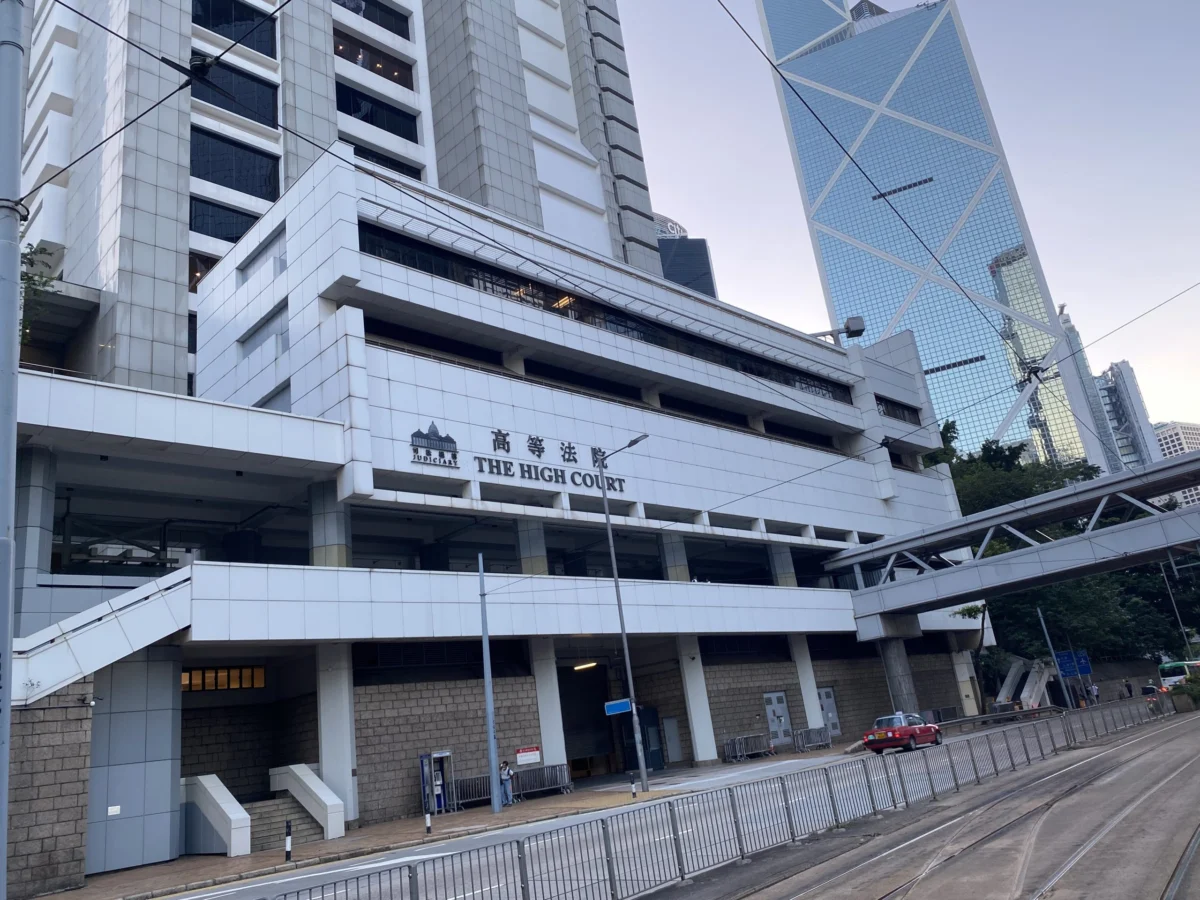
In a decision that legal experts say marks a definitive turning point for the city’s civil society, a Hong Kong appellate court has upheld the convictions of five prominent pro-democracy activists. The case centered on the 612 Humanitarian Relief Fund, an organization established to provide essential legal, medical, and financial support to individuals caught up in the 2019 anti-extradition bill protests. The court’s ruling not only confirms the criminal nature of their failure to register the fund under the Societies Ordinance but also underscores the shrinking space for humanitarian and advocacy work in a post-National Security Law landscape.
The Core Facts: A Criminalized Humanitarian Effort
The appellants in this case represent some of the most respected figures in Hong Kong’s public life: retired Roman Catholic Cardinal Joseph Zen, scholar Hui Po Keung, singer-activist Denise Ho, and former Legislative Council members Margaret Ng and Cyd Ho.
The central legal issue was the activists’ failure to register the 612 Humanitarian Relief Fund as a "society" under the Societies Ordinance (Cap 151). While the trustees argued that the fund was a charitable initiative designed to provide emergency aid—covering medical expenses, living costs, and legal fees for protesters—the prosecution contended that the fund operated as an unregistered organization, thus circumventing the transparency and regulatory requirements mandated by the colonial-era law.
The Court of Appeal rejected the defense’s arguments that the fund did not meet the definition of a "society." The presiding judges maintained that the internal management, fundraising apparatus, and decision-making structure of the fund were sufficient to constitute a governing body. Consequently, the court ruled that the trustees acted as the de facto officers of an unregistered society, upholding the original convictions and the associated fines of HKD$4,000 (approximately USD$500) per individual.
Chronology: From 2019 Unrest to Judicial Finality
To understand the weight of this decision, one must look at the timeline of the 612 Humanitarian Relief Fund’s rise and subsequent legal dismantling:
- June 2019: Massive protests erupt across Hong Kong in opposition to the proposed Extradition Bill, which critics feared would allow for the rendition of political dissidents to mainland China. The 612 Humanitarian Relief Fund is formed to offer aid to those arrested or injured during these demonstrations.
- October 2019: Amidst sustained public pressure, the Hong Kong government formally withdraws the Extradition Bill.
- 2020: The central government in Beijing imposes the National Security Law (NSL) on Hong Kong, drastically altering the city’s legal and political landscape.
- 2021–2022: Authorities intensify scrutiny of the fund. Police arrest the trustees, alleging collusion with foreign forces—a charge under the NSL—and specifically targeting their failure to register the fund under the Societies Ordinance.
- 2023–2024: Initial trials take place, resulting in the conviction of the five trustees for administrative breaches related to the Societies Ordinance.
- September 2026: The Hong Kong Court of Appeal delivers its judgment, confirming the lower court’s findings and rejecting the appeals brought forth by Cardinal Zen and his co-defendants.
Legal Context: The Societies Ordinance and the ICCPR
The Societies Ordinance, a piece of legislation originating in 1901, was once a tool of colonial governance. While it was briefly repealed in 1992, it was reinstated by the Standing Committee of the National People’s Congress following the 1997 handover. The court’s justification for upholding the convictions rests on the principle that these amendments were necessary to address the "prevailing and emerging security concerns" of the territory.
The Conflict with International Law
The defense had sought to invoke the International Covenant on Civil and Political Rights (ICCPR), specifically Articles 19, 21, and 22, which protect freedom of expression, peaceful assembly, and association. While China has not ratified the ICCPR, it remains a cornerstone of the Hong Kong Bill of Rights Ordinance.
However, the Court of Appeal drew a sharp line, emphasizing that rights to association are not absolute. The court ruled that these freedoms are subject to restrictions when deemed necessary in the interest of "national security, public safety, or the protection of the rights and freedoms of others." By characterizing the 2019 protest movement as a period of "unprecedented social unrest and violent riots," the court provided a broad security rationale that effectively subordinates civil liberties to the state’s mandate for order.
Implications for Hong Kong’s Civil Society
The ruling against the 612 Humanitarian Relief Fund is viewed by international observers and rights groups as a "chilling effect" on the remaining pillars of Hong Kong’s independent civil society.
1. The Death of Independent Aid
The conviction establishes a precedent where humanitarian aid can be conflated with the management of an unregistered society. If an organization as transparent as the 612 Fund can be prosecuted for administrative technicalities, smaller, less well-resourced NGOs and advocacy groups are unlikely to risk operating in a similar capacity. The ruling signals that the act of providing assistance to those in legal or physical distress during political volatility is now a high-risk endeavor.
2. Judicial Deference to Security
This case is part of a broader pattern where Hong Kong courts exhibit significant judicial deference to the government’s security-first approach. Since the implementation of the National Security Law in 2020, and the subsequent expansion of laws regarding "subversion" and "sedition," the judiciary has increasingly favored the executive branch’s interpretation of national security. This trend has seen the criminalization of election boycotts, the suppression of historical commemoration, and the tightening of social controls across all sectors of public life.
3. The Future of Legal Activism
For figures like Margaret Ng and Cardinal Zen, the case is more than just about a $500 fine. It is about the principle of the rule of law. By branding the fund’s activities as an administrative crime, the state has effectively removed the legal shield that NGOs once relied upon. Legal-aid efforts, which were once considered a fundamental part of the justice system, are now under scrutiny, forcing many organizations to dissolve rather than face the potential for criminal liability.
Official Responses and Public Reaction
The government has maintained that the rule of law remains intact and that the ruling was a strictly legal matter regarding compliance with registration requirements. Officials have argued that no organization, regardless of its stated humanitarian goals, is "above the law."
Conversely, human rights organizations and international bodies have expressed profound alarm. Critics argue that the decision is a strategic use of administrative law to suppress political dissent. By using the Societies Ordinance—rather than more high-profile security charges—the authorities can achieve the same goal of silencing critics while framing the case as a matter of simple regulatory compliance.
Conclusion: A City Transformed
The upholding of the convictions of the 612 Humanitarian Relief Fund trustees serves as a stark reminder of how far the legal and political environment in Hong Kong has shifted since 2019. The court’s decision is unlikely to be the last of its kind, as the judiciary continues to refine its interpretation of security laws in the face of ongoing social and political pressure.
As Hong Kong moves further into this new era, the space for civil activism, humanitarian support, and independent oversight continues to evaporate. For the residents of Hong Kong, the message from the appellate court is clear: the institutions that once acted as buffers between the citizen and the state are being systematically recalibrated to ensure alignment with the overarching security imperatives of the administration. Whether or not this will lead to a complete dissolution of independent civil society remains to be seen, but the trajectory of the law suggests that the window for dissent—and even for neutral, humanitarian aid—is closing rapidly.
