




An aircraft equipped with Joby Aviation’s proprietary autonomy technology has successfully completed a historic transcontinental journey, flying more than 3,100 miles across the United States without a human pilot taking control at any point during the operation. The landmark achievement, announced by the company, represents a major milestone for autonomous aviation and signals a significant expansion of Joby’s commercial and military ambitions beyond its well-known urban electric air taxi program.
The cross-country demonstration showcased the versatility of Joby’s flight-control and automation systems, proving they can be integrated into existing conventional aircraft architectures. By successfully executing every phase of flight—from taxiing and takeoff to mid-air navigation and landing—completely under computer control, Joby has positioned itself as a major competitor in the rapidly growing market for autonomous regional logistics, disaster response, and defense aviation.
Main Facts of the Transcontinental Autonomous Flight
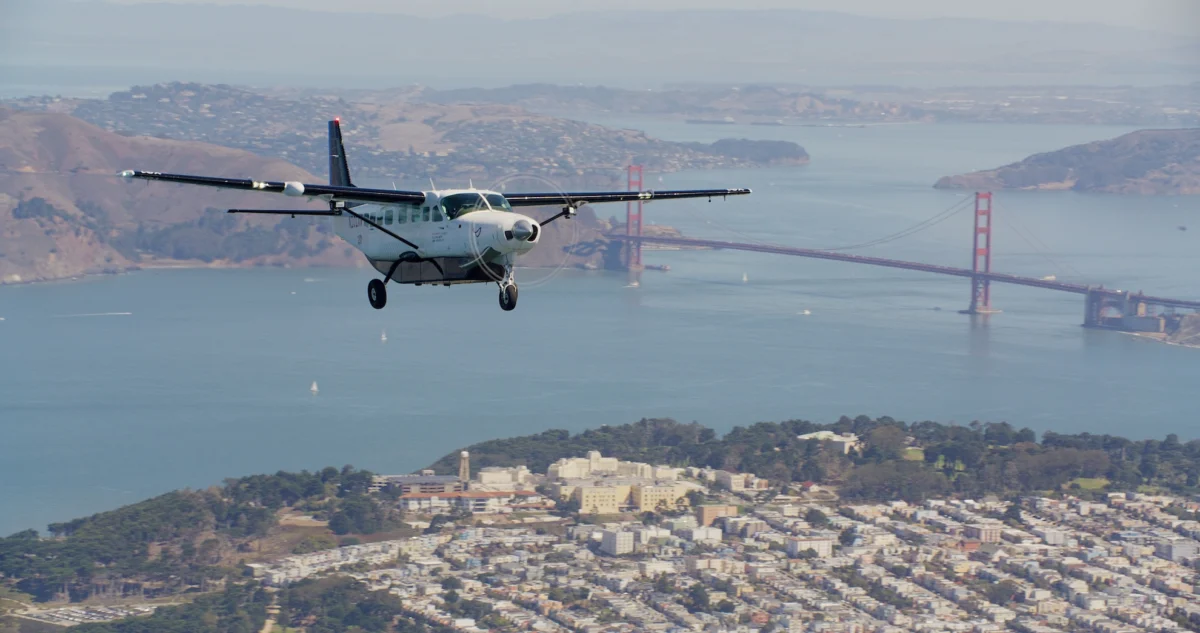
The historic flight was conducted using a modified Cessna Caravan, a rugged and widely used single-engine turboprop utility aircraft. Retrofitted with Joby’s advanced autonomy software and hardware suite—often referred to as the "autonomy stack"—the aircraft traversed the American continent under continuous, multi-point remote supervision.
Key details of the flight operations include:
- Total Distance: Over 3,100 miles across multiple states and varying geographical terrains.
- Autonomous Phases: The aircraft autonomously executed taxiing on the runway, takeoffs, en-route navigation, and landings without human intervention.
- Remote Supervision: Command and control oversight was maintained from two primary nodes: Joby’s corporate headquarters in Marina, California, and Shaw Air Force Base in South Carolina.
- Onboard Safety Protocols: In accordance with Federal Aviation Administration (FAA) regulations and safety compliance standards, a licensed safety pilot remained in the cockpit throughout the journey. However, Joby confirmed that the safety pilot did not touch the controls or intervene in the aircraft’s operation at any point during the transcontinental mission.
- Primary Mission Objectives: The flight was designed to prove the operational readiness, environmental adaptability, and safety redundancy of Joby’s autonomy stack across diverse weather conditions, air traffic control environments, and flight corridors.
Chronology of the Mission and Joby’s Autonomy Journey
The transcontinental flight represents the culmination of years of quiet development, strategic acquisitions, and defense partnerships aimed at diversifying Joby’s technological portfolio.
[August 2025] ----> [August 2026] ----> [Present (Friday)] ----> [Next Two Weeks]
  L3Harris            Resonant Sci.        3,100-Mile            Return Flight via
  Partnership         Acquisition ($500M)  Flight Completed      Louisville & SLC
The Transcontinental Flight Path and Next Steps
The multi-day journey concluded its primary eastbound leg on Friday, but the mission is far from over. Over the next two weeks, the autonomous Cessna Caravan will embark on a multi-stop return journey to the West Coast.
This return leg is designed to demonstrate regional operational flexibility, with scheduled stops in several major U.S. cities, including Louisville, Kentucky, and Salt Lake City, Utah. These stops will allow Joby to test the aircraft’s autonomous systems in different regional airspace classes, varying elevations, and diverse meteorological conditions.
The Strategic Timeline
Joby’s path to this autonomous milestone has been paved by a series of deliberate business and technical moves over the past several years:
- August 2025 – L3Harris Partnership: Joby signed a collaborative agreement with major defense contractor L3Harris Technologies. The partnership was established to explore opportunities to develop a new class of autonomous aircraft—specifically focusing on gas-turbine hybrid vertical takeoff and landing (VTOL) systems designed for long-endurance defense applications.
- August 2026 – Resonant Sciences Acquisition: Joby made its most significant move into the defense sector by acquiring Ohio-based Resonant Sciences for $500 million in a cash-and-stock transaction. Resonant Sciences, an expert in radio frequency (RF) signature technologies, sensor systems, and advanced aerospace communications, was integrated into a dedicated defense-focused business unit within Joby. This unit is tasked with developing turbine-electric, hydrogen-electric, and fully autonomous flight systems.
- The Present Demonstration: The successful completion of the 3,100-mile flight marks the first major public validation of the integrated technologies developed through these acquisitions and partnerships.
Supporting Data and Technical Specifications
Joby’s autonomy strategy relies on a retrofittable system architecture capable of transforming conventional, piloted aircraft into fully autonomous platforms. This dual-use strategy allows the company to target both commercial cargo and military logistics markets simultaneously.
| Parameter / Program Component | Details and Specifications |
|---|---|
| Testbed Aircraft | Converted Cessna Caravan (C208) |
| Total Route Mileage | 3,100+ miles (Eastbound leg completed) |
| Supervision Centers | Marina, CA (Joby HQ) & Shaw AFB, SC (U.S. Air Force) |
| Defense Funding Support | $17 Million AFWERX Contract |
| Resonant Sciences Acquisition | $500 Million (Cash and Stock, August 2026) |
| Primary Use Cases | Commercial cargo, defense logistics, medical transport, disaster relief |
The Autonomy Stack and Retrofit Strategy
Unlike Joby’s flagship eVTOL passenger aircraft, which is built from the ground up as an all-electric, clean-sheet design, the autonomy stack used in this cross-country flight is designed to be platform-agnostic.
The system utilizes an array of advanced sensors, including LiDAR, radar, optical cameras, and redundant inertial navigation systems (INS), paired with high-performance flight-control computers. This suite allows the aircraft to perceive its surroundings, detect other aircraft, interpret weather data, and make real-time routing decisions.
By retrofitting existing regional airframes like the Cessna Caravan, Joby can bypass the lengthy design and manufacturing cycles associated with new aircraft development, bringing autonomous flight solutions to market much faster.
Official Responses and Industry Perspectives
The success of the transcontinental flight has drawn significant attention from both the commercial aviation sector and the military. Joby’s leadership emphasized that while their urban air taxi service remains a core pillar of the company’s long-term vision, this flight proves their technological capabilities are far broader.
In a statement following the flight, Joby Aviation highlighted the versatility of the technology:
"This cross-country flight not only demonstrates the robust capabilities of Joby’s autonomy technology under real-world conditions, but it also shows that our ambitions extend well beyond our pursuit of electric air taxis. Our autonomy stack is designed to handle different environments and missions, including medical transport, disaster response, and defense logistics."
The integration of Shaw Air Force Base as a remote command center underscores the U.S. military’s deep interest in the project. The Department of Defense (DoD), through programs like AFWERX—the innovation arm of the Department of the Air Force—has been actively funding and testing autonomous cargo systems to solve the challenges of "contested logistics."
Military analysts note that autonomous regional aircraft could drastically reduce the risk to human pilots in hazardous environments, such as delivering supplies to remote Pacific islands or transporting medical evacuations in active conflict zones. The $17 million AFWERX contract awarded to Joby has been a key driver in adapting this technology for military use, allowing the Air Force to evaluate how autonomous regional airframes can be integrated into standard military operations.
Implications for the Aviation and Defense Industries
The successful 3,100-mile flight has profound implications for the future of aviation, regulatory frameworks, and corporate strategies within the aerospace sector.
1. The Dual-Use Business Model as a Financial Safeguard
Developing electric vertical takeoff and landing (eVTOL) aircraft is an incredibly capital-intensive endeavor. Companies in the space must navigate highly complex FAA type-certification processes, build entirely new manufacturing supply chains, and wait for cities to construct vertiport infrastructure.
By developing a parallel, retrofittable autonomy business, Joby has created a secondary revenue stream that can be commercialized much sooner. Retrofitted cargo aircraft operating in remote areas or under military contracts face a more straightforward regulatory pathway than passenger-carrying eVTOLs operating over densely populated cities. This dual-use strategy provides Joby with financial resilience, leveraging military R&D funding to perfect software and hardware that will eventually benefit its commercial passenger fleet.
                  ┌───────────────────────────┐
                  │   Joby Aviation Tech R&D  │
                  └─────────────┬─────────────┘
                                │
         ┌──────────────────────┴──────────────────────┐
         ▼                                             ▼
┌─────────────────────────────┐               ┌─────────────────────────────┐
│   Commercial eVTOL Fleet    │               │  Autonomy Stack Retrofits   │
│  - Urban Air Mobility       │               │  - Conventional Aircraft    │
│  - Passenger Transport      │               │  - Regional Cargo / Freight │
│  - Long-Term FAA Type Cert  │               │  - Defense & DoD Logistics  │
└─────────────────────────────┘               └─────────────────────────────┘
2. Revolutionizing Regional Freight and Air Cargo
The commercial shipping industry is facing a severe shortage of regional pilots, making low-density, short-haul cargo routes increasingly expensive to operate. Autonomous regional aircraft like the converted Cessna Caravan could revolutionize middle-mile logistics.
By removing the requirement for an onboard flight crew, operators can run continuous, on-demand freight networks connecting smaller regional airports. This would drastically reduce shipping times and costs for e-commerce, medical supplies, and perishable goods, revitalizing underutilized local airport infrastructure across the country.
3. Transforming Military and Humanitarian Logistics
In defense and disaster response scenarios, time and safety are paramount. Autonomous aircraft can fly into areas deemed too dangerous for human crews, such as regions affected by nuclear, biological, or chemical contamination, severe wildfires, or active combat zones.
The ability to remotely supervise flights from thousands of miles away—as demonstrated by controllers at Shaw Air Force Base overseeing an aircraft flying across the country—means a small team of operators can manage a large fleet of autonomous supply planes, maximizing operational efficiency and saving lives on the ground.
4. Pressure on Regulatory Frameworks
While the technology for autonomous flight is rapidly maturing, regulatory frameworks remain the primary bottleneck. The FAA currently requires a safety pilot to be present for experimental autonomous flights in the National Airspace System (NAS).
Joby’s successful transcontinental flight, conducted safely across 3,100 miles of highly congested airspace, provides the FAA and international aviation regulators with an unprecedented mountain of safety data. This data will be crucial in drafting future standards for uncrewed traffic management (UTM), remote pilot certification, and the eventual elimination of the onboard safety pilot for commercial cargo operations.
