





By Dan Zukowski | Smart Cities Dive
Published September 3, 2026
The Los Angeles County Metropolitan Transportation Authority (LA Metro) has reached a pivotal turning point in its post-pandemic recovery. After years of struggling to regain the trust and patronage of Angelenos, the agency officially reported eight consecutive months of ridership growth as of July 2026. This resurgence—marked by nearly 26 million boardings in July alone—is not merely a statistical rebound but the result of a concerted, multi-pronged strategy to modernize infrastructure, improve public safety, and lean into the city’s role as a global stage for major sporting events.
The Core Drivers of Ridership Growth
The recent surge in patronage is defined by a shift in how residents interact with the sprawling transit network. While daily commuting remains a pillar of the system, the most significant growth is currently occurring on weekends, fueled by leisure travelers and event-goers who are increasingly opting for rail and bus services over the legendary gridlock of Southern California’s freeway system.
The primary catalyst for this shift has been the strategic alignment of transit expansion with major high-profile events. The recent influx of visitors and residents for FIFA World Cup matches, Fourth of July festivities, and a dense calendar of Los Angeles Dodgers home games served as a stress test for the system—one that Metro appears to have passed with high marks. By offering specialized, direct bus service to these high-traffic venues, the agency effectively demonstrated the value proposition of public transit: reliability and freedom from the exorbitant costs and time-drains associated with stadium parking and event-day traffic congestion.
A Chronology of Strategic Expansion
The current success did not happen in a vacuum. It is the culmination of years of capital improvement projects designed to stitch together the disparate corners of Los Angeles County.
- Late 2025 – The Airport Connection: The inauguration of the LAX/Metro Transit Center marked a historic milestone for the region. By finally bridging the gap between the transit network and Los Angeles International Airport via efficient shuttle-bus connections, the agency eliminated one of the most persistent hurdles for tourists and business travelers alike.
- December 2025 – Eastern Connectivity: The A Line extension to Pomona opened, effectively providing a high-capacity, reliable link between the San Gabriel Valley and the rest of the LA County network. This expansion proved vital for suburban commuters looking for alternatives to the I-10 corridor.
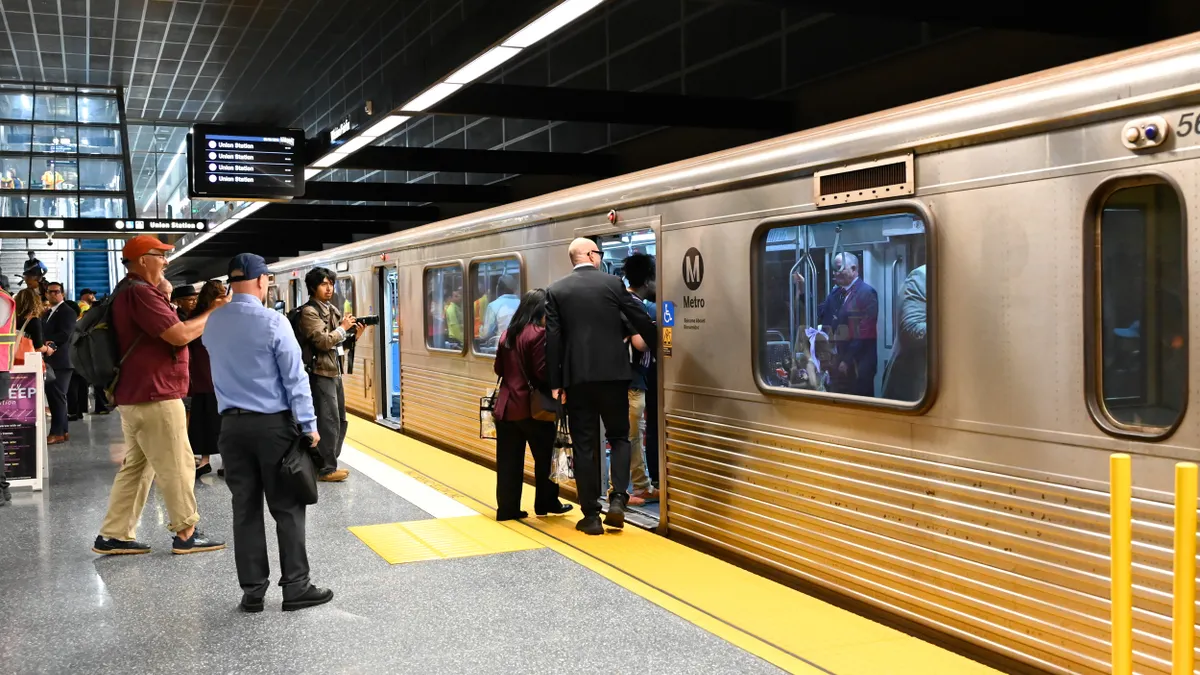
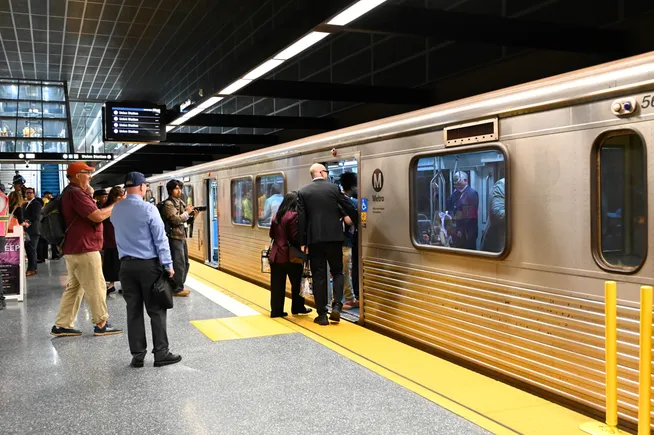
- May 2026 – The D Line Advancement: The opening of a three-station extension of the D Line subway represented a triumph of urban engineering. These stations have served as critical hubs, funneling thousands of riders directly into the heart of the city’s professional and cultural centers.
These projects have collectively expanded access to key employment and leisure destinations, providing a tangible incentive for residents to incorporate Metro into their daily routines.
Data-Driven Progress: Safety and Satisfaction
Perhaps the most significant challenge Metro has faced in recent years is the perception—and reality—of safety on its trains and buses. To address this, the agency has undergone a structural transformation in its approach to public safety and social services.
According to data released by the agency on August 3, 2026, the population of unhoused individuals on the transit system has plummeted by 57% since 2024. This success is largely attributed to the establishment of the Care-Based Services Division in January 2026. This division functions as a specialized arm of the agency, coordinating with the Department of Public Safety to move away from a strictly punitive model toward one that integrates social support, mental health outreach, and law enforcement.
The agency now deploys 24 dedicated outreach teams tasked with connecting vulnerable individuals with housing and support services. This holistic approach is supported by rigorous code-of-conduct enforcement and enhanced physical security measures. The impact of these policies is reflected in the numbers: violent crime on the system dropped by 6.7% in 2025 compared to the previous year.
These initiatives have directly translated into record-high customer satisfaction scores, with 87% of riders now reporting a positive experience. As the agency spokesperson noted, "Riders want to feel safe on the system, and increasing ridership and record-high customer satisfaction show our efforts are having a positive impact."

Official Responses and the "Care-Based" Model
Metro’s shift toward a "care-based" public safety model is arguably the most significant policy departure in the agency’s recent history. By integrating social services with traditional policing, the agency is attempting to solve the complex issue of transit safety at its root.
"The division coordinates with Metro’s Department of Public Safety law enforcement, code of conduct enforcement, physical security, and emergency management to ensure all riders and employees feel safe and are safe," the agency stated in a recent press release.
This model acknowledges that public transit in a metropolis like Los Angeles serves as a public space that inevitably mirrors the broader societal challenges of the city. By addressing homelessness and behavioral health through dedicated teams rather than relying solely on police presence, Metro has succeeded in lowering the barrier to entry for cautious riders who previously avoided the system due to safety concerns.
Future Implications: The Road to 2028
The momentum generated throughout 2026 is critical, as Los Angeles is currently in the midst of a multi-year sprint to prepare for an unprecedented run of global attention. With the Super Bowl scheduled for 2027 and the Summer Olympics slated for 2028, the stakes for the city’s transit infrastructure have never been higher.
The agency is not resting on its current successes. Plans are already in motion for two additional extensions of the D Line subway, expected to open in 2027. These lines will be transformative, reaching high-density areas including Beverly Hills, Century City, the University of California, Los Angeles (UCLA), and the West Los Angeles VA Medical Center. Connecting these transit-deprived but high-traffic neighborhoods is expected to trigger another massive wave of ridership growth.

However, the agency is also looking inward. "Coming off Metro’s World Cup efforts, we’re continuing to assess key lessons learned and how we can apply them as we prepare for upcoming major events," a Metro spokesperson explained. "We’re focusing on building on what worked, identifying opportunities for improvement, and ensuring Metro is ready to help make the next major event a success."
Conclusion: A Model for the Future
The story of LA Metro in 2026 is a testament to the fact that transit systems are living, breathing entities. When infrastructure is expanded thoughtfully, when safety is prioritized with compassion, and when services are aligned with the pulse of the city’s social and professional life, riders will return.
As the agency continues its ambitious expansion, the challenge will be to maintain the quality of service as the system grows in complexity. If the past eight months are any indication, Los Angeles is finally building a transit network that not only moves people from point A to point B but serves as the backbone of a more accessible, safer, and better-connected urban future. The city is preparing for the world to watch in 2028; based on its recent trajectory, Metro is determined to ensure that its trains and buses are ready to carry that world.
